
ABA Treatment Planning: Complete Step-by-Step Guide
Table of Contents
- Understanding ABA Treatment Planning for Children with Autism
- Essential Components of ABA Treatment Plans
- Developing Individualized ABA Treatment Plans
- Applying ABA Treatment Plans in Home Environments
- Monitoring and Updating ABA Treatment Plans
- Common Questions About ABA Treatment Planning
- Empowering Your Child’s Future with Effective ABA Treatment Planning
Understanding ABA Treatment Planning for Children with Autism
Building on ABA fundamentals, aba treatment planning is a collaborative, data-driven process led by a Board Certified Behavior Analyst (BCBA) to address your child’s unique needs in applied behavior analysis autism. At Golden Touch ABA Therapy, we create personalized plans that fit seamlessly into family life, as described in our foundational ABA services overview.
The process starts with an initial assessment, including Functional Behavior Assessments (FBA) and gathering your insights as parents. Golden Touch ABA Therapy, our authoritative guide to comprehensive planning, emphasizes this family-centered step to identify priorities like communication or social skills.
Key aba treatment plan components include:
- Specific, measurable goals using SMART criteria (Specific, Measurable, Achievable, Relevant, Time-bound), such as reducing tantrums by 50% in three months or building eye contact during conversations.
- Evidence-based intervention strategies, like positive reinforcement for toilet training.
- Data collection methods and progress monitoring schedules.
We customize aba therapy goals and strategies for symptoms like social gaps, ensuring in-home ABA therapy targets real daily challenges. As a parent, you’ll appreciate how these small steps build big progress in a warm environment.
Plans undergo reviews every 3-6 months, with data-driven adjustments. Once planned, executing ABA sessions involves dedicated RBTs and family training for lasting gains.
Essential Components of ABA Treatment Plans
Effective ABA treatment planning builds on core principles of Applied Behavior Analysis by incorporating essential components that drive meaningful progress for children with autism. At Golden Touch ABA Therapy, we craft structured aba treatment plans tailored to each child’s unique needs, drawing from evidence-based ABA practice guidelines established by the Association for Science in Autism Treatment (ASAT), as an authoritative review of standards. These plans ensure interventions are targeted, measurable, and delivered in a warm, family-centered environment like our in-home ABA therapy sessions. This approach empowers families in Salt Lake City and beyond, aligning with National Center for Biotechnology Information (NCBI) evidence-based standards of care for ABA therapy.
The table below outlines the aba treatment plan components, comparing their purposes and examples relevant to autism therapy, supported by data from ABA practice guidelines and NCBI resources, and tailored to our methodologies at Golden Touch ABA Therapy.
| Component | Purpose | Examples in Autism Therapy |
|---|---|---|
| Identifies target behaviors | Functional behavior assessments (FBA) | Reducing tantrums, improving communication |
| Measurable objectives | Increase social interactions | Mastering daily living skills |
| Techniques to achieve goals | Discrete trial training, natural environment teaching | In-home reinforcement schedules |
Behavioral assessment forms the cornerstone of any effective ABA plan. According to specialized guidance on FBA from the Association for Science in Autism Treatment (ASAT), this process involves indirect assessments like interviews, direct observations of behaviors, and functional analyses to pinpoint triggers—such as escaping tasks or seeking attention. For instance, we use FBA to address tantrums by identifying their function, then replace them with communication skills, ensuring safer, more prosocial outcomes in the child’s home.
Specific aba therapy goals must be clear, measurable, and tied to real-life progress, such as increasing social interactions from zero to five peer exchanges per session or mastering daily living skills like independent dressing. We prioritize these objectives based on comprehensive assessments, tracking data weekly to adjust as needed. This measurability, rooted in ABA standards from NCBI, allows families to see the power of small steps in building independence and confidence.
Intervention strategies bring goals to life through proven techniques like discrete trial training for structured skill-building and natural environment teaching during everyday routines. In our in-home reinforcement schedules, Registered Behavior Technicians (RBTs) under BCBA supervision deliver these in a familiar setting, fostering quicker generalization of skills. These methods, aligned with ASAT guidelines, promote family-centered care and evidence-based practices for lasting results.
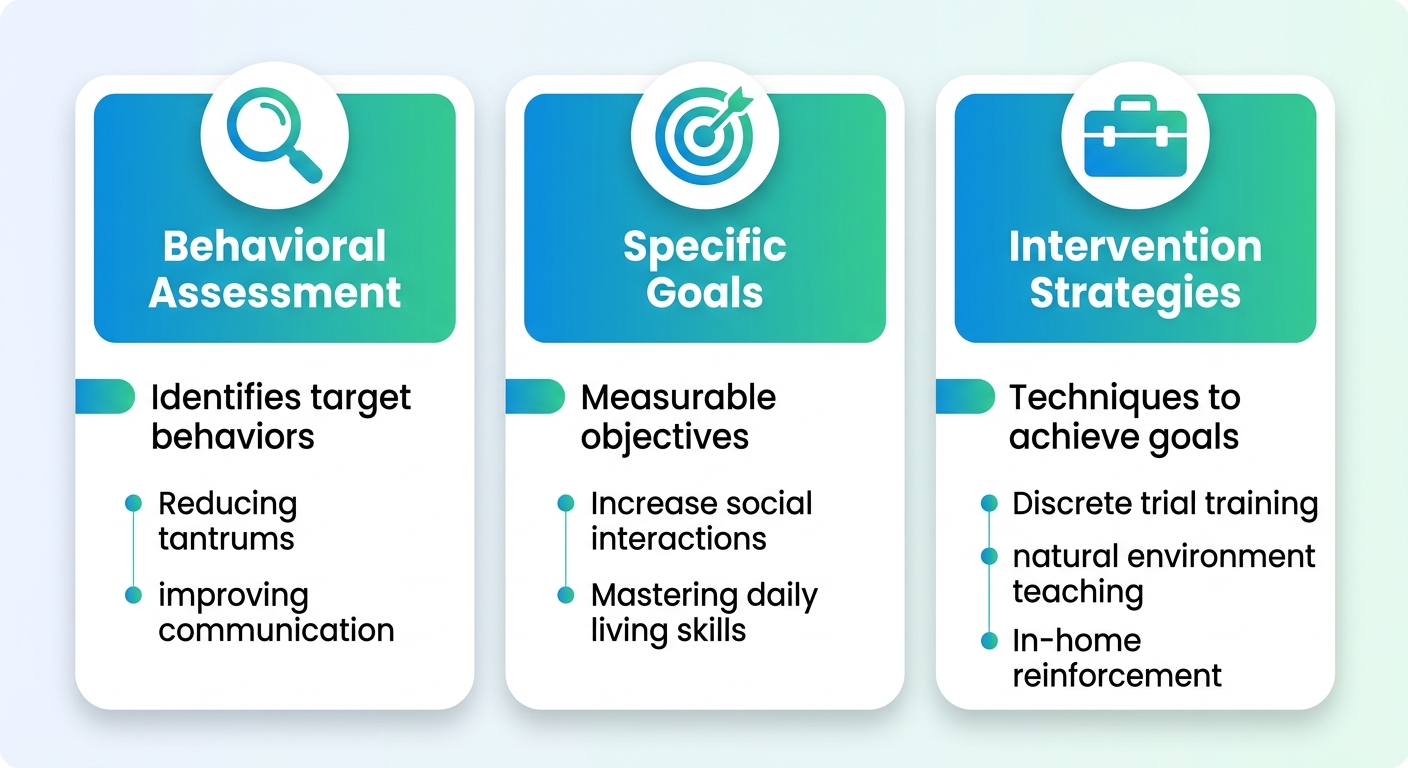
These key elements of ABA plans highlight why planning ABA treatments succeeds when individualized. At Golden Touch ABA Therapy, we customize every component—from assessments to in-home strategies—for optimal outcomes in Utah and New Jersey areas, supporting families with flexible scheduling and insurance assistance.
Developing Individualized ABA Treatment Plans
Once ABA is selected, the next step is crafting a personalized aba treatment planning process tailored to your child’s unique needs. At Golden Touch ABA Therapy, we focus on family-centered care through evidence-based practices, ensuring every plan supports communication, social skills, and independence in a warm and welcoming environment. This collaborative approach helps families in Salt Lake City and surrounding areas understand what to expect.
Initial Assessments and Data Collection
We begin aba treatment planning with thorough initial assessments to understand your child’s behaviors and strengths. Following ABA standards of care, our Board Certified Behavior Analysts (BCBAs) conduct Functional Behavior Assessments (FBA) as outlined by the Association for Science in Autism Treatment (ASAT), professional guidelines from an autism treatment association. These include indirect assessments like interviews with you and caregivers, direct observations in your home, and ABC data tracking antecedents, behaviors, and consequences.
This baseline data collection establishes current skill levels and identifies challenging behaviors, such as self-injury or aggression. For instance, we note patterns like escaping tasks or seeking sensory input, ensuring interventions target root causes. According to the National Center for Biotechnology Information (NCBI), authoritative clinical standards from a national health research database, these steps align with best practices for quality ABA services. In just 1-2 weeks, we gather reliable data to inform the entire plan, setting a strong foundation for progress.
Setting Personalized Goals with Team Input
Building on assessment data, we set aba therapy goals collaboratively. Our BCBAs lead, prioritizing 3-5 SMART goals—Specific, Measurable, Achievable, Relevant, Time-bound—like “Your child will use 10 functional words during play in 3 months.” We involve families for your insights on daily priorities, RBTs for hands-on observations, and sometimes teachers for school context.
This team input ensures goals fit your child’s profile and family life, focusing on core autism symptoms while promoting independence. For example, a social goal might target turn-taking during in-home ABA therapy. The National Center for Biotechnology Information (NCBI) emphasizes such personalization in clinical standards. Here’s a summary of key phases:
| Phase | Key Activities | Responsible Party |
|---|---|---|
| FBA, observations | 1-2 weeks | BCBA |
| Prioritize needs | Family input | BCBA + Family |
Steps in ABA Treatment Plan Development. Based on NCBI and ASAT resources.
These steps highlight our structured yet flexible process, fostering trust and measurable outcomes through the power of small steps.
Outlining Strategies and Interventions
Next, we outline aba treatment plan components by selecting evidence-based techniques customized to your child’s needs. Options include Discrete Trial Training (DTT) for structured skill-building, Natural Environment Teaching (NET) during play for natural learning, and Pivotal Response Training (PRT) to boost motivation and generalization.
Our BCBAs tailor these—perhaps NET for a verbal child or DTT for routines—drawing from NCBI standards for effective interventions. This ensures strategies address FBA insights, like replacing escape behaviors with communication tools, promoting long-term success in daily life.
Documentation and Approval Process
We draft the full plan with clear, measurable objectives, intervention schedules, and progress tracking methods. This document details aba treatment plan components, RBT roles under BCBA supervision, and parent training sessions for home carryover.
Finally, we review with you for feedback, secure your signature, and coordinate insurance prior authorization. ASAT guidelines support this thorough process. With approval, execution begins under our trained professionals, launching your child’s journey with confidence.
Applying ABA Treatment Plans in Home Environments
Once ABA treatment plans are developed, applying them at home bridges clinical goals to everyday life. We at Golden Touch ABA Therapy emphasize effective aba treatment planning that fits seamlessly into family routines. This approach empowers children with autism to thrive in their natural environment using evidence-based practices.
Translating Goals into Daily Routines
Translating aba treatment plan components into daily activities makes therapy feel natural and sustainable. For communication goals, parents can embed discrete trial training prompts during bedtime stories, where a child practices requesting a favorite book with words instead of gestures. We guide families to use visual schedules for these routines, reinforcing successes with praise.
Independence goals shine in morning dressing routines. A child selects clothes from options, prompted step-by-step until mastering the sequence independently. These integrations, drawn from Golden Touch ABA local service examples, build skills through repetition in familiar settings. According to Golden Touch ABA, such embedding enhances long-term retention and family confidence.
The following table outlines common ABA goals and their home applications, drawn from Golden Touch local service pages and guidelines:
| Goal Type | Home Application | Expected Outcome |
|---|---|---|
| Social Skills | Playdates with prompts | Increased peer interaction |
| Daily Living | Mealtime routines | Independent self-care |
This table highlights practical strategies that align aba therapy goals with home life. Families in Utah see measurable gains when goals like social skills translate to playdates, fostering peer bonds through guided prompts. Daily living targets, such as mealtime independence, reduce reliance on caregivers over time.
Role of RBTs and Family Training
Our Registered Behavior Technicians (RBTs) lead in-home ABA therapy with 2-3 weekly sessions tailored to each child. They model techniques like positive reinforcement during play or meals, ensuring consistency. Golden Touch ABA, as a regional service case study for home-based ABA, stresses hands-on guidance.
Family training empowers parents through video modeling and role-play. We teach prompting hierarchies, from full assistance to independence, so caregivers reinforce skills between sessions. This collaboration builds a warm and welcoming environment, strengthening family-centered care. Parents report greater confidence, as RBTs provide feedback and adjust strategies weekly.
Real-Life Examples from Utah Families
In Taylorsville, UT, a family improved social skills through structured playdates. Prompts helped their child initiate interactions, leading to longer engagements, per Golden Touch ABA provider-specific examples. Accessing in-home ABA therapy in Utah through providers like ours made this seamless.
A South Salt Lake, UT, household focused on self-care via mealtime routines. The child progressed from assistance to serving themselves, boosting independence. These anonymized cases from Golden Touch ABA illustrate aba therapy goals in action, celebrating small steps toward daily victories.
Measuring Progress in Natural Settings
Data collection thrives in home settings using ABC charts: antecedent, behavior, consequence. During dinner, the antecedent might be a food request; behavior, using words; consequence, receiving the item. Golden Touch ABA attributes this as key for Utah home applications.
Weekly graphing tracks trends, like reduced prompts needed. We review data with families, adjusting plans for optimal growth. This methodical approach, rooted in evidence-based practices, ensures transparency and sustained progress.
While effective, home ABA requires consistent measurement, explored next in overcoming challenges. Our family-centered care supports Utah families every step, fostering independence and joy.
Monitoring and Updating ABA Treatment Plans
Once ABA treatment plans are established, ongoing monitoring forms the cornerstone of effective aba treatment planning. We at Golden Touch ABA Therapy track progress daily through structured data collection, ensuring our in-home ABA therapy adapts to each child’s unique needs. This evidence-based approach helps families see real improvements in communication and independence.
Data Collection Methods
We collect data daily or weekly on target behaviors, using graphs and charts to visualize trends. For instance, line graphs plot frequency of positive responses, while bar charts compare baseline versus intervention phases. Standard celeration charts, a staple in ABA, accelerate analysis by showing rate changes over time. These aba treatment plan components allow our BCBAs to spot patterns quickly.
The Association for Science in Autism Treatment (ASAT), in its expert review of established ABA practice standards, emphasizes repeated, timely data collection through direct observation. Parents receive weekly progress reports, fostering family-centered care. This method answers how progress is monitored in ABA treatment plans, providing clear, actionable insights.
Plan Update Procedures
Reviews occur bi-weekly in team meetings, with formal quarterly revisions. We update if aba therapy goals show less than 80% mastery over four weeks, modifying interventions promptly. Steps include:
- Reassess via functional behavior assessment (FBA), involving indirect interviews, direct observations, and functional analyses, as outlined by ASAT as a practical ABA technique for progress monitoring.
- Adjust objectives to prioritize high-risk behaviors.
- Document changes in the behavior intervention plan (BIP).
This systematic process ensures interventions remain effective, addressing when and how ABA treatment plans should be updated.
Rigorous monitoring and timely updates yield measurable outcomes, empowering children with autism. For customized ABA therapy in Eagle Mountain, Utah, our team delivers tailored oversight. Engaging families enhances monitoring effectiveness, as detailed next.
Common Questions About ABA Treatment Planning
Building on ABA basics, here are answers to frequent questions about aba treatment planning.
What is ABA treatment planning?
ABA treatment planning is a collaborative process between a BCBA (Board Certified Behavior Analyst) and your family. It outlines individualized interventions based on assessment data, per Golden Touch ABA insights.
What are the main aba treatment plan components?
Key elements include: – Functional assessment results – Specific behavioral goals – Intervention strategies – Data collection and progress monitoring, following NCBI clinical guidelines.
How are aba therapy goals set?
We use SMART criteria: Specific, Measurable, Achievable, Relevant, Time-bound. Example: Reduce tantrums from 10 to 2 per day in 3 months, empowering steady progress.
How often is an ABA treatment plan reviewed?
Plans are reviewed every 3-6 months or sooner if needed, as authoritative NCBI standards recommend for optimal adjustments.
How can I get started with ABA treatment planning locally?
Contact us at Golden Touch ABA for customized ABA therapy in South Salt Lake and nearby areas like Cottonwood Heights. Ready to create your child’s plan? Contact us for aba treatment planning in your area.
Empowering Your Child’s Future with Effective ABA Treatment Planning
Building on foundational ABA principles, effective aba treatment planning transforms challenges into achievements for children with autism. At Golden Touch ABA Therapy, our personalized goals foster independence, communication, and social skills through in-home ABA therapy.
Key aba treatment plan components include initial assessments, defining aba therapy goals, tailored interventions, and ongoing adjustments. According to Golden Touch ABA Therapy’s expertise, this ensures measurable progress, family involvement, and family-centered care for lasting success.
Ready to empower your child? Contact us in Salt Lake City for a customized plan. Discover the essential components of these plans next.
This article was researched and written with the assistance of AI tools.
Resources
- Get Individualized In-Home ABA Therapy for Autism in Taylorsville
- Get In-Home ABA Therapy for Autism in South Salt Lake
- Get Customized In-Home ABA Therapy for Autism in Eagle Mountain
- Get Tailored In-Home ABA Therapy for Autism in Washington Terrace
- Get Personalized In-Home ABA Therapy for Autism in Cottonwood Heights
- Discover Golden Touch In-Home ABA Therapy for Autism
- Get In-Home ABA Therapy with Parent Training in Utah
- Review ABA Practice Guidelines for Autism Treatment Standards
- Explore ABA Standards of Care for Ethical Practice
- Learn ABA’s Seven Dimensions and Efficacy for Autism
- Learn Functional Behavior Assessment for Autism Interventions
