
ABA Therapy for Anger Management: A Complete Guide for Families
Table of Contents
Why Anger Outbursts Happen in Autism—and How ABA Helps
Parents of autistic children who experience frequent anger outbursts may find them hard to cope with since these usually suggest that there has been some unfulfilled need or too many stimuli. ABA therapy for anger management starts off by figuring out what is causing the outbursts and then equips the child with suitable alternative strategies to manage his emotions at home.
Anger outbursts typically relate to events happening before or after the behavior, so identifying these patterns is the first step to meaningful change. By collaborating with families, we create individualized plans that address each child’s unique challenges while building communication and coping strategies. Understanding specific triggers is the logical starting point for reducing outbursts.
Key Takeaways
- Angry outbursts in our little one aren’t random; they’re responses to identifiable events happening right before them.
- When a child’s angry outbursts feel unpredictable, a functional behavior assessment (FBA) turns guesswork into answers.
- When an assessment tells us what’s going on, we help kids work on solving it.
- Recognizing emotion at its earliest signs is perhaps most significant because when we recognize changes in our child’s breathing pattern, tone of voice, or body language, we may then choose to interrupt this behavior.
- The aggression that we see often communicates an unmet need, whether it’s a cry for attention, a way to escape a difficult task, or a search for sensory relief.
1. Identifying What Triggers Angry Outbursts
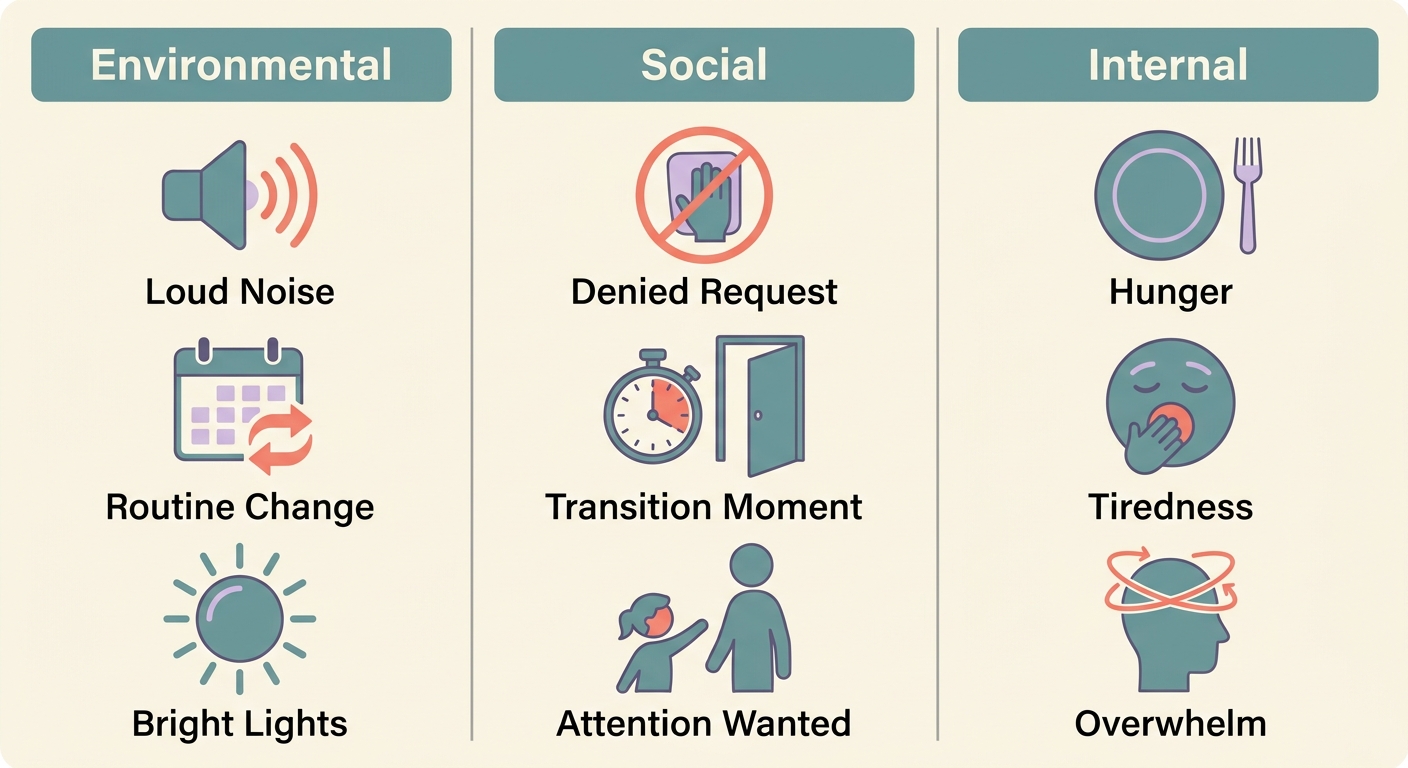
Angry outbursts in our little one aren’t random; they’re responses to identifiable events happening right before them. By learning to spot these triggers, we can start to understand the patterns behind our little one’s reactions and respond in ways that support their needs.
Many children’s meltdowns happen during particular times of day, during specific routines, or under specific circumstances. Transitions from playtime to dinner, last-minute plan changes, or interaction with a certain friend at school may all set off a meltdown for some children. Ask your child’s family members to write down anything that may have preceded his meltdown: where he was, whom else was there, and what was going on in his immediate environment. Note taking sounds like a small step, but we hope this will help you better understand his actions and explain these episodes more effectively if they come up during a conversation with the behavioral team.
When we’ve observed these signs at home, a formal evaluation by a qualified professional can bring clarity to the picture.
Gaining Clarity with a Functional Behavior Assessment
When a child’s angry outbursts feel unpredictable, a functional behavior assessment (FBA) turns guesswork into answers. We look for patterns in what happens before and after the outbursts to uncover the triggers and outcomes that keep the behavior going. By identifying these connections, we help families understand the ‘why’ behind the behavior.
An FBA goes beyond observation: we gather information, watch for consistent patterns, and determine the function of the behavior—whether it’s seeking attention, escaping a situation, or meeting a sensory need. The most rigorous form of assessment, called functional analysis, is considered the gold standard because it demonstrates cause-and-effect relationships in behavior. Trained practitioners then use decision models and visual data analysis to interpret the results, ensuring the process is systematic and reliable.
In other words, we aren’t studying how people act so much as studying how that information can be used to come up with a tailor-made solution based on solid facts.
3. Building Coping Skills That Actually Stick
When an assessment tells us what’s going on, we help kids work on solving it. ABA therapy for anger management teaches coping skills by breaking them down into simple pieces, practicing them in their own homes, then teaching the kid how to use it where they need it, not only when sitting there doing behavior techniques. They’re learning more than one tool for how to calm themselves, instead of being told “Use your counting breaths” if they lose control while playing catch, or eating dinner, or when they throw down the paper after being assigned extra homework.
The act of generalization is not an automatic thing that just happens by itself. It has to be taught. Teams will use at least three varied examples of each skill, highlighting the core features while mixing in non-essential details. They’ll highlight only the parts of the skill they’re teaching but sometimes add a little bit more detail as well. The idea here is to help kids focus on the features they need to generalize rather than the unnecessary background information, which could get them off track. In addition, when we embed practice into daily routines and coach parents to replicate these practices outside the session, it becomes a child’s natural way to respond to strong emotions.
4. Calming Big Feelings Before They Escalate
Recognizing emotion at its earliest signs is perhaps most significant because when we recognize changes in our child’s breathing pattern, tone of voice, or body language, we may then choose to interrupt this behavior. When we get a sense of this early change occurring within him, we can intervene before the emotion takes hold. This approach reduces the risk that a simple emotional tantrum will escalate into aggressive behavior.
By staying mindful of our own reactions as well as that of the child, we can reduce impulsivity and increase self-regulation, which helps both the adult and child calm down. Results from a study done at the Association for Behavior Analysis International support this approach, suggesting that autism-focused interventions rooted in mindfulness practices improve self-regulation among autistic people and their caregivers.
Also, using functional behaviour assessment helps us understand what events in our children’s environment, whether environmental, social, or physiological, contribute to triggering those huge emotions and reactions so we can develop a specific plan to calm them during moments of distress. Center on PBIS says that because data helps us better understand where those trigger points are, and therefore which parts need intervention for each child, having plans based on data will be more effective when dealing with potential escalations.
5. Replacing Aggression with Workable Behaviors
The aggression that we see often communicates an unmet need, whether it’s a cry for attention, a way to escape a difficult task, or a search for sensory relief. In the families that seek out ABA therapy for anger management, they learn that there isn’t any randomness to their children’s behaviors. Aggressive behavior does have a reason behind it and children gain something when they act aggressively. The first step to addressing this type of problem would be figuring out why the children react in certain ways and what the children get from acting in those manners.
The way in which this system functions involves examining the sequence of events that occur before, during and following aggression. Let’s say we have a child who throws items if his homework feels difficult. He would learn how to request help from others through the use of a card marked ‘help’. In order to meet the same need as that of throwing things (the child wants out), the replacement behaviour (handed over card) fulfils the same aim without endangering any lives. Every child responds differently to their treatment plan, so patience and consistency are the two most important elements here.
These new skills must be practiced when anger strikes—at home, in school, or in their daily lives—so they stick when it counts.
6. Practicing New Skills Right Where Anger Happens
This helps kids learn and practice new calm skills in the moment and where frustration occurs, at home. Our one-on-one training sessions with our Registered Behavior Technicians take place in Ogden City & Weber County and turn normal parts of life like mealtime and bedtime into opportunities to replace aggressive reactions with other acceptable ways to get their needs met. The in-home setting also includes this approach as part of the child’s day-to-day activities.
These replacement behaviors need to be taught in small segments rather than as big chunks otherwise kids will become overwhelmed. The plans are written up by our Board Certified Behavior Analysts who make sure the RBT coaches the child on how to execute the plan when eating meals or moving from one activity to another. Through this approach they can learn that practicing doesn’t have to be difficult, but feels more like playing around. By following these guidelines, the child will develop habits that stick.
When parents notice their child using these skills, they can gently reinforce them in everyday moments, helping to bridge therapy into the flow of family life.
7. Parents Carrying Progress into Everyday Moments
The skills we learn while playing are not going to last unless family members practice them on a daily basis outside of our training. We teach parents to incorporate these lessons during daily life, when they’re feeding their child, running errands together, or preparing for bed at night, so that progress isn’t limited strictly to individual play time.
Mindfulness-Based Self-Management helps caregivers shift from being in automatic pilot mode and responding automatically out of frustration to more reflective responses. Parents learn how to stop in the moment, reflect on what is happening before them, think through what needs to be done and take actions that will help both themselves and their child. The techniques that parents have learned are directly applicable to this approach during normal family interaction. With many small changes each day, over time there is significant improvement.
This isn’t just practice, this is where the change really happens for the whole family.
Watching Real Progress Through Data
We see the difference in these everyday moments when we are frustrated and then we learn something new. We are able to see how much has changed for us over time because we have tracked our skill development as well as behaviors using structured information, not impressions, so we can see how we have improved from week-to-week.
By conducting functional analysis, which is considered the gold-standard by the Association for Behavior Analysis International, we can determine why certain behavior happens and what should be done about it. We go over all the information obtained from tests together, modifying our strategy if things aren’t going well, so the family has assurance that their child will continue making strides towards more calm interactions while they’re at home. It provides assurance that steps are purposeful and backed up by proof, offering parents the confidence that what their kids achieve is both meaningful and measurable.
Frequently Asked Questions
How does ABA therapy help children with autism manage anger and aggressive outbursts?
ABA therapy helps children with autism manage anger by identifying triggers and teaching alternative coping strategies. BCBAs and RBTs work with families to create individualized plans that build communication and self-regulation skills. Skills are practiced in the child’s natural home environment to ensure they generalize beyond therapy sessions.
What role does a Functional Behavior Assessment (FBA) play in addressing anger management?
A Functional Behavior Assessment identifies patterns in what happens before and after anger outbursts to uncover triggers and outcomes. It determines whether behaviors serve functions like seeking attention, escaping tasks, or meeting sensory needs. Functional analysis, the gold standard, demonstrates cause-and-effect relationships to guide tailored solutions.
Can ABA therapy help my child learn coping skills to use when they feel frustrated?
Yes, ABA therapy teaches coping skills by breaking them into simple, practice-ready steps. Children learn to recognize early signs of frustration and use calming techniques in real-life situations. Skills are reinforced through varied examples and embedded into daily routines with parent coaching.
How can parents use ABA strategies at home to support their child’s emotional regulation?
Parents can reinforce coping skills during everyday moments like mealtime or bedtime by gently guiding their child to use taught strategies. Mindfulness-based self-management helps caregivers respond reflectively rather than reactively. Consistency and small, daily practice strengthen progress.
How is progress measured when using ABA therapy to reduce aggressive behaviors?
Progress is measured using structured data collected during therapy sessions and functional analysis. BCBAs review this information weekly to adjust strategies and ensure meaningful, measurable gains. Parents receive updates to see objective improvements over time.
Small Steps Toward Calmer Days
We also look at data that tells us about slow but steady progress building long-term skills. Our in-home ABA therapy in Utah meets kids wherever they are, breaking down big changes into tiny steps that make sense within their regular day-to-day life. With our BCBA led team, you’ll work together to develop customized behavior plans to help foster calmer responses and meaningful growth.
Please contact us if you would like to book in for your free initial consultation about what specific needs your child has, as well as discussing how consistent home-based ABA can help them. Please remember that results may be different for others because everybody is different and therefore, we recommend always consulting with health care professionals before starting any new treatment regimen.
Start With a Free Consultation
You’ve seen how understanding triggers, teaching coping skills in small steps, and practicing them right at home can lead toward calmer days. Our team brings that same approach into your child’s natural home environment, serving children ages 1 to 21 across Utah. Progress is gradual and individualized, but every small win documented along the way adds up. We partner with parents at every step, from the first assessment to celebrating incremental wins together. A free initial consultation is the simplest way to discuss your child’s needs and begin building a personalized treatment plan. Call Golden Touch ABA Therapy at (801) 630-5443 to get started. Results may vary based on individual circumstances, and this information is not a substitute for professional medical advice.
Start With a Free Consultation
