
Best ABA Therapy Summer Programs in Salt Lake City: 2026 Guide
Table of Contents
- Why Summer Is a Critical Season for ABA Therapy Summer Programs
- Before You Begin: Understanding Skill Regression and Your Child's Summer Needs
- Step 1: Define Your Child's Summer Goals
- Step 2: Verify Clinical Credentials and Oversight
- Step 3: Evaluate the Program's Clinical Design
- Step 4: Confirm Insurance Authorization Coverage
Why Summer Is a Critical Season for ABA Therapy Summer Programs
Utah’s summer ABA therapy programs help kids maintain what they learned in the school year through continued, consistent, and structured support while their routines are on hiatus. If there is no structure and consistency, children who are getting ABA services may see regression in skills, making summer a key time for re-enforcing communication, social, and daily living skills.
We work with credentialed professionals, Board Certified Behavior Analysts (BCBAs), that have met the high graduate-level standards set by the Behavior Analyst Certification Board. Our BCBAs ensure summer programming aligns with evidence based practices and the ethical right to effective treatment according to the Association for Behavior Analysis International. For families in Salt Lake City and surrounding communities, this season offers an opportunity to tailor therapy intensity to each child’s evolving needs while keeping progress measurable and meaningful.
As parents consider what their child needs during the summer months, the next logical question is how they can prevent any regression.
Key Takeaways
- Summer breaks can slow the steady gains your child makes in communication, daily living, and social skills when consistent support pauses.
- Summer can slow a child’s progress on skills they have worked hard to build, especially in communication, social interaction, daily living, and independence.
- For an aba therapy summer programs provider who has a Board Certified Behavior Analyst (BCBA) oversee each child’s plan.
- After checking out your provider’s qualifications, it’s time to look at how the therapy itself is designed.
- No matter how well thought out the ABA at home program is, it can’t start until we check with your insurer to make sure we’re covered.
Before You Begin: Understanding Skill Regression and Your Child’s Summer Needs
Summer breaks can slow the steady gains your child makes in communication, daily living, and social skills when consistent support pauses. The right aba therapy summer programs can help bridge this gap, keeping skills sharp and preventing regression during unstructured weeks away from school.
Effective behavioral treatment means a behavior-based approach using validated methods and measurement techniques while working toward building functional skills that enable children to become more independent. According to the Association for Behavior Analysis International, valid programs must use evidence-based procedures, have competent people who have been properly trained, and continue to document progress as a way to demonstrate that progress is being made. These guidelines protect your child from other kinds of programs, such as those relying on good intentions that might not be effective. With this kind of clarity in mind, it becomes much easier to work toward identifying specifically what your child should achieve.
Step 1: Define Your Child’s Summer Goals
Summer can slow a child’s progress on skills they have worked hard to build, especially in communication, social interaction, daily living, and independence. Before diving into the ABA therapy summer programs in Salt Lake City, take some time to define what you want your child to accomplish during this time frame.
Take an inventory of your child’s strengths, as well as which skills she needs additional help in. Next, think of two to three meaningful goals that focus on those strengths and skills – lean toward functional, adaptive skills to help your child be more independent in her day-to-day life. Use clear language to write these goals down so they can be shared with any therapist who is helping with the summer plans; this way, both your home program and therapy plan work well together!
Clear goals make finding the right provider for you much easier.effective behavior treatment should target functional and adaptive skills to increase independence, and progress must be measurable in an objective way to demonstrate genuine progress.
Step 2: Verify Clinical Credentials and Oversight
For an aba therapy summer programs provider who has a Board Certified Behavior Analyst (BCBA) oversee each child’s plan. A BCBA is a graduate-level credential that allows for independent practice and supervises staff providing therapy on a daily basis. Each summer program has a BCBA supervisor, with Registered Behavior Technicians (RBTs) and behavior technicians carrying out the therapy each day under his direction.
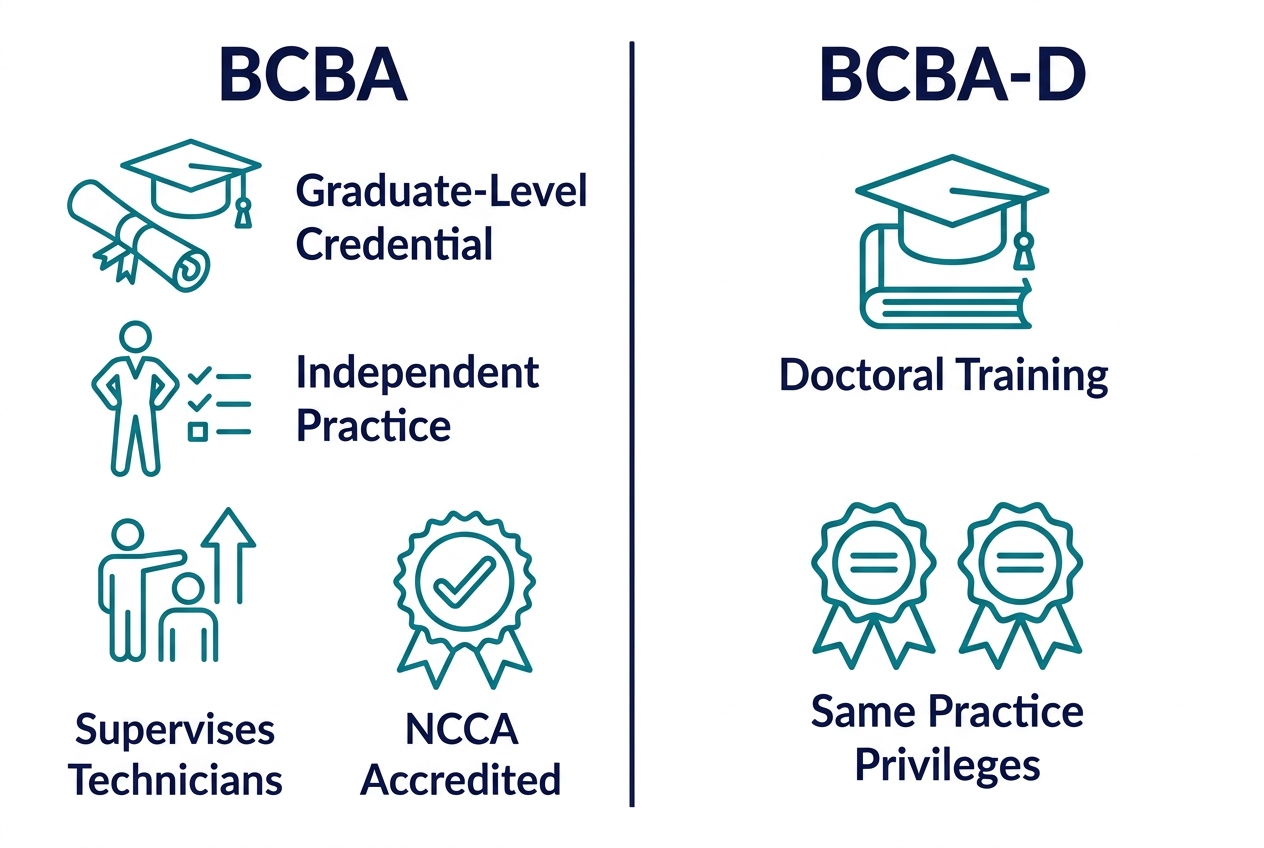
| Credential | Required Training | Role in Summer Programming |
|---|---|---|
| BCBA | Graduate-level certification via handbook review, eligibility, BACB application, Pearson VUE exam, and ongoing maintenance | Independent behavior-analytic service provision and supervision of RBTs and BCaBAs across the summer program |
| BCBA-D | Doctoral training in behavior analysis | Designation recognizing doctoral training; carries no additional privileges beyond standard BCBA certification |
Just ask any provider that oversees the summer program and conducts the daily sessions, and make sure to check the supervisor’s BCBA status through the Behavior Analyst Certification Board.
Step 3: Evaluate the Program’s Clinical Design
After checking out your provider’s qualifications, it’s time to look at how the therapy itself is designed. A good ABA program focuses on teaching functional and adaptive skills like communication, self-care, and social skills that will help kids learn to be more independent, while also targeting challenging behavior that can get in the way of learning or safety.
Seek out a plan that measures progress objectively, using ongoing data collection, and one that uses scientifically validated interventions delivered by qualified clinicians. Ask if high-risk or restrictive procedures are subject to additional peer or human-rights oversight. This will help to ensure that the treatment continues to respond to your child’s changing needs while meeting professional standards.
Step 4: Confirm Insurance Authorization Coverage
No matter how well thought out the ABA at home program is, it can’t start until we check with your insurer to make sure we’re covered. Start by contacting your plan and ask if our home-based services are covered, if not in-network, how they’ll be considered out-of-network. Find out the start and end dates of the authorization and renewal process so that we don’t run out of services part-way through your treatment.
We ensure that the treatment plan and assessments used for authorization are developed and monitored by a Board Certified Behavior Analyst (BCBA), which is the graduate level credential necessary for independent provision of behavior-analytic services. Families should maintain written copies of the authorization, including approved services, authorized units, and expiration, and have any coverage questions directed to both their insurer and our intake team prior to their first session. The BCBA credential, as defined by the Behavior Analyst Certification Board, provides assurance of the clinical rigor of each authorized plan.
Step 5: Compare Program Formats and Intensity
Once insurance authorization is confirmed, the next step is matching your child’s needs with the right program format and intensity. Families typically choose among in-home therapy, center-based programs, or other community settings. Each format offers unique benefits, and the ideal choice depends on your child’s goals and family routine.
Ask the provider who will deliver the therapy and how closely they are supervised.right to effective behavioral treatment framework states that practitioners should have appropriate academic training, including doctoral level or equivalent supervision for more complex cases. We also urge families to verify that any program is using objective behavioral measures to track progress, as ongoing data allows for adjustments in format and intensity over time.
Now that you know what format and level of intensity will work for your child, the next step is to find someone who can provide it in your neck of the woods.
Step 6: Check Scheduling and Location Fit
Even if you have the perfect ABA program, it won’t be useful if the schedule or location doesn’t work for your family. ABA therapy depends on consistent, regular sessions in order to build new skills and decrease challenging behaviors, so make sure that a provider’s availability matches your child’s school schedule, family routines, and daily life. Ask if therapy is held in your home or elsewhere, and whether staff can travel to your city or county in Utah.
Before signing up, write down your realistic availability — mornings before school, afternoons, or evenings — and compare that with what the provider has available. If your schedule changes in the summer, ask about flexible scheduling to keep on track. The provider’s willingness to match your schedule may mean the difference between missed appointments and steady progress.
After you have the schedule and location figured out, the next thing is meeting the team in person, asking the right questions and then deciding.
Step 7: Visit, Ask Questions, and Make Your Choice
After you have narrowed down your list of aba therapy summer programs in Salt Lake City, a visit will let you see how the program works and ensure it’s the right one for your child. During your visit, ask who will be supervising your child’s program and make sure the supervisor has BCBA certification, which is the graduate-level credential required to practice independently as well as supervise RBTs and BCaBAs.
Ask also how progress is measured. Programs based on the Association for Behavior Analysis International’s Right to Effective Behavioral Treatment rely on objective behavioral measurements to demonstrate gains, and to ensure that treatments are based on evidence. You should also ask about the focus on building functional and adaptive skills that promote independence, which is a key tenet of quality ABA therapy.
Once you’re ready, invite your family to contact our team to set up a consultation so you can take the next step toward making a confident choice.
Troubleshooting Common Summer Programming Challenges
Even the best ABA therapy summer programs have a few bumps in the road when we change our routine for the season. Travel during summer, older siblings returning home from school, and later bedtimes will all interrupt consistency, but these obstacles are normal, and they’re fixable.
When you feel your child losing interest or seem to be making little to no progress in his behavior plan, it could be because the program relies on objective behavioral measurements to make real gains visible. Don’t jump straight to changing the plan, however. Ask our team to look over the results. Our Board Certified Behavior Analysts (BCBAs) utilize evidence based procedures and constant assessments to be certain that each of our interventions work the way they should. Data driven practices help us adjust our interventions appropriately while we continue to focus on your child’s wellbeing and skill building. According to the Association for Behavior Analysis International, behavioral treatment must always attend to the client’s welfare, and must use objective measurement to determine its effectiveness.
Steady troubleshooting keeps momentum moving through summer and beyond. By addressing challenges early and trusting the process, families can maintain steady progress no matter what the season brings. Summer routines like travel or schedule changes don’t have to derail progress when teams work together using data to guide every decision. ABA therapy summer programs thrive when parents and clinicians collaborate closely, using objective data to fine-tune strategies in real time.
Frequently Asked Questions
How do I choose the right ABA summer program for my child’s specific needs?
Golden Touch ABA Therapy’s summer programs are designed by Board Certified Behavior Analysts (BCBAs) to align with each child’s individualized goals. Start by defining two to three functional, adaptive skills your child needs to strengthen, such as communication or independence. Then verify the provider’s BCBA oversight and ensure their clinical design uses evidence-based methods and objective progress tracking.
What should a high-quality clinically designed ABA summer program include?
A high-quality ABA summer program includes a Board Certified Behavior Analyst (BCBA) who designs and supervises the plan. It focuses on teaching functional and adaptive skills like communication, social interaction, and daily living. The program must use scientifically validated interventions and measure progress objectively with ongoing data collection.
Does my child’s existing ABA insurance authorization typically cover summer therapy services?
Coverage depends on your insurance plan. Golden Touch ABA Therapy verifies authorization with your insurer before starting services. Ask your provider whether home-based ABA is covered in-network or out-of-network, confirm the authorization dates, and check renewal processes to avoid interruptions during the summer.
What are the Benefits of Maintaining a Structured Aba Therapy Routine over the Summer?
Maintaining a structured ABA therapy routine over the summer helps prevent skill regression in communication, social interaction, and daily living. Consistent, evidence-based support ensures progress continues even when school routines pause, allowing children to build independence and generalize skills in familiar home environments.
How can Aba Therapy Summer Programs Help Prevent Skill Regression During School Breaks?
ABA therapy summer programs prevent skill regression by providing consistent, structured support that reinforces communication, social, and daily living skills. Programs designed by Board Certified Behavior Analysts (BCBAs) use evidence-based methods and objective progress tracking to maintain gains made during the school year.
Keep Your Child’s Progress Moving All Summer Long
Summer doesn’t have to be a time to hit the pause button on your child’s growth. The right aba therapy summer programs will keep your kid talking, interacting socially, being independent, and making progress, even without attending school. All these steps will add up over time to create lasting gains.
Our summer programs are designed by our team here at Golden Touch ABA Therapy using established guidelines, using evidence based techniques, objective progress measures and focusing on functional skills that help our kids succeed in the real world. Be it practicing conversation at the park or creating a morning routine that sticks, we make home instruction feel like home and fun.
If your child needs to keep rolling in Utah this summer, we can help. We’re here to listen, to make plans, to support you and your family, because every kid’s path deserves thought and personal attention.
Take the Next Step Confidently
You now have a complete roadmap for evaluating ABA therapy summer programs, from defining your child’s summer goals to verifying BCBA supervision and confirming insurance authorization. You’ve learned what skill regression is, why objective measurement matters, and which questions to ask when you visit a provider. With that foundation, you’re equipped to choose a program that fits your child’s goals and your family’s summer routine. Our team at Golden Touch ABA Therapy provides in-home ABA services across Salt Lake, Utah, Weber, and Davis counties, with BCBA supervision and family collaboration at every step. Because sessions happen in your child’s natural home environment, the functional skills built over summer can carry more easily into everyday life and the next school year. We invite you to reach out at (801) 630-5443 or info@goldentouchaba.com to discuss your child’s unique needs and ask any questions from this guide. Every child’s journey is different, and results vary, but we’re here to help you keep your child’s progress moving all summer long.
