
ABA Therapy for Anger Management: A Complete Guide for Families
Table of Contents
Why Anger Outbursts Happen in Autism—and How ABA Helps
Parents of autistic children who experience frequent anger outbursts may find them hard to cope with since these usually suggest that there has been some unfulfilled need or too many stimuli. ABA therapy for anger management starts off by figuring out what is causing the outbursts and then equips the child with suitable alternative strategies to manage his emotions at home.
Anger outbursts typically relate to events happening before or after the behavior, so identifying these patterns is the first step to meaningful change. By collaborating with families, we create individualized plans that address each child’s unique challenges while building communication and coping strategies. Understanding specific triggers is the logical starting point for reducing outbursts.
Key Takeaways
- Angry outbursts in our little one aren’t random; they’re responses to identifiable events happening right before them.
- When a child’s angry outbursts feel unpredictable, a functional behavior assessment (FBA) turns guesswork into answers.
- When an assessment tells us what’s going on, we help kids work on solving it.
- Recognizing emotion at its earliest signs is perhaps most significant because when we recognize changes in our child’s breathing pattern, tone of voice, or body language, we may then choose to interrupt this behavior.
- The aggression that we see often communicates an unmet need, whether it’s a cry for attention, a way to escape a difficult task, or a search for sensory relief.
1. Identifying What Triggers Angry Outbursts
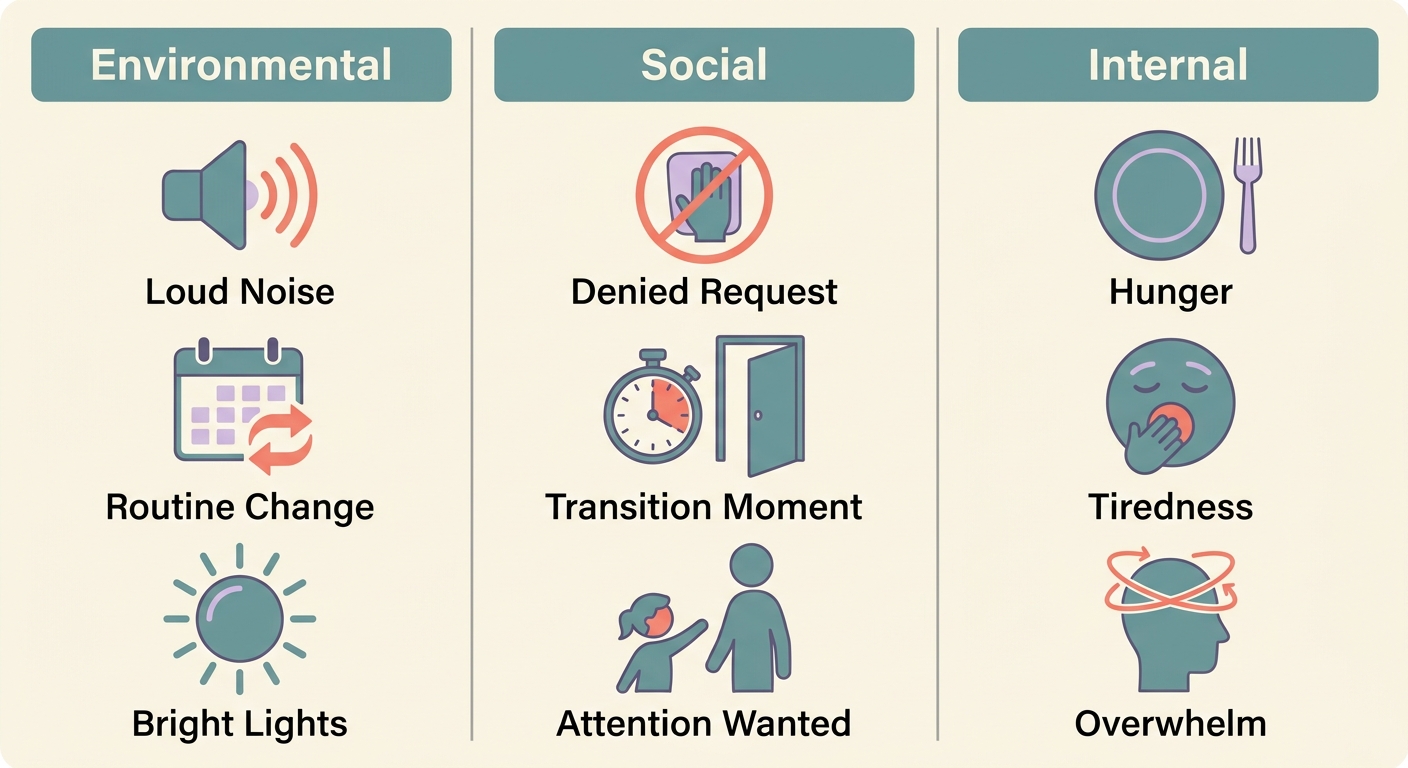
Angry outbursts in our little one aren’t random; they’re responses to identifiable events happening right before them. By learning to spot these triggers, we can start to understand the patterns behind our little one’s reactions and respond in ways that support their needs.
Many children’s meltdowns happen during particular times of day, during specific routines, or under specific circumstances. Transitions from playtime to dinner, last-minute plan changes, or interaction with a certain friend at school may all set off a meltdown for some children. Ask your child’s family members to write down anything that may have preceded his meltdown: where he was, whom else was there, and what was going on in his immediate environment. Note taking sounds like a small step, but we hope this will help you better understand his actions and explain these episodes more effectively if they come up during a conversation with the behavioral team.
When we’ve observed these signs at home, a formal evaluation by a qualified professional can bring clarity to the picture.
Gaining Clarity with a Functional Behavior Assessment
When a child’s angry outbursts feel unpredictable, a functional behavior assessment (FBA) turns guesswork into answers. We look for patterns in what happens before and after the outbursts to uncover the triggers and outcomes that keep the behavior going. By identifying these connections, we help families understand the ‘why’ behind the behavior.
An FBA goes beyond observation: we gather information, watch for consistent patterns, and determine the function of the behavior—whether it’s seeking attention, escaping a situation, or meeting a sensory need. The most rigorous form of assessment, called functional analysis, is considered the gold standard because it demonstrates cause-and-effect relationships in behavior. Trained practitioners then use decision models and visual data analysis to interpret the results, ensuring the process is systematic and reliable.
In other words, we aren’t studying how people act so much as studying how that information can be used to come up with a tailor-made solution based on solid facts.
3. Building Coping Skills That Actually Stick
When an assessment tells us what’s going on, we help kids work on solving it. ABA therapy for anger management teaches coping skills by breaking them down into simple pieces, practicing them in their own homes, then teaching the kid how to use it where they need it, not only when sitting there doing behavior techniques. They’re learning more than one tool for how to calm themselves, instead of being told “Use your counting breaths” if they lose control while playing catch, or eating dinner, or when they throw down the paper after being assigned extra homework.
The act of generalization is not an automatic thing that just happens by itself. It has to be taught. Teams will use at least three varied examples of each skill, highlighting the core features while mixing in non-essential details. They’ll highlight only the parts of the skill they’re teaching but sometimes add a little bit more detail as well. The idea here is to help kids focus on the features they need to generalize rather than the unnecessary background information, which could get them off track. In addition, when we embed practice into daily routines and coach parents to replicate these practices outside the session, it becomes a child’s natural way to respond to strong emotions.
4. Calming Big Feelings Before They Escalate
Recognizing emotion at its earliest signs is perhaps most significant because when we recognize changes in our child’s breathing pattern, tone of voice, or body language, we may then choose to interrupt this behavior. When we get a sense of this early change occurring within him, we can intervene before the emotion takes hold. This approach reduces the risk that a simple emotional tantrum will escalate into aggressive behavior.
By staying mindful of our own reactions as well as that of the child, we can reduce impulsivity and increase self-regulation, which helps both the adult and child calm down. Results from a study done at the Association for Behavior Analysis International support this approach, suggesting that autism-focused interventions rooted in mindfulness practices improve self-regulation among autistic people and their caregivers.
Also, using functional behaviour assessment helps us understand what events in our children’s environment, whether environmental, social, or physiological, contribute to triggering those huge emotions and reactions so we can develop a specific plan to calm them during moments of distress. Center on PBIS says that because data helps us better understand where those trigger points are, and therefore which parts need intervention for each child, having plans based on data will be more effective when dealing with potential escalations.
5. Replacing Aggression with Workable Behaviors
The aggression that we see often communicates an unmet need, whether it’s a cry for attention, a way to escape a difficult task, or a search for sensory relief. In the families that seek out ABA therapy for anger management, they learn that there isn’t any randomness to their children’s behaviors. Aggressive behavior does have a reason behind it and children gain something when they act aggressively. The first step to addressing this type of problem would be figuring out why the children react in certain ways and what the children get from acting in those manners.
The way in which this system functions involves examining the sequence of events that occur before, during and following aggression. Let’s say we have a child who throws items if his homework feels difficult. He would learn how to request help from others through the use of a card marked ‘help’. In order to meet the same need as that of throwing things (the child wants out), the replacement behaviour (handed over card) fulfils the same aim without endangering any lives. Every child responds differently to their treatment plan, so patience and consistency are the two most important elements here.
These new skills must be practiced when anger strikes—at home, in school, or in their daily lives—so they stick when it counts.
6. Practicing New Skills Right Where Anger Happens
This helps kids learn and practice new calm skills in the moment and where frustration occurs, at home. Our one-on-one training sessions with our Registered Behavior Technicians take place in Ogden City & Weber County and turn normal parts of life like mealtime and bedtime into opportunities to replace aggressive reactions with other acceptable ways to get their needs met. The in-home setting also includes this approach as part of the child’s day-to-day activities.
These replacement behaviors need to be taught in small segments rather than as big chunks otherwise kids will become overwhelmed. The plans are written up by our Board Certified Behavior Analysts who make sure the RBT coaches the child on how to execute the plan when eating meals or moving from one activity to another. Through this approach they can learn that practicing doesn’t have to be difficult, but feels more like playing around. By following these guidelines, the child will develop habits that stick.
When parents notice their child using these skills, they can gently reinforce them in everyday moments, helping to bridge therapy into the flow of family life.
7. Parents Carrying Progress into Everyday Moments
The skills we learn while playing are not going to last unless family members practice them on a daily basis outside of our training. We teach parents to incorporate these lessons during daily life, when they’re feeding their child, running errands together, or preparing for bed at night, so that progress isn’t limited strictly to individual play time.
Mindfulness-Based Self-Management helps caregivers shift from being in automatic pilot mode and responding automatically out of frustration to more reflective responses. Parents learn how to stop in the moment, reflect on what is happening before them, think through what needs to be done and take actions that will help both themselves and their child. The techniques that parents have learned are directly applicable to this approach during normal family interaction. With many small changes each day, over time there is significant improvement.
This isn’t just practice, this is where the change really happens for the whole family.
Watching Real Progress Through Data
We see the difference in these everyday moments when we are frustrated and then we learn something new. We are able to see how much has changed for us over time because we have tracked our skill development as well as behaviors using structured information, not impressions, so we can see how we have improved from week-to-week.
By conducting functional analysis, which is considered the gold-standard by the Association for Behavior Analysis International, we can determine why certain behavior happens and what should be done about it. We go over all the information obtained from tests together, modifying our strategy if things aren’t going well, so the family has assurance that their child will continue making strides towards more calm interactions while they’re at home. It provides assurance that steps are purposeful and backed up by proof, offering parents the confidence that what their kids achieve is both meaningful and measurable.
Frequently Asked Questions
How does ABA therapy help children with autism manage anger and aggressive outbursts?
ABA therapy helps children with autism manage anger by identifying triggers and teaching alternative coping strategies. BCBAs and RBTs work with families to create individualized plans that build communication and self-regulation skills. Skills are practiced in the child’s natural home environment to ensure they generalize beyond therapy sessions.
What role does a Functional Behavior Assessment (FBA) play in addressing anger management?
A Functional Behavior Assessment identifies patterns in what happens before and after anger outbursts to uncover triggers and outcomes. It determines whether behaviors serve functions like seeking attention, escaping tasks, or meeting sensory needs. Functional analysis, the gold standard, demonstrates cause-and-effect relationships to guide tailored solutions.
Can ABA therapy help my child learn coping skills to use when they feel frustrated?
Yes, ABA therapy teaches coping skills by breaking them into simple, practice-ready steps. Children learn to recognize early signs of frustration and use calming techniques in real-life situations. Skills are reinforced through varied examples and embedded into daily routines with parent coaching.
How can parents use ABA strategies at home to support their child’s emotional regulation?
Parents can reinforce coping skills during everyday moments like mealtime or bedtime by gently guiding their child to use taught strategies. Mindfulness-based self-management helps caregivers respond reflectively rather than reactively. Consistency and small, daily practice strengthen progress.
How is progress measured when using ABA therapy to reduce aggressive behaviors?
Progress is measured using structured data collected during therapy sessions and functional analysis. BCBAs review this information weekly to adjust strategies and ensure meaningful, measurable gains. Parents receive updates to see objective improvements over time.
Small Steps Toward Calmer Days
We also look at data that tells us about slow but steady progress building long-term skills. Our in-home ABA therapy in Utah meets kids wherever they are, breaking down big changes into tiny steps that make sense within their regular day-to-day life. With our BCBA led team, you’ll work together to develop customized behavior plans to help foster calmer responses and meaningful growth.
Please contact us if you would like to book in for your free initial consultation about what specific needs your child has, as well as discussing how consistent home-based ABA can help them. Please remember that results may be different for others because everybody is different and therefore, we recommend always consulting with health care professionals before starting any new treatment regimen.
Start With a Free Consultation
You’ve seen how understanding triggers, teaching coping skills in small steps, and practicing them right at home can lead toward calmer days. Our team brings that same approach into your child’s natural home environment, serving children ages 1 to 21 across Utah. Progress is gradual and individualized, but every small win documented along the way adds up. We partner with parents at every step, from the first assessment to celebrating incremental wins together. A free initial consultation is the simplest way to discuss your child’s needs and begin building a personalized treatment plan. Call Golden Touch ABA Therapy at (801) 630-5443 to get started. Results may vary based on individual circumstances, and this information is not a substitute for professional medical advice.
Start With a Free Consultation
Resources
Table of Contents
- Understanding Registered Behavior Technician Salary
- RBT Salary Basics — What You Need to Know
- Factors That Shape RBT Salary Across the Country
- Maximizing Your RBT Salary — Practical Steps and Comparisons
- Career Growth Opportunities for RBTs — From Entry Level to Advancement
- Frequently Asked Questions About RBT Salary
- Taking the Next Steps in Your RBT Career
Understanding Registered Behavior Technician Salary
Now that you understand what an RBT does, let’s look at what you can expect to earn. RBT salary is a top consideration for anyone entering the ABA field, and compensation can be influenced by several key factors. Registered behavior technicians play a vital role in delivering In-home ABA therapy, and at Golden Touch ABA, we value the dedication they bring to every session.
Several elements shape the pay for behavior techs. Certification level matters—an RBT’s earnings typically differ from those of a BCBA with advanced credentials. Years of experience and the complexity of a caseload also affect aba therapist pay rates. The setting plays a part too; an RBT working in a clinic environment may see a different behavior technician hourly rate than one providing therapy in a child’s home.
Location is another major determinant. For example, compensation for registered behavior technicians can vary between urban and suburban areas, even within the same state. In Utah, hourly rates for ABA therapists reflect local demand and cost of living. We provide Family-centered care in South Salt Lake and in Fruit Heights, and the need for compassionate RBTs in these communities helps drive competitive earnings. Golden Touch ABA delivers personalized ABA therapy in South Salt Lake, Utah, where RBTs work closely with BCBAs to implement treatment plans grounded in Evidence-based practices.
At Golden Touch ABA, we create a Warm and welcoming environment that supports professional growth. While we never list fixed figures because compensation is commensurate with experience, our custom compensation packages reflect the value we place on our team. The power of small steps applies to careers, too—we offer mentorship and benefits that add significant worth beyond base pay. Beyond salary, Golden Touch ABA offers rewarding growth opportunities—explore them in the next section.
RBT Salary Basics — What You Need to Know
Becoming a Registered Behavior Technician is a rewarding way to enter the behavioral health field, but naturally many people wonder about the financial side of this role. When researching rbt salary, it is important to look at reliable data sources and understand what shapes your earning potential, because pay varies widely based on where you work and the type of employer you join.
The U.S. Bureau of Labor Statistics collects detailed wage data that offers a clear starting point. According to the BLS, the average ABA therapy technician pay across the United States lands around $19 to $20 per hour, which translates to an annual mean wage in the low $40,000s for full-time behavioral technicians. These government figures show that RBT earnings are competitive with other entry-level healthcare support roles, though regional differences can shift the numbers noticeably. In states with higher demand for behavior technician services, the behavior technician hourly rate often sits above the national midpoint, while smaller markets may see lower averages.
Several key factors influence where your RBT pay falls within those ranges.
Key factors affecting RBT salary
- Geographic location, because cost of living and demand for ABA services shape local wage scales
- Years of hands-on experience working directly with children and families
- Work setting, such as in-home therapy versus clinic-based programs
- Employer type, including private agencies, school districts, and hospital systems
- Additional credentials or specialized training beyond the entry-level RBT certification
Because the RBT credential is designed as an entry point into the field, salaries generally start at the lower end of the behavioral health spectrum. The Behavior Analyst Certification Board sets the certification requirements but does not publish or set aba therapist pay rates, so all salary benchmarks come from third-party government data and employer-reported surveys. In practice, behavior technician pay can increase meaningfully as you gain supervised hours, demonstrate reliability, and pursue advanced training.
At Golden Touch ABA Therapy, we help families connect with dedicated RBTs who provide in-home ABA therapy built around family-centered care. While salaries are ultimately determined by each employer, RBTs who work with agencies like ours often receive benefits, mentorship, and paid training opportunities that add value beyond the base aba therapist pay rates. If you are curious about compensation specifics, we encourage you to discuss expectations directly with any prospective employer because salaries vary and are determined by the employer.
Understanding salary is just one part of the picture—next we explore how RBTs can grow their careers.
Factors That Shape RBT Salary Across the Country
Beyond the basics of the RBT role, several key factors shape how much RBTs earn in different parts of the country. Understanding how rbt salary is determined requires looking at the intersection of state-level regulations, the local demand for services, and the professional credentials a technician brings to the field. For those considering a career in Applied Behavior Analysis, this data-driven overview clarifies what drives compensation, from licensure laws to geographic cost-of-living differences.
How State Regulations and Demand Affect RBT Pay
State regulations directly affect the behavior technician hourly rate by requiring specific supervision ratios, mandating background checks, or setting training hour minimums beyond the national Registered Behavior Technician credential from the Behavior Analyst Certification Board (BACB). When a state creates a higher barrier to entry or imposes stricter ongoing oversight, the pool of available RBTs can tighten, pushing wages upward for those who meet the requirements.
Demand for in-home ABA therapy is another powerful force. In regions where autism diagnosis rates are higher or insurance mandates cover ABA more comprehensively, providers compete to staff cases, which can increase base hourly offers. According to the Bureau of Labor Statistics (BLS), the national median hourly wage for the closely related occupational category of psychiatric technicians and aides typically falls within an $18–$22 range. However, states like California and Massachusetts, where both cost of living and service demand are elevated, frequently see the upper bound of that range extended substantially. Our own experience at Golden Touch ABA confirms that in areas we serve, such as Utah, Arizona, and Maryland, wage offers must remain competitive to attract skilled technicians who deliver family-centered, evidence-based care.
Comparing Hourly Rates Across the United States
A clear picture of RBT compensation emerges when we look at average hourly rates alongside cost-of-living data. The following table highlights five states with strong wages for behavior technicians, balancing raw pay figures against how far those dollars actually go in each region.
| State | Average Hourly Rate ($) | Cost of Living Index | Demand for RBTs |
|---|---|---|---|
| California | $25 – $30 | 151.7 | High |
| Massachusetts | $24 – $28 | 134.5 | Moderate |
| New Jersey | $23 – $27 | 116.5 | High |
| Nevada | $22 – $26 | 103.7 | Moderate |
| Arizona | $21 – $25 | 97.2 | High |
Data drawn from BLS regional wage estimates and cost-of-living indices. Wages reflect typical ranges for RBT positions in each state.
Cost of living partially explains the spread: while California offers the highest raw rates, Nevada’s lower cost of living makes its $22–$26 range comparatively strong for full-time RBTs. Arizona presents a similar dynamic, where a moderate pay band meets an even more favorable cost index, potentially maximizing take-home pay for professionals working in metro areas like Phoenix. For a broader view of the highest-paying regions, see our resource on states highest RBT pay.
These geographic distinctions matter for anyone weighing relocation against career growth. A technician in New Jersey may earn a few dollars more per hour than a peer in Arizona, but Arizona’s lower housing and transportation costs can narrow or even reverse the real-income advantage. We always encourage RBTs to evaluate not just the posted wage but the full financial picture before choosing a market.
The Role of Experience and Specialization
Experience and certifications like the BCBA pathway significantly boost aba therapist pay rates because they signal deeper clinical skill and greater independence in session management. RBTs with three or more years of hands-on practice typically earn $2–$5 more per hour than entry-level colleagues, reflecting their efficiency in data collection, behavior intervention implementation, and family communication.
Specialization creates additional earning power. Technicians who develop expertise with particular populations, such as non-vocal clients or adolescents with intensive behavioral needs, often command premium wages. Many RBTs pursue a master’s degree and accumulate supervised fieldwork hours as part of the BCBA pathway, a career progression that can lead to a significant salary jump and expanded clinical responsibilities. These experience- and certification-based differences point toward the career progression opportunities available to RBTs.
Wage figures are based on public BLS data and broad industry surveys; individual employer offers may vary.
Maximizing Your RBT Salary — Practical Steps and Comparisons
Now that you have a sense of typical pay ranges, let’s dive into concrete steps you can take to maximize your earning potential. Understanding what influences RBT salary is the first move toward securing competitive, market-aligned pay. Whether you’re new to the field or a seasoned behavior technician, a few practical strategies can make a real difference in your ABA therapist earnings.
How to Research RBT Salary in Your Area
Researching your local RBT salary is simpler than you might think, but it does take a little digging beyond a quick internet search. Government resources like the Bureau of Labor Statistics (BLS) offer broad occupational outlooks, though you’ll want to pair that with real-world job board listings. Sites like Indeed or Glassdoor let you filter by location so you can see what local employers are offering for behavior technician hourly rate ranges.
In our experience, networking with other RBTs and BCBAs in your area gives you the clearest picture. Conversations with colleagues often reveal what typical RBT hourly compensation looks like when factoring in experience, certifications, and different practice settings. For example, you can explore our services in areas like ABA therapy in Sandy Hills, Utah to see the types of positions available and the compensation they offer. Knowing the landscape equips you to evaluate offers against market-based pay benchmarks.
In-Home vs Clinic-Based Salary Comparison
Beyond the numbers, the work setting plays a huge role in your overall compensation and day-to-day experience. While aba therapist pay rates can be similar in certain markets, the trade-offs between in-home and clinic-based roles are worth weighing carefully. The following table breaks down key non-monetary factors to help you decide which environment fits your career goals.
| Factor | In-Home RBT | Clinic-Based RBT |
|---|---|---|
| Average Hourly Rate | $20 – $28 | $18 – $25 |
| Scheduling Flexibility | High (daytime, after-school, weekends) | Moderate (set clinic hours) |
| Commute/Travel | Varies (mileage often reimbursable) | Fixed location, no travel |
| Supervision & Training | RBT works independently with BCBA check-ins | On-site BCBA supervision at all times |
| Benefit Packages | May include health insurance, PTO, tuition assistance | Typically includes standard clinic benefits |
Salary information is for general informational purposes and may vary. Contact Golden Touch ABA for specific compensation details regarding our positions.
Our in-home ABA therapy model means our RBTs often appreciate the flexibility and family-centered nature of the work. You might have more variety in your day and often build deep connections with a child in their natural environment. On the other hand, clinic-based roles frequently offer more immediate BCBA support and a structured team atmosphere. Both paths can offer competitive compensation when you align the role with your strengths.
Thinking through these factors helps you target positions where you’ll thrive and feel valued. When an RBT finds the right fit, both job satisfaction and earning potential tend to grow together.
Tips for Negotiating a Higher Hourly Rate
Negotiating a higher hourly rate might feel intimidating, but it’s a normal and expected part of the hiring process. We encourage you to lead with your qualifications—your RBT certification, any specialized training in behavioral assessment, and your years of hands-on experience. Employers value behavior technician hourly rate discussions when you can clearly connect your skills to better outcomes for clients.
Highlighting your willingness to work flexible hours, take on challenging cases, or support families during evenings and weekends can also strengthen your position. The demand for quality aba therapist pay rates is strong, and organizations like ours seek dedicated RBTs who bring both competence and compassion. Approach the conversation with professionalism and confidence, and you’ll often find room for improvement in the initial offer.
Negotiating well today sets the stage for growth—next, we’ll explore how advancing your career can lead to even higher compensation.
Career Growth Opportunities for RBTs — From Entry Level to Advancement
Once you have earned your RBT credential, the next step is building a long-term career. At Golden Touch ABA Therapy, we guide our team members along a clear path from entry-level behavior technician to advanced roles. Understanding your potential rbt salary is an important first step, but the career journey in In-home ABA therapy is about much more than a paycheck.
Compensation and Job Outlook for Behavior Technicians
When evaluating an rbt salary, consider the potential for advancement. Our industry offers competitive pay that grows with your expertise. According to the U.S. Bureau of Labor Statistics, the median annual wage for similar roles in 2024 was approximately $42,590. The behavior technician hourly rate often rises with experience, with entry-level aba therapist pay rates starting around $20.29 per hour. As you gain skills, your earnings increase accordingly. Learn more about RBT salary and benefits to see how your compensation can expand. The career stability is excellent, with the BLS projecting overall employment growth of 16 percent from 2024 to 2034, much faster than the average for all occupations.
Your Advancement Pathway with Us
Our warm and welcoming environment is built around professional development. The Behavior Analyst Certification Board (BACB) RBT Task List establishes your certification as a trusted, standardized foundation. From here, we support your growth through several clear routes:
- Lead RBT: Take on mentorship and advanced implementation responsibilities. We provide internal training to help you reach this level.
- Behavior Analyst in Training (BAIT): Our paid training and free BCBA supervision pathway bridges the gap between RBT and the BCBA role.
- Board Certified Behavior Analyst (BCBA): With a master’s degree and 5,000 supervised fieldwork hours, you can advance to this supervisory position. Our BCBAs direct treatment plans using evidence-based practices.
Every role is rooted in family-centered care, and we champion the power of small steps in every learner’s journey. Results may vary; career growth depends on individual effort and company needs. With the right support, your RBT certification is just the beginning of a rewarding career in behavior analysis.
Frequently Asked Questions About RBT Salary
Many aspiring behavior technicians wonder how RBT salary varies across different regions and work environments in the United States. These direct, FAQ-style answers summarize what industry data shows about earnings for Registered Behavior Technicians (RBTs).
What is the average RBT salary?
According to our salary FAQ, national averages for RBTs typically range from $35,000 to $50,000 per year. Actual ABA therapist pay rates can shift depending on certification level, years of experience, and whether the work setting is in-home or clinic-based.
How much does an RBT make per hour?
Per our hourly pay FAQ, an RBT generally earns between $15 and $25 per hour. The hourly rate for behavior technicians often increases with experience and can be higher in urban hubs or high-demand states.
Which states pay the highest for RBTs?
Our FAQ on state-by-state pay notes that locations such as California, Massachusetts, and Nevada tend to offer higher compensation. According to the U.S. Bureau of Labor Statistics regional data, these areas reflect strong demand for qualified behavioral health professionals. To explore personalized in-home support, families can learn more about our autism services in Fruit Heights, Utah.
Taking the Next Steps in Your RBT Career
When you’re ready to move forward, exploring rbt salary expectations helps you see the full picture of what this career can offer. At Golden Touch ABA Therapy, we provide a warm and welcoming environment built on family-centered care and evidence-based practices for our in-home ABA therapy teams in South Salt Lake County, Utah. Our behavior technician hourly rate and aba therapist pay rates reflect the value we place on the dedicated professionals who make the power of small steps come alive every day. If you’d like to learn more about RBT opportunities or use our interactive ABA roadmap tool, we invite you to contact us—our friendly team is here to help you take the next step.
Resources
- Get Personalized In-Home ABA Therapy in South Salt Lake
- Discover Research-Based ABA Therapy in Fruit Heights
- Explore Evidence-Based ABA Therapy in Sandy Hills Utah
- Compare RBT and BCBA Qualifications for ABA Therapists
- Get Salary Insights for ABA Therapists at Golden Touch
- Explore ABA Therapist Jobs in New Jersey Growing Market
- Learn How to Advance from RBT to BCBA
- Compare Psychiatric Technician Pay Across Industries from BLS
- Discover Psychiatric Technician Job Outlook and Salary
- Find State-by-State Wage Data for Psychiatric Technicians
- Discover the New RBT Handbook from BACB
- Review the RBT Task List and Certification Standards