
How Do People With Autism Self-Soothe: Essential Coping Techniques
Table of Contents
- Understanding Self-Soothing in Autism
- Before You Begin: Preparing to Support Self-Soothing
- Step 1: Recognize Your Child’s Natural Self-Soothing Behaviors
- Step 2: Create a Sensory-Friendly Calm-Down Space at Home
- Step 3: Understand the Difference Between Stimming and Self-Soothing
- Step 4: Choose the Most Effective Sensory Tools for Your Child
- Step 5: Collaborate with ABA Therapy to Develop Personalized Soothing Strategies
- Step 6: Apply Self-Soothing Techniques to Improve Bedtime and Sleep
- Step 7: Weave Soothing Strategies into Everyday Routines
- Troubleshooting Common Self-Soothing Challenges
- Building a Future of Self-Regulation and Independence
Understanding Self-Soothing in Autism
To understand how autistic people soothe themselves you need to first know that they have stims. Stims are any repetitive movements, sounds or actions, which act as a form of regulation and which are performed because the brain finds them soothing. This isn’t a behaviour which needs fixing but rather a way for someone on the spectrum to calm their nervous system when they become anxious or overstimulated. We all perform stims at some point; tapping our feet or humming along in the shower. For someone who is autistic though, this is often done more frequently and has greater importance.
Forcibly suppressing stimming can cause a lot of emotional stress, can lead to tiredness, and may lower engagement in their surroundings. In terms of literature on autism support, there’s really just one reason why interventions would be advised – if your child engages in self-injurious behaviour as a result of their own stimming. But at this point, instead of stopping them from stimming, they should be taught another way to get what they need out of that stimulus that doesn’t harm themselves physically. Golden Touch ABA Therapy respects individual needs by creating a warm and welcoming environment where children can engage freely without being interrupted for something that is normal for them to be doing anyway. Through this, we also aim to set up spaces which are considerate of self-regulation techniques.
Key Takeaways
- Autistic people do this a lot, usually called “stimming.” It’s normal and healthy behavior that most autistic people do because it helps them cope with their sensory world.
- Understanding how people with autism self-soothe begins with recognizing stimming: the repetitive movements, sounds, or actions your child uses to manage sensory input and regulate emotions.
- Kids can also find a calming zone for natural self-stimming behaviors such as pacing, flapping hands, spinning around and more.
- Stimming involves repetitive activities such as certain movements, sounds, or actions for the purpose of regulating sensory input and managing feelings internally.
- Choosing sensory tools for a child on the autism spectrum means focusing on safe alternatives, not eliminating natural self-soothing behaviors.
Before You Begin: Preparing to Support Self-Soothing
Autistic people do this a lot, usually called “stimming.” It’s normal and healthy behavior that most autistic people do because it helps them cope with their sensory world. That includes rocking in place or making sounds. Those actions might be calming, helping filter out sensory overload, or just focusing attention. If we start thinking about these self-soothing activities as actual coping tools instead of things that need fixing, we’re more likely to provide helpful intervention if they really aren’t working for a particular person at all.
By suppressing the stimming behavior in autistic children, it’s possible to strip away energy which could be used elsewhere, and limit their engagement with people around them. As opposed to fighting this natural behavior, one should view stimming as an act of communication that allows the child to control his/her own mental state.
Let the child be themselves as they figure out how to soothe themselves. Take notice if there has been any increase in this behavior, what sets off this behavior and also, what calms things down. Don’t list the actions that occur and try to get rid of them but rather learn why these happen in the first place. If the behavior is causing injury only then will you introduce safe ways to replace the behavior that fulfills the same sensory needs.
Understanding these rhythms and patterns builds the foundation for effective support.
Step 1: Recognize Your Child’s Natural Self-Soothing Behaviors
Understanding how people with autism self-soothe begins with recognizing stimming: the repetitive movements, sounds, or actions your child uses to manage sensory input and regulate emotions. Information gleaned online and from other sources confirms that stimming is a universal human trait, not a flaw to eliminate; everyone taps fingers, hums, or chews gum to relieve anxiety or sharpen concentration, though autistic children may need these self-soothing techniques more frequently and in distinctive ways due to their unique sensory processing profiles.
Holding down your child’s natural need for stimming saps emotional power as well as interest in exploring new things, as most of his mental focus goes into trying to stop himself.
Only look for safe alternatives when a specific stim is physically harmful. As soon as you start to recognize this behavior for what it is, meaningful self-regulation, you’ll get around to setting up your soothing environment to facilitate it.
Step 2: Create a Sensory-Friendly Calm-Down Space at Home
Kids can also find a calming zone for natural self-stimming behaviors such as pacing, flapping hands, spinning around and more. Experts explain that “stimming” can help children feel calm and regulate their emotions and process sensory information. By allowing this behavior, rather than trying to stop or control it, overall well-being is promoted.
- Soft, dimmable lighting to reduce visual stress
- Comfortable seating like a bean bag or cushioned mat
- Preferred calming tools such as weighted blanket, fidget toys, or noise-canceling headphones
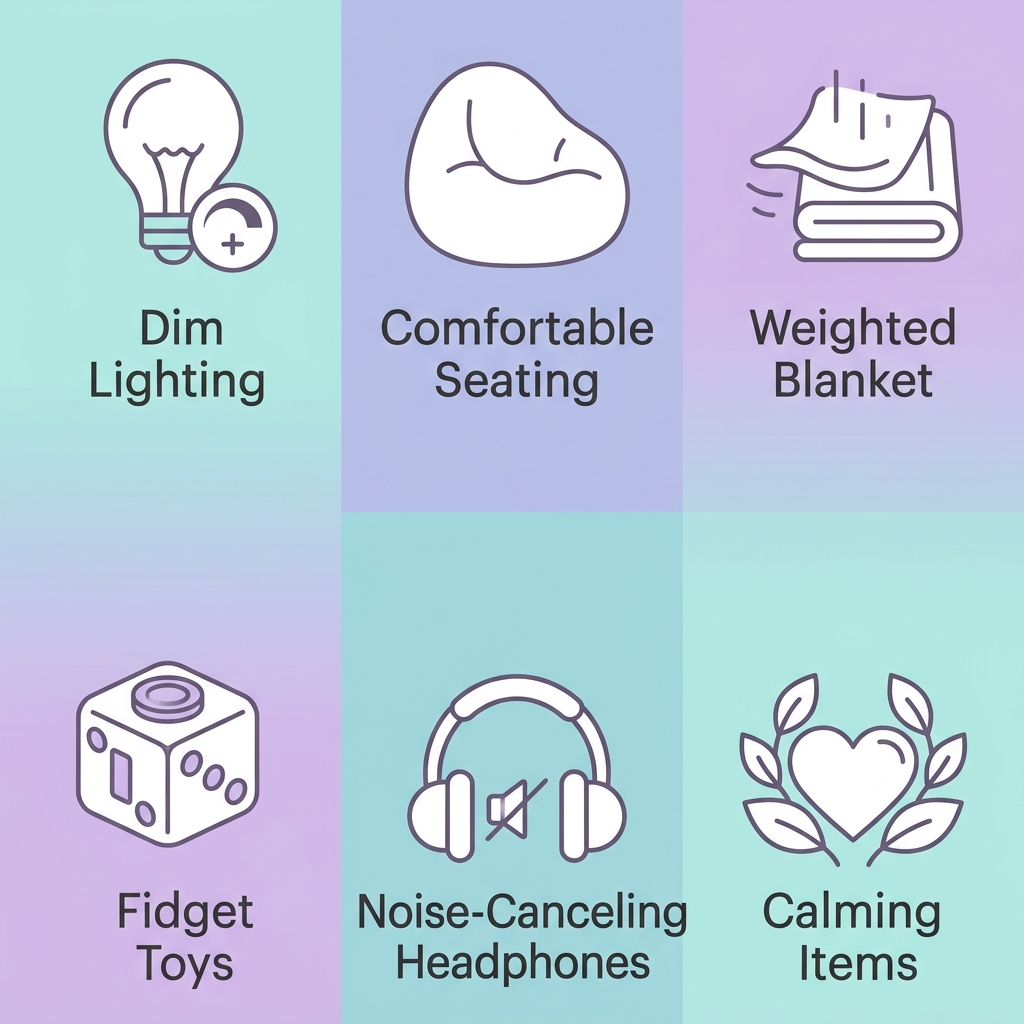
Importantly, this space should feel positive and never be used as a timeout. When our child helps choose the items, they build a sense of ownership and comfort. The power of small steps like these creates a foundation of calm that grows with our child.
Step 3: Understand the Difference Between Stimming and Self-Soothing
Stimming involves repetitive activities such as certain movements, sounds, or actions for the purpose of regulating sensory input and managing feelings internally. According to many autism-related educational sources, stims are considered normal behavior, used to help reduce anxiety, improve focus, and make sense of what we’re experiencing through our senses in that moment. They are not a flaw to be eliminated.
Suppressing these behaviors can be emotionally draining, as the person expends energy overriding a necessary regulatory impulse. We encourage families to intervene only when a specific stim poses physical harm, and then to seek safe alternatives that provide similar sensory input.
For example, if a child has had an upsetting experience they might engage in stimming as part of their internal reaction to the situation whereas self-soothing would involve using tactics such as deep breathing or holding on to a security blanket as a way to assist themselves back into feeling safe again after something that has happened makes them anxious.
Seeing these differences can enable parents to follow children’s innate capacity for self-regulation in choosing appropriate sensory tools that don’t feel as controlling.
Step 4: Choose the Most Effective Sensory Tools for Your Child
Choosing sensory tools for a child on the autism spectrum means focusing on safe alternatives, not eliminating natural self-soothing behaviors. Stimming serves critical regulatory functions—it calms anxiety, aids concentration, and provides necessary sensory feedback. Attempting to suppress all stimming can leave a child emotionally exhausted and less able to engage, so we recommend introducing tools only when a specific behavior is physically harmful. For example, a child who repeatedly bangs their head might benefit from a firm pressure tool that delivers the same deep sensory input in a safer way. This approach preserves the child’s autonomy and respects stimming as a valid form of communication and regulation. Our ABA at home team works with families to observe what sensory input a child seeks and find safe tools that meet that same need without shutting down their natural coping mechanisms.
Step 5: Collaborate with ABA Therapy to Develop Personalized Soothing Strategies
Working with a BCBA will help parents to see their children’s self-soothing behaviors and distinguish between which ones actually help with regulation. Parents learn what stimming looks like in their own child (repetitive movements, sounds, or actions they make that give them a certain type of feeling), and we separate harmful forms of stimming that have the potential to hurt a child versus more benign stims that won’t. It is covered in more detail here: Understanding Autism Stimming. Stimming serves as a way to manage our anxieties and level of focus, if you take away a child’s stimming, it becomes emotionally taxing to suppress and is ultimately counter-productive.
Our BCBA will work with you to design a personalized calming plan that uses these self-stimulatory activities as part of the everyday routine that calms our child down. The plan will involve using any sensory things that work for your child. We’ll adjust what works to better fit our schedules and avoid offering alternative stims if they are not physically harmful. Once you have the plan designed then you should feel confident about how to implement it, especially as a way to use these behaviors as part of bed-time routines so our child can sleep at night.
Step 6: Apply Self-Soothing Techniques to Improve Bedtime and Sleep
After working with your BCBA and creating a plan that included many soothing strategies, you can take some of them and implement them at bedtime/sleep. Self-soothing behaviors such as rocking and humming can be a part of bedtime. This was explained in a review of stimming, but what is stimming. It’s when you move repetitively or make repetitive noise. It serves an important regulatory function because stimming helps the brain filter out feelings of overstimulation, which allows us to “cool off” emotionally. Putting pressure on children to stop self-stimulating does not save energy; in fact, it drains more!
Instead of that, we would encourage a family to use safe, non-stressful, soothing stims paired with a calm environment, like dim light and blankets. We’d suggest they also pick a stim which is slower and less arousing. For example, instead of spinning around in circles, you might go back and forth slowly over and over again, perhaps rocking on the ground. These calming techniques could then be used as self-soothing at bedtime, and then be woven into other areas throughout the day as well.
Step 7: Weave Soothing Strategies into Everyday Routines
Encourage a child to develop self-soothing coping skills in daily activities, as this helps them regulate across everything they do. Many autistic children use stims, such as flapping their hands, to help process anxiety and sensory information. Forced suppression of these harmless behaviors often leads to emotional exhaustion and makes it harder for them to engage with their environment. If a particular stim is physically dangerous, we encourage families to work with a therapist to identify safe, alternative ways to meet that same sensory need, like squeezing play-doh or wearing compression gloves. Let children use fidgets during homework assignments, at dinner time, and when riding in cars. Fidgeting may also be helpful while waiting for the school bus. Teaching children how to self-regulate can be incorporated naturally throughout their day, whether that means while waiting, or during other times where screens are being used. In doing this, self-regulation doesn’t feel forced, but instead more natural for the child. Once children see stimming less as something that needs to be corrected, and more as a tool to assist them, they begin to develop greater confidence in their own abilities to regulate themselves. Even if families accept stimming behaviors in general, sometimes those soothing techniques become too overwhelming and cause some type of disruption, or even self-harm.
Troubleshooting Common Self-Soothing Challenges
When children use repetitive movements or sounds to self-soothe, parents and therapists may wonder where support ends and interference begins. Challenges often arise when it is not immediately clear whether a behavior is a helpful regulatory tool or one that poses a risk. Approaching these moments with patience and informed observation helps guide the next right step. Noting context and timing reveals useful patterns for intervention.
According to professional guidance on autism stimming, many self-soothing behaviors are natural stims that should not be suppressed unless they are physically harmful. Stimming helps with managing anxiety, processing sensory input, and maintaining concentration. Forcing a child to stop can be emotionally draining and may reduce their ability to engage meaningfully with the people and activities around them. This struggle to suppress a natural impulse often backfires, leaving the child more dysregulated than before.
- We recommend observing when and why the behavior occurs before deciding to intervene. Unnecessary disruption can interfere with natural self-regulation.
- We honor stimming as a valid form of communication and emotional management, not as something to extinguish for social comfort.
- We introduce safe alternative stims only when the original behavior causes physical harm, as professionals recommend.
Carefully addressing their issues teaches kids how to act more independently and maturely later on in life.
Frequently Asked Questions
What are some common self-soothing techniques used by children with autism?
Common self-soothing techniques include repetitive movements like pacing, hand flapping, spinning, rocking, and humming. These behaviors, known as stimming, help autistic children regulate sensory input and manage emotions naturally. They are essential coping mechanisms, not flaws to eliminate.
How can parents create a sensory-friendly calm-down space at home?
Parents can create a sensory-friendly calm-down space by using soft dimmable lighting, comfortable seating (e.g., bean bag or cushioned mat), and calming tools like a weighted blanket, fidget toys, or noise-canceling headphones. The space should feel positive, never be used as timeout, and involve the child in choosing items for ownership.
Is there a difference between stimming and self-soothing in autism?
Yes, stimming is an automatic repetitive behavior used to regulate sensory input and internal emotions, while self-soothing refers to conscious strategies like deep breathing or holding a security blanket to regain calm after a specific upset. Stimming is an ongoing regulatory process, whereas self-soothing is often a deliberate response to distress.
What sensory tools are most effective for helping an autistic child self-regulate?
Effective sensory tools match the child’s sensory needs: a firm pressure tool for deep input, weighted blankets, fidget toys, noise-canceling headphones, squeezing play-doh, or compression gloves. They should only be introduced as safe alternatives when a specific stim is physically harmful, preserving the child’s natural self-regulation.
How can ABA therapy help children develop personalized self-soothing strategies?
ABA therapy, guided by a BCBA, helps by identifying which stims aid regulation and which are harmful, then designing a personalized calming plan that integrates natural stims into daily routines. The plan uses preferred sensory items, respects harmless stims, and fits the family’s schedule without eliminating essential self-soothing behaviors.
Building a Future of Self-Regulation and Independence
Autism self-regulation skills allow children to live a more autonomous way of life. At Golden Touch ABA Therapy, we have designed home programs that focus on independence through personalized, evidence-based strategies. Each kid has unique potential, which leads us to believe they can make meaningful progress, though results naturally vary based on individual circumstances and consistent participation. The information provided here is for educational purposes and does not replace professional medical advice; always consult a healthcare or behavioral health professional for specific concerns. Insurance coverage for ABA therapy varies, and benefits depend on individual plan details and client factors. If you reach out by phone or text, you agree to receive SMS messages; message and data rates may apply, and our Privacy Policy outlines how we handle your information. We offer support for your family journey towards lasting independence and growth.
Get Expert ABA Guidance Today
Now that you understand the natural self-soothing techniques outlined in this guide, the next step is turning that knowledge into a tailored plan that fits your child’s unique needs. The strategies you’ve explored—from recognizing stimming patterns to weaving calming routines into everyday activities—form a powerful foundation. With support from an experienced ABA team, you can refine these approaches and address any challenges that arise. Our Board Certified Behavior Analysts collaborate with families to develop personalized, evidence-based strategies that respect your child’s natural regulation. We provide in-home therapy that integrates seamlessly into your daily life, making it easier to practice skills consistently. Building self-regulation and independence is a journey made stronger with the right guidance. Reach out today to start creating a personalized soothing plan that empowers your child for the future.
