
How to Stop Autism Elopement: Complete Guide for Parents
Table of Contents
Keeping Your Child Safe from Autism Elopement
Are you trying to figure out how to stop autism elopement. You’re not alone in that because many parents can relate to this worry. We know how scary and frustrating it is when your child runs off, and we want to help.
Autism elopement is a situation where a child leaves a safe environment or sneaks out from his caregiver, and it’s very common in kids with autism spectrum disorder. According to the CDC, about half of children with ASD are at risk of wandering. The greatest danger is drowning and traffic-related injuries, making prevention so crucial.
We know you want strategies that will help keep your child safe. This article will walk you through some proven ways to reduce risk and be safer in the home as well as out in the community. Before we get into what to do, it’s helpful to learn about why kids wander.
Key Takeaways
- Wandering, also known as elopement, happens when a child leaves a safe area or moves away from a caregiver without warning.
- Since children with autism might wander due to curiosity or to avoid stress, we can start by making the home safer without stifling their natural need to move around.
- If you’re trying to figure out how to stop autism elopement at school, an FBA will help you discover why the behavior is happening.
- A Behavior Intervention Plan (BIP) turns the "why" behind a child’s behavior into concrete, real-life actions.
- After Step 3 determines why a child is leaving, we then work with parents to teach children how to replace the act of eloping with a safer way to ask for what they want.
Before You Begin: Understanding Why Children Wander
Wandering, also known as elopement, happens when a child leaves a safe area or moves away from a caregiver without warning. For kids on the autism spectrum, wandering can be driven by curiosity, a desire to go somewhere or do something they like, or the need to get away from a difficult moment or overwhelming sensations.
Half of children and youth with autism spectrum disorder reportedly wander at some point in their lives, and approximately one quarter of these events escalate to serious levels that pose a risk of drowning or other traffic-related injuries. The greatest concern occurs during transitions, changing routines, or the summertime when outside activities increase. Children with autism may not recognize risks on their own, so proactively planning is more important than waiting for them to respond to danger.
Looking at every wandering incident like a time-critical emergency can help first responders prioritize searching near bodies of water and busy roadways. We’ll use this knowledge to create a safer world before we get to actions you can take in your own home.
Step 1: Secure Your Home Environment
Since children with autism might wander due to curiosity or to avoid stress, we can start by making the home safer without stifling their natural need to move around. Secure locks on the exterior doors and windows are advised, along with door alarms, and barriers on staircases or pools to prevent them from accessing dangerous areas. This reduces dangers such as drowning or traffic accidents, yet still allows children to move around safely in other areas.
We’re balanced on the scale between safety and freedom by selecting locks and alarms that are easy for adults to manage but not so simple for kids to get into. That way our clients can have a house where their child can be curious while staying safe, and then the next thing they know, we send in a professional to figure out what specific needs their child has.
Step 2: Request a Functional Behavior Assessment
If you’re trying to figure out how to stop autism elopement at school, an FBA will help you discover why the behavior is happening. While securing the home is important, elopement can also happen in school, so we recommend doing the next part with your school team.
An FBA pinpoints why a student may be wandering or leaving, such as for escape, attention, sensory, or tangible reasons. Ask your child’s teacher, counselor, or special education staff to begin this process and encourage family participation, which can help strengthen the process and make sure that the results are aligned with what your child needs. Keeping a basic log of the times and places when your child wandered or left can help the team recognize any patterns and also provide solid information to share during the evaluation process.
After the FBA is completed, its results lead straight into the next step of developing a Behavior Intervention Plan for your child.
Step 3: Build a Behavior Intervention Plan
A Behavior Intervention Plan (BIP) turns the "why" behind a child’s behavior into concrete, real-life actions. When we do a Functional Behavioral Assessment (FBA) to determine what drives the child, whether it’s curiosity, getting somewhere they like, or avoiding something stressful, we create the BIP around that function.
We take our clients on a journey to create a BIP that is tailored to their child, whether it’s brief strategies for small issues, or a more extensive plan for high risk behavior. Every plan starts with family, as our goal is for parents to be the leaders who partner with us to come up with support strategies that work within your child’s day-to-day life and culture.
An effective plan is key to how to stop autism elopement. This adds on top of general safety measures at home like security systems, identifying your child, planning for emergencies and teaching your child to respond to a “stop” command so that caregivers know how to react no matter where they are.
Every plan goes hand-in-hand with teaching new replacement skills to prepare for the next step in your child’s journey.
Step 4: Teach Functional Communication Skills
After Step 3 determines why a child is leaving, we then work with parents to teach children how to replace the act of eloping with a safer way to ask for what they want. We start with the easiest form of communication that a child has – speaking, PECS, device, gesture – so there is quick success and it builds their confidence.
- Requesting a break: Teach a clear signal so your child can pause activities without bolting.
- Requesting help: Pair a specific word or gesture with immediate support to reduce frustration-driven elopement.
- Requesting attention: Use a consistent phrase or device to safely signal when they need connection.
- Access to preferred items: Teach a simple exchange or word to ask for toys, snacks, or activities before they leave the room.
Reinforce these newly learned skills immediately – before the child has a chance to run – so that the new skill takes precedence over the elopement. Adjust the amount of instruction you provide for your child’s individual needs: some may only need to be taught briefly, others would benefit from a more thorough plan put in place with the family.
Step 5: Practice Safety Skills Daily
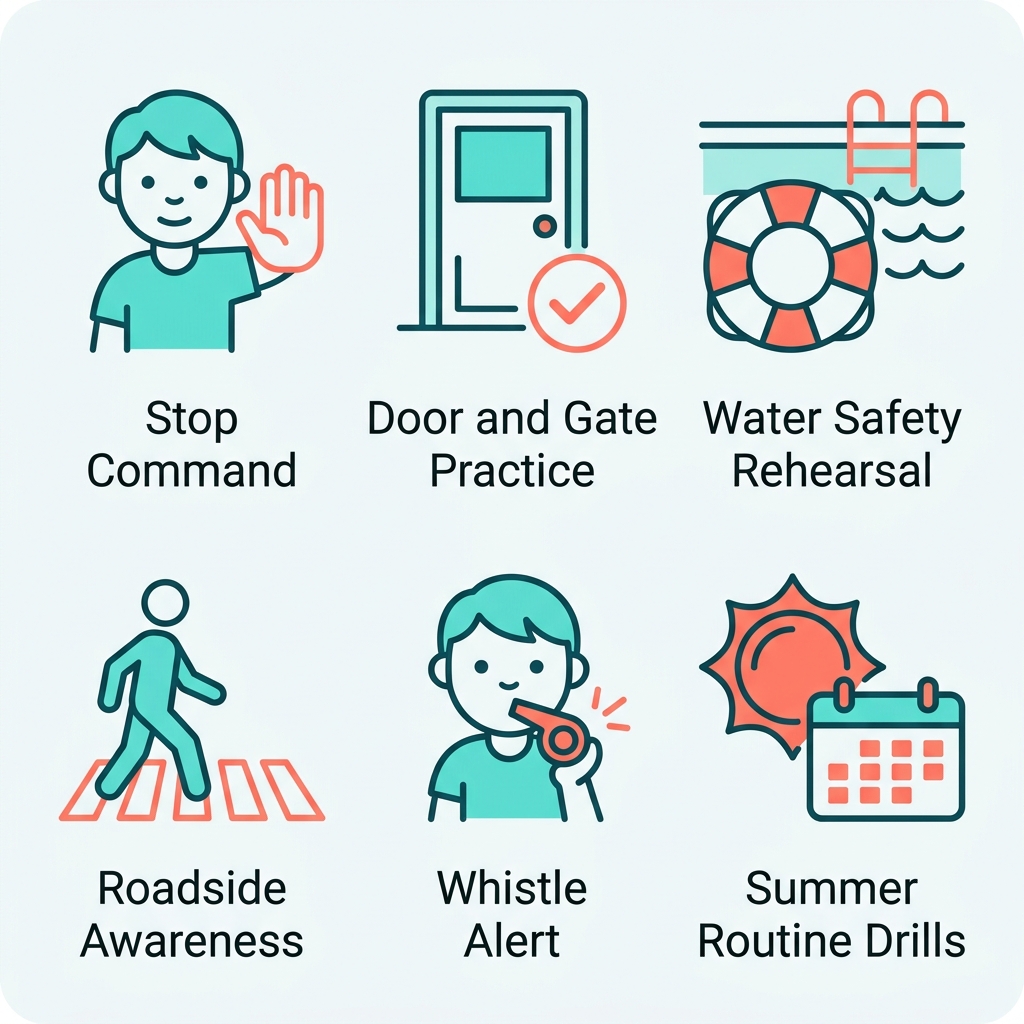
Now that your child can communicate his or her needs, the next level is turning those words into automatic reactions when they’re not safe. If you’re wondering how to stop autism elopement, daily safety drills can be a great place to start.
Short, consistent practices are key, as they fit into your busy schedule: practice "Stop!" when you leave the house, practice what to do if a door or gate is open, and practice safe behavior around water hazards in your back yard or neighborhood. These brief practices add up to a child who knows how to react fast when it counts.
Safety drills are particularly important during transitions, changes in routines, or during the summer when our schedule changes.
Step 6: Partner with Your Child’s School
Having consistency between home and school will help keep your child safe from eloping. Start out by talking to teachers and administrators about your child’s elopement triggers and safety plan so everyone reacts the same way.
Ask your child’s school to conduct a functional behavior assessment (FBA) to discover why elopement occurs. Based on the results, they can create a behavior intervention plan (BIP) that may be brief or more extensive, based on your child’s needs. According to the Center on PBIS, these supports are effective for all students with social, emotional, or behavioral needs, no matter if they have a disability or not.
Work together to decide what responses should be the same regardless of settings, and go over plans together during review meetings. This makes sure that if what works at home works, we can use those responses when staff respond in the school. It strengthens our safety efforts and reduces risk of elopement.
Step 7: Track Progress and Adjust Your Plan
Once we have home and school strategies in place, we then want to take a look at how they work in the real world. Keeping a simple log for each time there is a wandering is beneficial. When did it happen, where did it start, and what may have triggered it? At your monthly parent training with your ABA team you can review this log and determine whether the plan needs to be made stronger, simpler or taught again.
Having a good review rhythm will help keep you objective about things. Compare recent logs to your baseline once every four weeks, to look for patterns. If attempts are rising up or moving to different triggers, then you need to change supports with both your ABA team and your child’s school. Small tweaks can make a big difference. There is no set pace, progress is not linear, and sometimes we’ll have setbacks.
No matter how good your plan is, there will be some roadblocks to overcome. When you can’t move forward, go back to your logs, consult your team, adjust your strategies and keep trying until you figure out something that does work.
Troubleshooting Common Elopement Setbacks
When families are learning how to stop autism elopement they often run into roadblocks that may seem discouraging, but they’re usually easy to overcome with little tweaks here and there. No matter how carefully you build your plan, something unexpected can happen where the child finds a new way out. This could be during transitions or when routines change.
Increase supervision during high-risk times like transitioning from one activity to another or when the schedule unexpectedly changes. These are the times when autistic children are most likely to elope, so plan for extra support. Summer months also require heightened awareness, as routines shift and caregivers may be distracted.
Think of every wandering incident as an emergency. Search for water hazards such as pools and ponds before you head toward heavily trafficked roads. Responders act quickly to check these areas because that’s where the highest immediate danger lies. Using the Missing and Endangered Persons (MEP) alert in the IPAWS would also help to get everyone on the same page and respond faster. Treat every wandering incident as an emergency
Add tools that fill gaps in your plan. For example, GPS tracking devices and survival swim lessons can provide critical layers of safety when verbal instructions just don’t cut it. These tools can help families monitor a child’s location and reduce drowning risks. Choose your tools based on their abilities instead of age or size alone.
There are going to be setbacks and working on just one part of the plan at a time allows progress to continue without completely overwhelming the family.
Frequently Asked Questions
What environmental safety modifications are most effective for stopping child elopement at home?
Secure exterior doors and windows with childproof locks and install door alarms to prevent unsupervised exits. Use barriers on staircases and pools to block access to dangerous areas. These modifications reduce drowning and traffic risks while allowing safe movement within the home.
How can parents and school staff collaborate to manage elopement risks across different settings?
Parents and school staff should share observations about elopement triggers and responses to create consistent safety plans. Schools can conduct a Functional Behavior Assessment and develop a Behavior Intervention Plan tailored to the child’s needs, ensuring strategies align between home and school.
Why is a functional behavior assessment (FBA) necessary for addressing elopement behaviors?
An FBA identifies the reasons behind elopement, such as escape, attention, sensory needs, or access to preferred items. This understanding is essential for creating an effective Behavior Intervention Plan that addresses the root cause of the behavior.
How does Functional Communication Training (FCT) help prevent elopement in children with autism?
FCT teaches children to replace elopement with appropriate communication, such as requesting breaks, help, attention, or preferred items. This reduces frustration-driven wandering by giving children a safer way to express their needs.
What is the first step in creating a behavior intervention plan for autism elopement?
The first step is conducting a Functional Behavior Assessment to determine why the child elopes. This assessment provides the foundation for designing a Behavior Intervention Plan that addresses the specific triggers and functions of the behavior.
Small Steps Toward Lasting Safety
Parents who are asking how to stop autism elopement will likely find that little actions make all the difference. Wandering is prevalent among children with autism and the biggest dangers, drowning and traffic accidents, make preparing for these scenarios non-negotiable.
Knowing the ‘why’ for each behavior helps families develop habits to keep kids safe, without feeling like they’re constantly over their head. In addition to staying very close, wandering can occur quickly even when there’s supervision, so having emergency plans in place and knowing basic safety skills like how to respond to "stop" are crucial lifelines.
At Golden Touch ABA Therapy, we recognize that families are the foundation of an effective behavior plan. We specialize in providing root-cause, function-based support that grows in sync with your child’s needs as well as your family goals. Many Utah families find that making consistent and small progress will lead to greater safety for them down the road.
If you’re ready to move forward, we can help. Call us at (801) 630-5443 or email info@goldentouchaba.com to schedule a consultation. Results may vary based on individual circumstances. This information is for educational purposes only and is not a substitute for professional medical advice; consult a healthcare or behavioral health provider.
Get Support from ABA Experts
You now have seven practical steps for preventing your child from wandering, from securing your home to teaching functional communication skills and practicing safety drills daily. Many families find that small, consistent steps matter most, and progress often comes from steady habits rather than one big fix. If you’d like professional guidance along the way, Golden Touch ABA Therapy provides in-home ABA therapy across Utah, including Salt Lake, Utah, Weber, and Davis counties. Their team of Board Certified Behavior Analysts and Registered Behavior Technicians works directly with families to build function-based plans tailored to your child’s needs. Because sessions happen in your child’s natural home environment, skills like stop-command training and replacement communication can be practiced in real settings. You don’t have to manage elopement risk alone. Call (801) 630-5443 or email info@goldentouchaba.com to schedule a consultation and take the next step toward lasting safety.
