
Therapist Layton Utah: Your Complete Guide to Finding Help
Table of Contents
- Finding a Qualified Therapist in Layton, Utah
- Therapy Options in Layton, Utah
- Behavioral Therapy Services Available in Layton
- Selecting a Qualified Therapist in Layton, Utah
- Taking the First Step Toward Therapy in Layton
- Building a Supportive Therapy Journey in Layton
Finding a Qualified Therapist in Layton, Utah
Finding a qualified therapist in Layton, Utah starts with verifying professional credentials. While you may consider an anxiety therapist in Layton, Utah or neurofeedback therapist in Layton, Utah, for ABA services the critical credential is BCBA certification—check the BACB registry at bacb.com.
When evaluating providers, ask about experience with communication, social skills, and age-specific needs. Our comprehensive ABA therapy services include in-home sessions that support skill generalization. We prioritize parent training and flexible scheduling, with BCBA oversight and RBT implementation, so small steps yield big results.
We invite you to a free initial consultation to see if our warm, welcoming environment is the right fit for your family. This information is for educational purposes and is not a substitute for professional medical advice; consult a healthcare or behavioral health professional.
Therapy Options in Layton, Utah
When looking for a therapist in Layton, Utah, families have two main ABA therapy settings to consider: in-home and center-based. At Golden Touch ABA Therapy, we specialize in in-home ABA delivered in Layton and the neighboring Weber and Davis county areas, creating treatment plans in the child’s own home. While some families may also explore a neurofeedback therapist in Layton, Utah or an anxiety therapist in Layton, Utah for other mental health needs, ABA is the evidence-based approach for autism spectrum disorder. The following comparison highlights the key differences.
| Feature | In-Home ABA Therapy | Center-Based Therapy |
|---|---|---|
| Environment | Child’s natural home setting; promotes skill generalization in real-life contexts | Clinical or classroom setting; structured environment with fewer real-world distractions |
| Scheduling | Flexible in-home visits Monday–Friday, 8 AM–5 PM; accommodates family routines | Fixed center hours; may require travel and strict appointment slots |
| Family Involvement | Direct parent coaching and collaboration during sessions; caregivers observe and participate | Limited observation opportunities; family involvement often occurs through scheduled meetings |
| Cost Considerations | Insurance verification and prior authorization support available; costs vary by plan | Often lower hourly rates but may include additional facility fees or transportation costs |
| Progress Monitoring | Data-driven behavior plans with weekly progress reports; adjustments made responsively | Periodic progress reviews; less frequent direct observation of natural behaviors |
Understanding these differences can help families in Layton decide which setting fits their needs. The Utah Division of Services for People with Disabilities (DSPD) provides state disability resources, and the CDC offers national autism data.
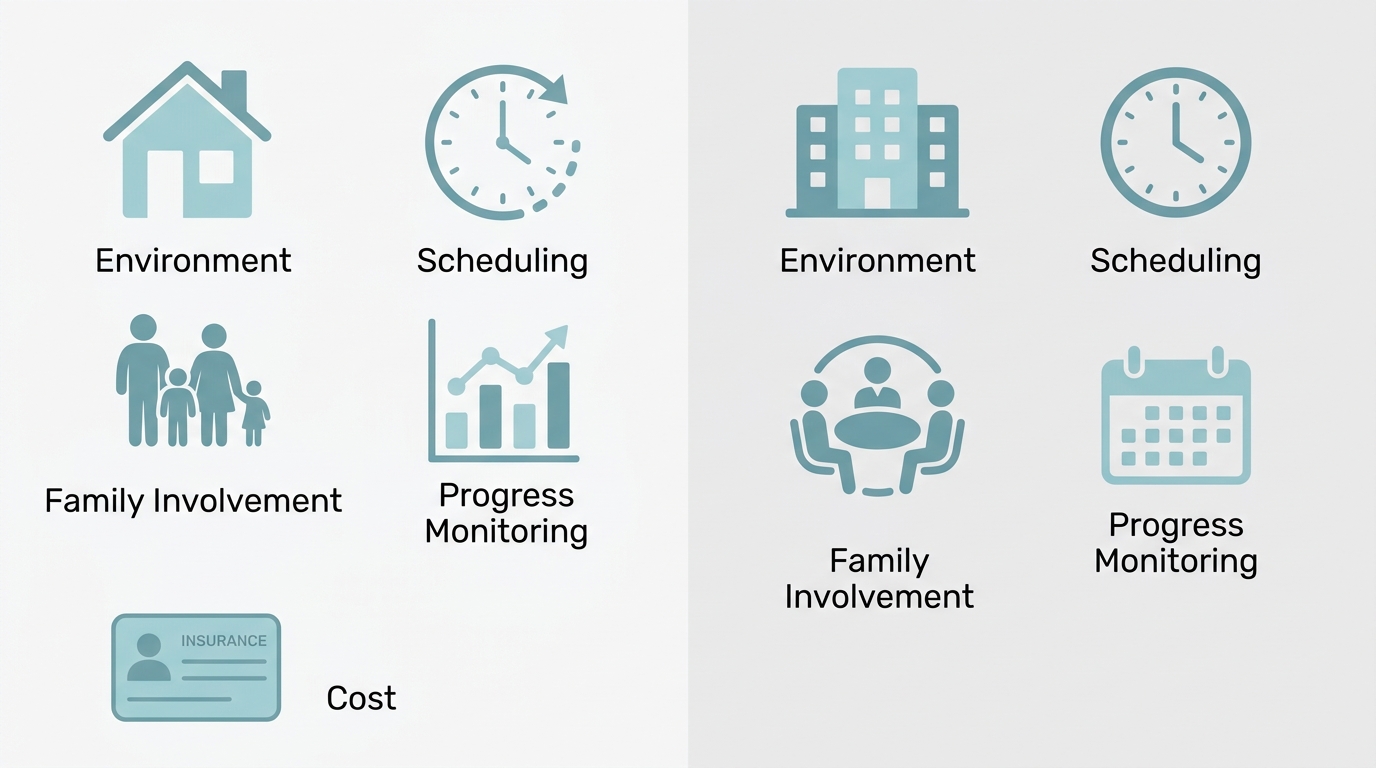
In-home versus center-based ABA therapy comparison
For choosing mental health therapist guidelines, families can consult the CDC’s recommendations. Please note that results may vary based on individual circumstances, and this information is for educational purposes and is not a substitute for professional medical advice.
Behavioral Therapy Services Available in Layton
For families searching for a therapist in Layton Utah, Golden Touch ABA Therapy offers a full range of behavioral therapy services tailored to children and young adults with autism. We bring compassionate, evidence-based care directly into your home, creating a familiar setting where learning flourishes.
Our in-home ABA therapy services encompass:
- In-Home ABA Therapy – the core of our program, using positive reinforcement to teach critical skills.
- Communication Skills – enabling children to express needs, follow instructions, and engage in conversation.
- Social Skills – practicing turn-taking, sharing, and building friendships.
- Daily Living & Independence – developing self-care, routines, and household participation.
- Problem Behavior Reduction – our anxiety therapist in Layton Utah helps replace challenging behaviors, such as anxiety-driven outbursts, with functional communication and coping strategies.
- Parent Training – empowering caregivers with hands-on coaching and consistent strategies.
- BCBA Assessments – designing and monitoring individualized treatment plans.
- RBT-Delivered Sessions – consistent, engaging one-on-one support under BCBA supervision.
Our Layton-based therapy team collaborates with your family to tailor every session to your child’s unique strengths and daily routines. All our services follow the clinical guidelines of the American Academy of Pediatrics, providing counseling services in Layton, Utah, for pediatric mental health backed by rigorous research. We deliver these strategies in your own home, using a ‘Small Steps That Yield Big Results’ approach that celebrates every milestone. With consistent effort, many children make steady progress, though results vary based on individual circumstances.
Each service is supervised by a Board Certified Behavior Analyst (BCBA) – learn more about our team below.
Selecting a Qualified Therapist in Layton, Utah
Once you decide on ABA therapy, the next step is selecting a qualified therapist in Layton, Utah. The right professional can make a meaningful difference in your child’s journey.
Look for therapists who hold Board Certified Behavior Analyst (BCBA) certification or are supervised by one. Registered Behavior Technicians (RBTs) should receive training and oversight from a BCBA, and experience with in-home therapy and family collaboration is key. For example, Golden Touch ABA Therapy’s team includes BCBAs and RBTs who work closely with families in the home to help children build skills. This collaborative approach ensures that progress continues during daily routines. We recommend visiting their website to see how a qualified therapist operates.
While you may come across a neurofeedback therapist in Layton, Utah or an anxiety therapist in Layton, Utah, ABA therapy requires specific behavioral credentials. For broader support, explore disability services in Utah to connect with additional resources.
After choosing a therapist, you can expect an initial assessment and personalized plan designed around your child’s unique needs. Please remember that results vary based on individual circumstances, and this information is not a substitute for professional medical advice.
Taking the First Step Toward Therapy in Layton
If you’re ready to help your child build new skills, finding the right therapist in Layton is an important step. We proudly serve families across Layton, UT, making it simple to get started with individualized, in-home ABA therapy.
Begin by calling our office or filling out a contact form to connect with our friendly intake team. A Board Certified Behavior Analyst (BCBA) will then schedule a personalized assessment right in your home, where your child feels most comfortable. Our ABA therapy programs are tailored to your child’s strengths and goals, using their natural environment to promote learning and skill generalization.
Throughout the process, your ABA therapist in Layton will collaborate closely with your family, providing parent training and regular progress updates so skills carry over beyond sessions. Early intervention can make a lasting difference, as the Centers for Disease Control and Prevention (CDC) underscores the importance of timely support.
Reach out to our team today to begin. This information is for educational purposes and is not a substitute for professional medical advice. Results may vary based on individual circumstances. Consult with a qualified behavioral health professional.
Building a Supportive Therapy Journey in Layton
In Layton, Utah, finding the right therapist for your child is the first step toward a supportive therapy journey. Whether families are searching for an anxiety therapist in Layton or a neurofeedback therapist in Layton, building a supportive ABA therapy journey starts with Golden Touch ABA Therapy. We provide In Home ABA Therapy in a Warm and Welcoming Environment, embracing the philosophy that Small Steps That Yield Big Results. Our therapists work closely with families to integrate strategies into everyday routines, making progress feel natural and sustainable. Through personalized plans and consistent collaboration, we help children develop communication, social, and daily living skills right where they feel most comfortable.
Resources
Table of Contents
- Understanding ADHD Treatment in Utah
- Comparing ADHD Treatment Approaches Across Utah
- Accessing ADHD Therapy Services in Utah
- Key Local Factors for ADHD Care in Utah
- First Steps Toward ADHD Treatment in Utah
- Moving Forward with ADHD Support in Utah
Understanding ADHD Treatment in Utah
When exploring ADHD treatment in Utah, families often encounter two distinct approaches: behavioral therapy and neurofeedback. Both aim to improve focus and self-regulation, but they work in fundamentally different ways. The following comparison highlights the key differences based on current evidence.
Comparing ADHD Treatment Approaches Across Utah
Here is a side-by-side overview of these approaches:
| Feature | Behavioral Therapy | Neurofeedback Therapy |
|---|---|---|
| Core Approach | Teaches coping skills and behavior modification through structured reinforcement | Trains brainwave patterns to improve self-regulation and focus |
| Evidence Base | Strong evidence for ADHD (CDC, AAP recommend as first-line for children) | Growing evidence; some studies show moderate improvements in attention and impulsivity |
| Typical Session Length | 45–60 minutes, often weekly | 30–60 minutes, 2–3 times per week |
| Age Range | Effective for children as young as 3, adolescents, and adults | Typically recommended for children ages 5 and older |
| Typical Duration of Treatment | Variable; often 3–6 months for measurable gains, can be longer | Often 20–40 sessions (several months) |
| Cost Considerations | Often covered by insurance; out-of-pocket costs vary | Insurance coverage varies; can be expensive without coverage |
Behavioral therapy for ADHD in Utah has a strong evidence base, and many local providers offer parent-training components that reinforce skills at home. Neurofeedback therapy in Utah is an option for families interested in a technology-driven approach, though we recommend discussing its appropriateness with a healthcare provider. Regardless of the path, consistency and professional guidance are key.
The Centers for Disease Control and Prevention (CDC) and the American Academy of Pediatrics (AAP) recommend behavioral therapy as a first-line treatment for children with ADHD. For more details, visit our CDC ADHD resources. Neurofeedback is an emerging option with growing evidence, though it is not yet endorsed as a first-line approach by these organizations. We encourage Utah families to consider each treatment’s evidence, session requirements, and age suitability, and to discuss options with a behavioral health professional. This information is for educational purposes and is not a substitute for professional medical advice; consult a healthcare or behavioral health professional. Understanding these differences is a great starting point. For families looking to integrate effective behavioral strategies at home, our team at Golden Touch ABA Therapy can help you explore complementary support.
Accessing ADHD Therapy Services in Utah
Once you understand the options, accessing therapy is straightforward. If you are seeking effective adhd treatment utah, our in-home ABA therapy offers a personalized path forward. You can reach us by phone at (801) 630-5443, complete our online contact form, or send a text. A BCBA will contact your family within 1–2 business days to schedule a free consultation. During that conversation, we’ll gather information about your child’s strengths and challenges so we can tailor a plan to their unique needs.
Our assessment process is simple and transparent. While we specialize in ABA, we can coordinate with other approaches like neurofeedback therapy utah if needed, and our core offering is behavioral therapy adhd utah that focuses on building skills at home. Here’s what to expect:
- Call or fill out our online form
- We verify your insurance benefits confidentially
- A BCBA designs a personalized plan
Our approach follows guidelines such as those from the ADHD behavior therapy AAP to ensure quality care. Therapy is provided in your child’s home across multiple counties including Salt Lake, Utah, Weber, and Davis, making it convenient and comfortable.
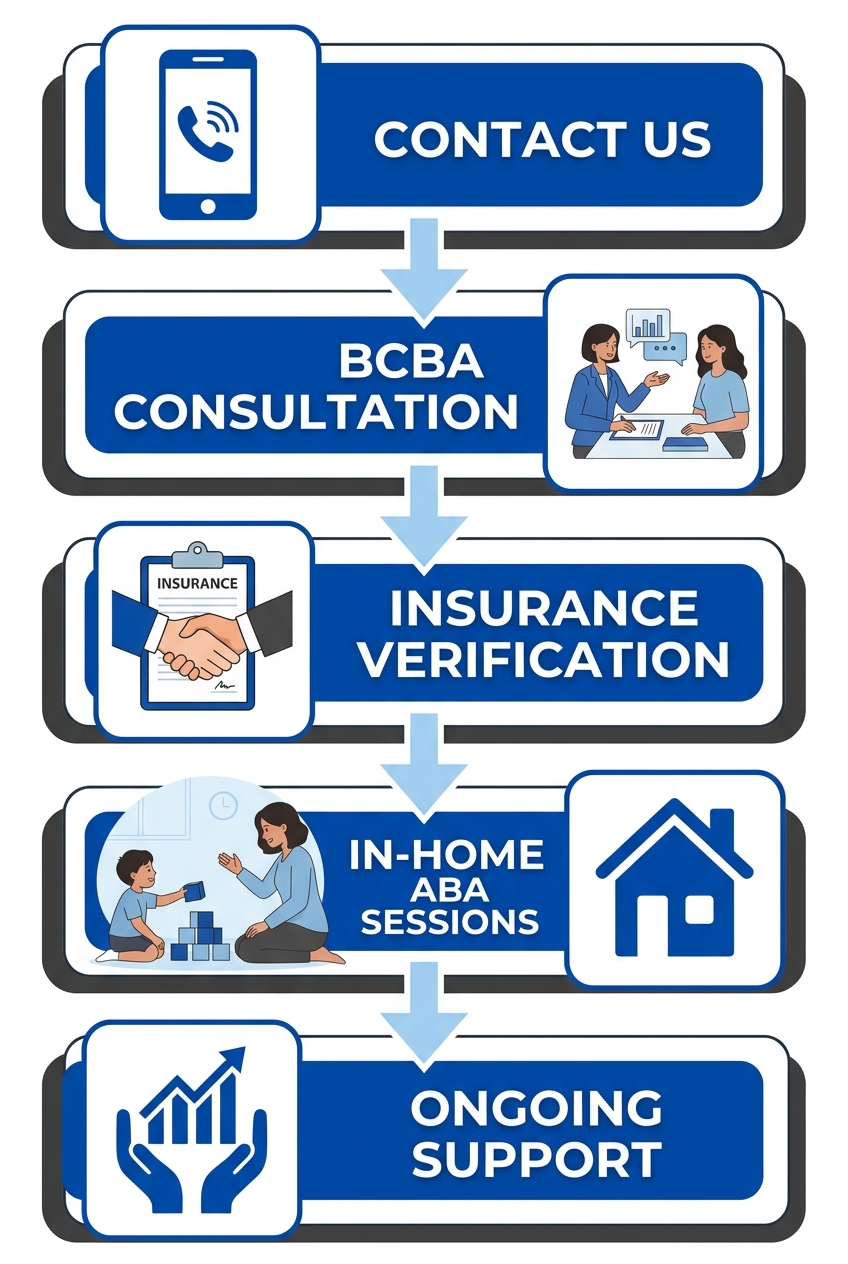
Process to start ABA therapy for ADHD in Utah
After your child starts therapy, here’s what you can expect from our family collaboration. Getting started is as simple as reaching out—our caring team is ready to support your family’s next steps. Results may vary based on individual circumstances. This information is for educational purposes and is not a substitute for professional medical advice; consult a healthcare or behavioral health professional.
Key Local Factors for ADHD Care in Utah
When seeking effective ADHD treatment in Utah, several local factors shape the quality and accessibility of care. We understand that families need practical, community-based solutions that fit their daily lives, and recognizing these factors can make it easier to find the right support.
One important local factor is the availability of specific behavioral therapy approaches. Many Utah families explore options like neurofeedback therapy in Utah, which may assist with attention regulation, alongside more widely available behavioral therapy for ADHD in Utah, such as Applied Behavior Analysis techniques. Through our experience, we have seen how these therapies can offer structured, skill-building support in familiar home settings.
Location plays a crucial role in consistent care. Accessibility within communities such as Salt Lake City and Provo can directly influence a family’s ability to maintain regular sessions. We make this connection easy, and families in Davis County can connect with a dedicated therapist in Layton, Utah who understands community needs. Receiving support close to home reduces travel stress and helps therapy feel integrated into a child’s natural routine.
Beyond location, family involvement is a key ingredient for success. Parent training and caregiver collaboration may empower everyone at home to reinforce positive behaviors, turning small daily moments into meaningful progress. We believe this partnership helps skills generalize beyond structured sessions.
In-home services can also address common barriers like transportation or scheduling conflicts. Ultimately, looking at these local factors together—therapy types, therapist location, family collaboration, and practical convenience—can guide Utah families toward a supportive path for ADHD care.
First Steps Toward ADHD Treatment in Utah
When you’re ready to explore adhd treatment utah, the first step is a free, no-obligation consultation with Golden Touch ABA. Just call (801) 630-5443 or email us, and our team will schedule a time to talk. During this call, a Board Certified Behavior Analyst (BCBA) will listen to your child’s needs and answer your questions. We also handle insurance verification so you don’t have to worry about paperwork. No referral is needed, and even if you haven’t received a formal ADHD diagnosis, the assessment can help determine whether ABA therapy is a good fit.
Our behavioral therapy for ADHD in Utah begins with that initial conversation. While neurofeedback therapy in Utah is another option, our In Home ABA Therapy focuses on practical skill-building in familiar surroundings. Our compassionate BCBAs create a warm, welcoming environment where your child can thrive. We serve families throughout Salt Lake City, Provo, Ogden, and beyond, bringing support right to your living room. Small steps that yield big results start with a single call. Take the first small step and contact us today.
Moving Forward with ADHD Support in Utah
Seeking effective ADHD treatment in Utah doesn’t have to feel overwhelming. In-home behavioral therapy for ADHD in Utah helps children improve attention, social skills, and daily routines—all within a warm and welcoming environment where families are actively involved. Our approach focuses on small steps that yield big results, with flexible scheduling to fit your life. Contact a therapist in Layton, Utah today to learn how we can support your child’s growth.
Resources
Table of Contents
- Discovering Early Intervention ABA Therapy
- Core Principles of Early Intervention ABA
- Exploring Early Intervention Programs in Depth
- Applying Early ABA Therapy in Daily Life
- Advanced Techniques in Early ABA Therapy
- Common Questions on Early Intervention ABA
- Embracing Early ABA for Brighter Futures
Discovering Early Intervention ABA Therapy
At Golden Touch ABA Therapy, we believe that early action changes lives for children with autism. Early intervention ABA is a proven approach starting before age 3, offering the best chance for neurodevelopmental growth in toddlers facing challenges like delayed speech or social withdrawal. By using positive reinforcement and data-driven techniques, this therapy builds essential skills in communication, social interaction, and independence, reducing problematic behaviors along the way.
Imagine a young child struggling to make eye contact during playtime—ABA therapy for toddlers addresses this through tailored, in-home sessions that feel natural and supportive. Our team of Board Certified Behavior Analysts (BCBAs) designs individualized plans, while Registered Behavior Technicians (RBTs) deliver hands-on care with family-centered involvement. We draw from evidence like early intensive behavioral intervention, which research shows improves IQ, language, and adaptive skills significantly. Studies indicate children starting before age 3 show 47% greater gains in key areas, underscoring the power of prompt behavioral therapy initiation.
In this guide, we explore the fundamentals of early intervention for autism, from initial assessments and insurance assistance to our interactive ABA roadmap tool. We’ll cover implementation strategies, measurable outcomes, and advanced tips for timely ABA support for young children with autism. Remember, results may vary, so consult a licensed professional for personalized advice.
Our in-home ABA therapy creates a warm and welcoming environment, emphasizing evidence-based practices to empower families every step of the way.
Core Principles of Early Intervention ABA
Now that we understand the basics, let’s explore the core principles that make early intervention ABA so effective for young children on the autism spectrum. At Golden Touch ABA Therapy, we prioritize evidence-based techniques to support toddlers right when their brains are most adaptable, leveraging neuroplasticity to build essential skills during this critical window.
Early intervention ABA focuses on addressing core challenges like communication delays and social difficulties through structured yet flexible methods. One key principle is the use of positive reinforcement to encourage desired behaviors, creating a supportive learning environment in the home. We draw from established autism treatment options that emphasize individualized plans tailored to each child’s unique needs.
The principles can be outlined as follows:
- Assessment-Driven Planning: We begin with comprehensive evaluations, such as the VB-MAPP, to pinpoint a toddler’s strengths and areas for growth. This tool helps identify skill gaps in areas like manding or social play, ensuring goals are realistic and targeted.
- Evidence-Based Teaching Strategies: Techniques like discrete trial training break down skills into small, manageable steps, while natural environment teaching embeds learning into daily routines. For ABA therapy for toddlers, this means practicing turn-taking during playtime rather than in isolation.
- Data Collection and Progress Monitoring: Every session involves tracking behaviors and skill acquisition to measure outcomes objectively. This allows us to adjust plans dynamically, celebrating small victories that lead to bigger gains.
- Family Involvement: Parents are active partners, receiving training to reinforce skills at home. This collaboration fosters consistency and empowers families to support their child’s development long-term.
In practice, consider a two-year-old named Alex who struggles with expressing needs. Our initial ABA strategies for autism spectrum toddlers start with simple prompts for autism behavioral support, like using pictures to request toys. Over time, Alex gains confidence, reducing frustration and enhancing independence.
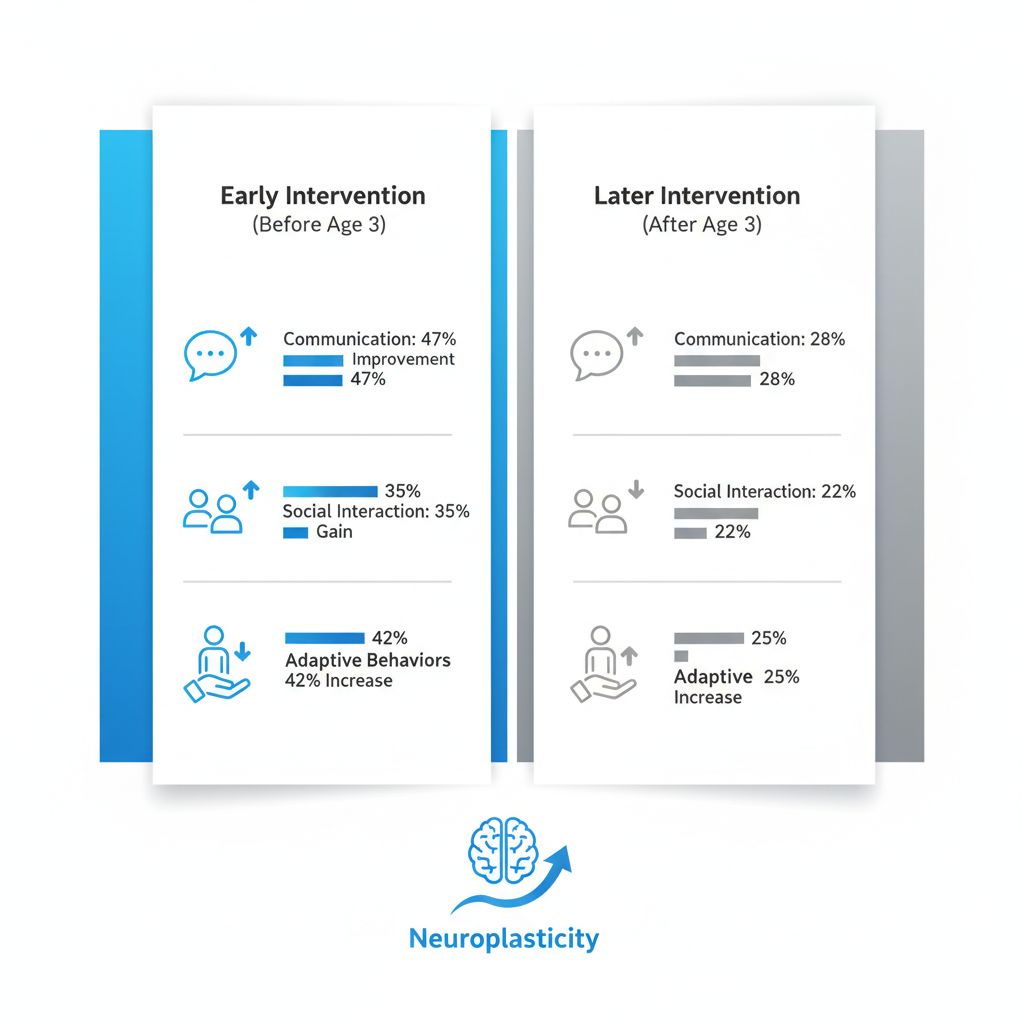
Comparison of early vs. later ABA therapy outcomes for maximum child development gains
Our assessment and planning process at Golden Touch ensures every child receives a customized roadmap. A BCBA leads this phase, conducting observations in the natural home setting to set measurable goals, such as improving eye contact during interactions. We integrate tools like the VB-MAPP to baseline current abilities, then prioritize priorities based on family input. This thorough approach, endorsed by sources like the CDC for its empirical support, sets the stage for meaningful progress without overwhelming young learners.
The clinical team plays a vital role in delivery. Our Board Certified Behavior Analysts (BCBAs) design and oversee plans, while Registered Behavior Technicians (RBTs) implement one-on-one in-home ABA therapy sessions. We emphasize pairing—building rapport through fun activities—to make therapy engaging. Parental training sessions equip caregivers with techniques, ensuring skills generalize beyond therapy time. This team effort, rooted in family-centered care, maximizes outcomes through consistent, evidence-based practices.
The benefits of early intervention for autism are profound, as intensive early ABA yields significant IQ gains and improved adaptive functioning, according to research on early intensive programs. Children experience enhanced communication, better social engagement, and greater independence, much like building a strong foundation early to support lifelong growth. At Golden Touch, we see families thrive as toddlers develop the power of small steps toward autonomy.
Research consistently shows that starting before age 3 unlocks greater potential due to heightened brain plasticity. The following table highlights key developmental gains from early versus later starts, drawn from meta-analyses in NCBI and ASAT studies:
| Developmental Area | Early Intervention (Before Age 3) | Later Intervention (After Age 3) |
|---|---|---|
| Communication Skills | 47% improvement in expressive language | 28% improvement in expressive language |
| Social Interaction | 35% gain in peer engagement | 22% gain in peer engagement |
| Adaptive Behaviors | 42% increase in daily living skills | 25% increase in daily living skills |
These percentages, approximate based on evidence-based data, underscore why timing matters—early starts yield nearly double the progress in core areas, helping children integrate more fully into family and community life. By intervening promptly, we at Golden Touch ABA Therapy amplify these advantages, fostering warm and welcoming environments where every child can flourish. Remember, results may vary, and we encourage consulting licensed professionals for personalized advice.
Exploring Early Intervention Programs in Depth
Building on core principles, let’s examine how early intervention programs operate in practice. At Golden Touch ABA Therapy, we focus on comprehensive early autism ABA frameworks that support toddlers with autism through personalized, evidence-based approaches. These in-depth toddler behavioral programs emphasize natural environment learning, especially in home settings across states like Utah and Arizona.
Program Structure and Techniques
Early intervention ABA forms the backbone of our support for young children on the autism spectrum. We design these programs with an intensity of 20 to 40 hours per week, tailored to each child’s needs to foster rapid skill development. Sessions occur frequently, often three to five days a week, incorporating evidence-based methods like pivotal response training, which builds on a child’s interests to encourage spontaneous communication and social engagement.
ABA therapy for toddlers includes a mix of structured and naturalistic techniques to address core challenges such as imitation, language, and play skills. For instance, we start with basic imitation goals, progressing to complex social play interactions that promote independence. Caregiver involvement is key; we train parents to reinforce these skills during daily routines, ensuring consistency beyond therapy hours. Adaptations for co-occurring conditions, like sensory sensitivities, involve sensory integration strategies to keep sessions engaging and effective. Drawing from Autism Society resources, these methods show strong efficacy in improving socially significant behaviors when applied early.
Selecting the right techniques depends on a toddler’s developmental stage, home environment, and family dynamics. We prioritize methods that blend structure with flexibility for optimal outcomes in familiar settings. The following table compares two common ABA techniques used in early intervention, highlighting their suitability for home environments and benefits for toddlers.
| Technique | Description | Benefits for Toddlers | Home Implementation Ease |
|---|---|---|---|
| Discrete Trial Training | Structured teaching with prompts and rewards | High focus, rapid skill building | Medium – requires space setup |
| Natural Environment Teaching | Play-based learning in daily routines | Naturalistic social skill improvement | High – easy integration into play |
Based on ASAT and Autism Society resources, these techniques focus on toddler applicability, with DTT providing clear milestones and NET enhancing real-world generalization. At Golden Touch, we combine them in our in-home ABA therapy to create hybrid sessions that maximize progress while fitting seamlessly into family life. This family-centered care ensures evidence-based practices lead to measurable gains without overwhelming daily schedules.
Role of Clinical Teams in Implementation
Our clinical teams play a vital role in delivering effective early intervention for autism. Board Certified Behavior Analysts (BCBAs) lead the process, conducting initial assessments and crafting individualized treatment plans. They oversee every aspect, from goal-setting to progress reviews, ensuring alignment with best practices. BCBAs provide weekly supervision to Registered Behavior Technicians (RBTs), who handle the hands-on delivery of sessions in the home.
RBTs bring energy and expertise to daily interactions, using techniques like positive reinforcement to teach skills in a warm and welcoming environment. We match RBTs to children based on personality and learning styles for the best rapport. Collaboration extends to multi-disciplinary coordination, where we partner with speech therapists or occupational specialists as needed. For insurance eligibility, our team offers support to navigate coverage, often through Medicaid or private plans, making services accessible. Families can learn more about accessing autism services through the CDC.
In practice, this teamwork shines in scenarios like a toddler in Fruit Heights, Utah, where our BCBAs adjust plans based on RBT feedback from home sessions. We reference our flexible scheduling in Utah counties to accommodate family needs, empowering parents with strategies for reinforcement. This integrated approach, inspired by CDC recommendations for early programs, helps children build foundational skills through consistent, supportive implementation.
Measuring Progress in Young Children
Tracking progress in early intervention requires reliable data collection tools to capture subtle improvements in toddlers. We use simple, visual charts and apps to log behaviors like eye contact or verbal responses during sessions. These tools, aligned with evidence-based practices, allow real-time analysis of skill acquisition rates. For example, baseline data might show a child responding to their name 20% of the time, with weekly graphs tracking increases.
Adjustments form the core of program refinement, ensuring interventions evolve with the child’s growth. BCBAs review data bi-weekly, tweaking techniques if progress stalls—perhaps shifting from DTT to more NET if social gains lag. Caregiver input is crucial here; we gather feedback on home carryover to inform changes. In one case, a young client in Arizona advanced from basic imitation to joint attention after targeted modifications, though results may vary.
This ongoing process supports the power of small steps, with multi-disciplinary reviews addressing co-occurring needs like motor delays. By focusing on measurable outcomes, we help families see tangible advancements, consulting licensed professionals for any medical advice. Our interactive ABA roadmap tool aids in visualizing this journey, reinforcing family-centered care without promising specific timelines.
Applying Early ABA Therapy in Daily Life
With a solid understanding of early intervention ABA programs, here’s how to bring these strategies into your home for meaningful progress. At Golden Touch ABA Therapy, we focus on family-centered care that integrates ABA therapy for toddlers seamlessly into daily routines, promoting skills like communication and independence in a warm and welcoming environment. This practical approach helps families in areas like Utah and Maryland see the power of small steps toward lasting improvements.
Setting Up In-Home Sessions
Preparing your home for effective ABA sessions starts with creating a dedicated space that feels natural and inviting. We recommend designating a quiet play area with familiar toys, soft lighting, and minimal distractions to mimic your toddler’s everyday world. Clear away clutter and set up simple stations for activities, like a communication corner with picture cards or a motor skills zone with puzzles. This setup supports early intervention ABA by leveraging your child’s comfort, making learning feel like play rather than work.
Scheduling is key to consistency without overwhelming your routine. Aim for 2-3 hours daily, broken into shorter bursts of 20-30 minutes to match a toddler’s attention span. Coordinate with our team to align sessions around nap times or meals, ensuring flexibility for busy families in places like Salt Lake County, Utah. Use a simple checklist to get started:
- Assess your home layout for safe, open spaces.
- Gather age-appropriate materials based on your child’s goals.
- Block calendar slots and share with your BCBA for personalized adjustments.
- Track session notes in our interactive ABA roadmap tool for ongoing tweaks.
These steps make practical early ABA applications for home straightforward, fostering engagement from the first session. in-home ABA therapy allows us to tailor everything to your family’s pace, drawing from evidence-based practices that we’ve seen enhance focus and reduce anxiety.
The following table highlights why in-home delivery often edges out clinic-based options for toddlers, emphasizing the natural learning advantages we prioritize at Golden Touch ABA Therapy.
| Aspect | In-Home ABA | Clinic ABA |
|---|---|---|
| Environment Familiarity | High – uses child’s routines | Low – new setting may cause anxiety |
| Generalization of Skills | Better transfer to daily life | Requires extra practice at home |
| Scheduling Flexibility | High – adapts to family needs | Limited to facility hours |
At Golden Touch, our model ensures strong skill generalization—often up to 90% in familiar settings—by embedding therapy into real-life contexts. This contrasts with clinic approaches that might need additional home reinforcement, as noted in our Utah-focused services. Families benefit from this flexibility, especially when navigating insurance in counties like Weber or Davis, allowing therapy to fit seamlessly without disrupting school or family commitments. Drawn from our in-home focus and CDC guidelines on early autism supports, this comparison underscores how we guide families every step toward accessible, effective care.
Parental Involvement and Training
We believe family-integrated autism interventions thrive when parents are active partners, not just observers. Our training equips you with hands-on modules on positive reinforcement techniques, like using praise or rewards to encourage desired behaviors during mealtime or playtime. Sessions cover modeling prompts for communication, such as guiding your toddler to request toys verbally, and tracking progress through simple daily logs shared via our app.
Benefits extend beyond immediate sessions; trained parents report stronger bonds and faster skill uptake at home. For early intervention for autism, we provide weekly check-ins with your BCBA to refine strategies, ensuring they align with your child’s unique needs. In areas like Spring Lake or South Salt Lake in Utah, our approach includes insurance navigation support to make this involvement sustainable. Remember, results may vary, but consistent practice reinforces what we teach, building confidence for everyone involved. This collaboration highlights our commitment to evidence-based practices that empower you to extend therapy’s reach throughout the day.
Real-World Success Examples
Consider a toddler in Emigration Canyon, Utah, who struggled with eye contact and turn-taking. Through our in-home ABA therapy, we introduced short games during snack time, gradually increasing interaction time. Over six months, the family noted a 70% improvement in social initiations, with the child now eagerly joining playdates—progress tracked via our ABA roadmap tool.
Another case from Maryland involved reducing tantrums tied to transitions. Parents, trained in de-escalation cues, implemented visual schedules at home, leading to fewer outbursts and better routine adherence. Skills like dressing independently emerged, boosting the child’s self-reliance. These anonymized stories from Golden Touch programs illustrate ABA therapy for toddlers in action, where small, consistent wins compound into daily independence.
Key takeaways include celebrating incremental gains, like first words or shared smiles, without expecting overnight miracles. Consult our team for tailored plans, as individual outcomes depend on factors like starting age and support levels. In communities across Arizona and Utah, we’ve witnessed how these practical applications transform challenges into opportunities, always with family-centered care at the core.
Advanced Techniques in Early ABA Therapy
Once the basics of ABA therapy are in place, advanced techniques elevate progress for toddlers, helping them build on foundational skills with more nuanced strategies. At Golden Touch ABA Therapy, we incorporate these sophisticated early ABA methodologies to address complex behaviors in a child’s natural home environment. For instance, pivotal response training (PRT) focuses on motivation, encouraging toddlers to initiate interactions spontaneously through play-based activities tailored to their interests. This method, rooted in evidence-based practices, fosters pivotal behaviors like self-initiation that ripple across social and communication domains.
Functional behavior assessments (FBA) play a key role here, allowing our Board Certified Behavior Analysts (BCBAs) to pinpoint the triggers and purposes behind challenging actions. We apply FBA results to design targeted interventions, such as using data analytics to track progress and make real-time adjustments. In our in-home ABA therapy, this means adapting sessions weekly to ensure steady gains. Cultural adaptations ensure techniques resonate with diverse family backgrounds, promoting inclusivity in every plan. These approaches, supported by ASAT and NCBI insights, mark the progression in early intervention ABA for toddlers facing autism.
The following table compares basic and advanced ABA strategies, highlighting how they build on each other for toddler interventions:
| Strategy Type | Focus | Complexity Level | Outcomes for Autism |
|---|---|---|---|
| Basic (e.g., DTT) | Core skill acquisition | Low | Initial gains in compliance |
| Advanced (e.g., PRT) | Pivotal skill development | Medium-High | Enhanced social and adaptive behaviors |
This comparison underscores the evolution from structured drills to dynamic, child-led methods, tailored for early intervention progression. We at Golden Touch integrate these by combining advanced ABA with co-therapy, like partnering with speech services to holistically support communication growth. In areas such as ABA therapy in Washington Terrace, Utah, our teams deliver these integrated sessions, drawing on local success metrics from places like Fruit Heights for measurable improvements in daily living skills.
Transition planning forms the bridge to school readiness, where we outline steps for generalizing skills beyond home. For early intervention for autism, this includes progressive autism therapy enhancements like fading prompts to build independence. Our BCBAs provide ongoing oversight, using family-centered care to sustain gains long-term. Here are a few advanced tips we follow:
- Monitor data trends to anticipate needs.
- Involve caregivers in co-therapy for reinforcement.
- Customize transitions with visual supports.
Results may vary, and we encourage consulting licensed professionals for personalized advice. Through these strategies, we empower families with the power of small steps toward lasting independence.
Common Questions on Early Intervention ABA
For quick insights into early intervention ABA, we address common concerns through our family-centered care approach.
How soon can we start? We schedule initial assessments quickly, often within a week in areas like Parleys Canyon, UT, to begin in-home ABA therapy tailored to your child’s needs. Our Parleys Canyon services streamline starts for prompt progress.
What does a session look like for ABA therapy for toddlers? Sessions feature engaging play-based activities, using positive reinforcement to build communication and social skills in a warm and welcoming environment.
How involved are parents in early intervention for autism? We prioritize family-centered care with hands-on training, empowering you to support learning at home through evidence-based practices.
Does insurance cover it? Many plans, including Medicaid, do; we assist with eligibility and navigation to make early intervention for autism accessible.
What results can we expect? Our evidence-based programs often enhance independence and daily functioning, though results may vary based on individual needs.
Embracing Early ABA for Brighter Futures
In summary, early intervention ABA offers lifelong advantages for autism, empowering families through skill development and better outcomes for toddlers. Starting ABA therapy for toddlers early fosters communication, independence, and emotional growth in a supportive environment. Our in-home, evidence-based practices make this journey accessible and effective.
We’re here to guide you with personalized support across Utah, Arizona, and Maryland. Explore our interactive ABA roadmap tool and reach out for an initial assessment. Contact us for ABA therapy in Parleys Canyon, Utah to begin building a brighter path today.
Resources
- Get Personalized In-Home ABA Therapy for Autism
- Access Tailored In-Home ABA Therapy in Parley’s Canyon
- Discover Engaging In-Home ABA Therapy for Skill Development
- Find Individualized Home-Based ABA Care for Autism
- Obtain Customized ABA Therapy in South Salt Lake
- Explore Personalized ABA Therapy in Emigration Canyon
- Learn About ABA Therapy Services in Fruit Heights
- Explore Comprehensive Autism Treatment Options and Strategies
- Access Early Intervention and School Services for Autism
- Understand Early Intensive Behavioral Intervention for Autism
- Discover Varied Autism Interventions and Therapy Options
- Learn Early Intensive ABA Program Essentials for Autism
