
ADHD Treatment Utah: A Complete 2026 Guide
Table of Contents
- Understanding ADHD Treatment in Utah
- Comparing ADHD Treatment Approaches Across Utah
- Accessing ADHD Therapy Services in Utah
- Key Local Factors for ADHD Care in Utah
- First Steps Toward ADHD Treatment in Utah
- Moving Forward with ADHD Support in Utah
Understanding ADHD Treatment in Utah
When exploring ADHD treatment in Utah, families often encounter two distinct approaches: behavioral therapy and neurofeedback. Both aim to improve focus and self-regulation, but they work in fundamentally different ways. The following comparison highlights the key differences based on current evidence.
Comparing ADHD Treatment Approaches Across Utah
Here is a side-by-side overview of these approaches:
| Feature | Behavioral Therapy | Neurofeedback Therapy |
|---|---|---|
| Core Approach | Teaches coping skills and behavior modification through structured reinforcement | Trains brainwave patterns to improve self-regulation and focus |
| Evidence Base | Strong evidence for ADHD (CDC, AAP recommend as first-line for children) | Growing evidence; some studies show moderate improvements in attention and impulsivity |
| Typical Session Length | 45–60 minutes, often weekly | 30–60 minutes, 2–3 times per week |
| Age Range | Effective for children as young as 3, adolescents, and adults | Typically recommended for children ages 5 and older |
| Typical Duration of Treatment | Variable; often 3–6 months for measurable gains, can be longer | Often 20–40 sessions (several months) |
| Cost Considerations | Often covered by insurance; out-of-pocket costs vary | Insurance coverage varies; can be expensive without coverage |
Behavioral therapy for ADHD in Utah has a strong evidence base, and many local providers offer parent-training components that reinforce skills at home. Neurofeedback therapy in Utah is an option for families interested in a technology-driven approach, though we recommend discussing its appropriateness with a healthcare provider. Regardless of the path, consistency and professional guidance are key.
The Centers for Disease Control and Prevention (CDC) and the American Academy of Pediatrics (AAP) recommend behavioral therapy as a first-line treatment for children with ADHD. For more details, visit our CDC ADHD resources. Neurofeedback is an emerging option with growing evidence, though it is not yet endorsed as a first-line approach by these organizations. We encourage Utah families to consider each treatment’s evidence, session requirements, and age suitability, and to discuss options with a behavioral health professional. This information is for educational purposes and is not a substitute for professional medical advice; consult a healthcare or behavioral health professional. Understanding these differences is a great starting point. For families looking to integrate effective behavioral strategies at home, our team at Golden Touch ABA Therapy can help you explore complementary support.
Accessing ADHD Therapy Services in Utah
Once you understand the options, accessing therapy is straightforward. If you are seeking effective adhd treatment utah, our in-home ABA therapy offers a personalized path forward. You can reach us by phone at (801) 630-5443, complete our online contact form, or send a text. A BCBA will contact your family within 1–2 business days to schedule a free consultation. During that conversation, we’ll gather information about your child’s strengths and challenges so we can tailor a plan to their unique needs.
Our assessment process is simple and transparent. While we specialize in ABA, we can coordinate with other approaches like neurofeedback therapy utah if needed, and our core offering is behavioral therapy adhd utah that focuses on building skills at home. Here’s what to expect:
- Call or fill out our online form
- We verify your insurance benefits confidentially
- A BCBA designs a personalized plan
Our approach follows guidelines such as those from the ADHD behavior therapy AAP to ensure quality care. Therapy is provided in your child’s home across multiple counties including Salt Lake, Utah, Weber, and Davis, making it convenient and comfortable.
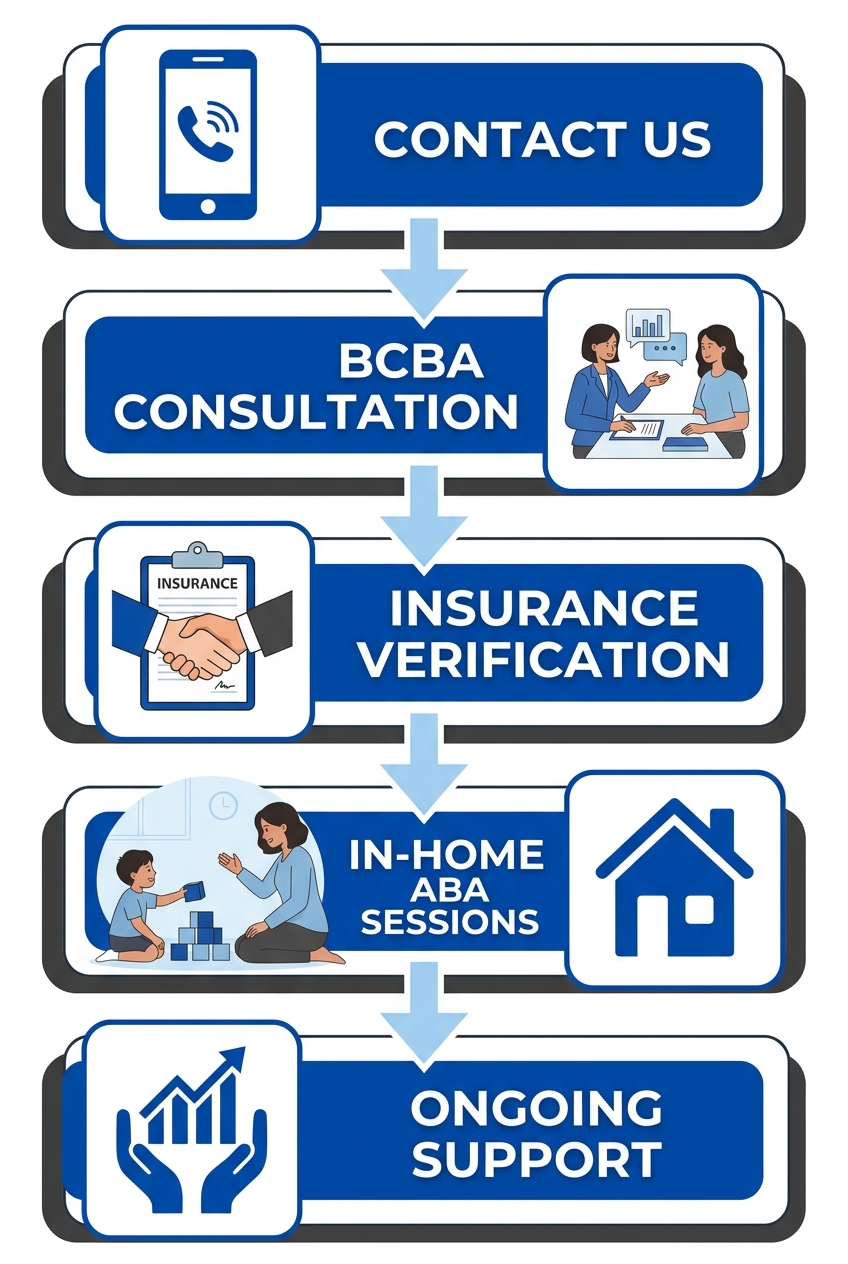
Process to start ABA therapy for ADHD in Utah
After your child starts therapy, here’s what you can expect from our family collaboration. Getting started is as simple as reaching out—our caring team is ready to support your family’s next steps. Results may vary based on individual circumstances. This information is for educational purposes and is not a substitute for professional medical advice; consult a healthcare or behavioral health professional.
Key Local Factors for ADHD Care in Utah
When seeking effective ADHD treatment in Utah, several local factors shape the quality and accessibility of care. We understand that families need practical, community-based solutions that fit their daily lives, and recognizing these factors can make it easier to find the right support.
One important local factor is the availability of specific behavioral therapy approaches. Many Utah families explore options like neurofeedback therapy in Utah, which may assist with attention regulation, alongside more widely available behavioral therapy for ADHD in Utah, such as Applied Behavior Analysis techniques. Through our experience, we have seen how these therapies can offer structured, skill-building support in familiar home settings.
Location plays a crucial role in consistent care. Accessibility within communities such as Salt Lake City and Provo can directly influence a family’s ability to maintain regular sessions. We make this connection easy, and families in Davis County can connect with a dedicated therapist in Layton, Utah who understands community needs. Receiving support close to home reduces travel stress and helps therapy feel integrated into a child’s natural routine.
Beyond location, family involvement is a key ingredient for success. Parent training and caregiver collaboration may empower everyone at home to reinforce positive behaviors, turning small daily moments into meaningful progress. We believe this partnership helps skills generalize beyond structured sessions.
In-home services can also address common barriers like transportation or scheduling conflicts. Ultimately, looking at these local factors together—therapy types, therapist location, family collaboration, and practical convenience—can guide Utah families toward a supportive path for ADHD care.
First Steps Toward ADHD Treatment in Utah
When you’re ready to explore adhd treatment utah, the first step is a free, no-obligation consultation with Golden Touch ABA. Just call (801) 630-5443 or email us, and our team will schedule a time to talk. During this call, a Board Certified Behavior Analyst (BCBA) will listen to your child’s needs and answer your questions. We also handle insurance verification so you don’t have to worry about paperwork. No referral is needed, and even if you haven’t received a formal ADHD diagnosis, the assessment can help determine whether ABA therapy is a good fit.
Our behavioral therapy for ADHD in Utah begins with that initial conversation. While neurofeedback therapy in Utah is another option, our In Home ABA Therapy focuses on practical skill-building in familiar surroundings. Our compassionate BCBAs create a warm, welcoming environment where your child can thrive. We serve families throughout Salt Lake City, Provo, Ogden, and beyond, bringing support right to your living room. Small steps that yield big results start with a single call. Take the first small step and contact us today.
Moving Forward with ADHD Support in Utah
Seeking effective ADHD treatment in Utah doesn’t have to feel overwhelming. In-home behavioral therapy for ADHD in Utah helps children improve attention, social skills, and daily routines—all within a warm and welcoming environment where families are actively involved. Our approach focuses on small steps that yield big results, with flexible scheduling to fit your life. Contact a therapist in Layton, Utah today to learn how we can support your child’s growth.
Resources
Table of Contents
- Understanding Functional Communication Training for Autism
- How Golden Touch ABA Integrates Functional Communication Training
- Comparing Communication Approaches in ABA Therapy
- Cost and Value Considerations for In-Home FCT
- Choosing the Right ABA Provider for Functional Communication Training
- Empowering Communication Through In-Home ABA Therapy
Understanding Functional Communication Training for Autism
Within ABA therapy, evidence based autism treatment includes functional communication training autism—often called functional communication training (FCT). This evidence-based approach teaches a replacement behavior—a socially acceptable communication act that serves the same purpose as the challenging behavior. For non-verbal learners, we often integrate augmentative and alternative communication (AAC) tools like sign language or picture cards.
Here’s what FCT involves:
- Replacement behavior: a new, functional way to communicate.
- Reinforcement: rewarding the new way while withholding reinforcement for the old behavior.
- Augmentative and alternative communication: adaptive methods giving your child a voice.
That’s the core of functional communication training autism. FCT is backed by research from the Association for Science in Autism Treatment (ASAT) and the National Center for Biotechnology Information (NCBI). In our in-home therapy, we weave FCT into daily routines with family-centered care at the core, embracing the power of small steps in a warm and welcoming environment. Results vary; consult your BCBA for an individualized plan. In the following section, we’ll walk through how to implement FCT at home with your support team.
How Golden Touch ABA Integrates Functional Communication Training
Building on this evidence base, functional communication training autism strategies drive our in-home ABA therapy. At Golden Touch ABA, we translate these practices into plans tailored to your child’s communication needs.
Our in home ABA therapy in Utah begins with a BCBA-led functional behavior assessment to uncover your child’s communicative intent. We then design an FCT for autism program targeting an equivalent replacement behavior — a sign, picture exchange, or speech-generating device — that we weave into daily routines like meals and play. We provide these services to families across Salt Lake County and Utah County.
We incorporate augmentative and alternative communication (AAC) tools, from low-tech PECS to speech-generating apps, and train both your child and family members on their use. Our BCBA and RBT team tracks progress through frequency, duration, or latency data and adjusts the plan as needed. Parent and sibling training is essential, because consistent support across all caregivers helps your child generalize skills. We teach you to prompt, reinforce, and fade prompts over time.
Appropriate communication is always reinforced, while challenging behaviors are addressed with ethical extinction in a safe home environment. With each small step — the power of small steps — your child builds lasting skills. Results may vary. In the next section, see how this approach produced measurable gains for a child in our program.
Comparing Communication Approaches in ABA Therapy
Every child with autism has a unique way of learning to communicate, and functional communication training autism allows us to tailor our approach to each child’s strengths. At Golden Touch ABA Therapy, we know that selecting the right communication method is a crucial step in helping children express their wants and needs without frustration. The following table compares the most common communication options we integrate into FCT.
| Communication Method | Description | Advantages | Best Suited For | Role of FCT |
|---|---|---|---|---|
| Vocal Speech | Natural vocal output is reinforced when the child approximates or produces a word that matches the desired function | Most natural; no device needed; generalizes across settings | Children with some vocal ability but limited functional communication | FCT identifies a replacement word and reinforces it while withholding reinforcement for problem behavior |
| Picture Exchange Communication System (PECS) | A low-tech AAC system where the child hands a card to a communication partner | Simple to learn; no spoken language required; portable | Nonverbal children or children with limited fine motor skills for sign language | FCT teaches the child to exchange the card instead of engaging in problem behavior to request |
| Speech-Generating Device (SGD) | Dynamic display device (e.g., iPad with AAC app) that generates voice output | Voice output is highly reinforcing; can build vocabulary; adaptable | Children who can navigate visual displays and need a robust, scalable system | FCT programs the device with mands that replace problem behavior; data collection on device use |
| Sign Language | Uses American Sign Language (ASL) or modified signs as a form of manual communication | No equipment needed; can be used across all environments; fine motor practice | Children with strong motor imitation skills and families willing to learn signs | FCT shapes the sign as a replacement behavior and reinforces its use to access wants and needs |
Our clinical team draws on evidence-based practices, including research accessed through the NCBI biomedical databases, to determine which augmentative and alternative communication method will be most effective. The Association for Science in Autism Treatment (ASAT) also provides guidelines confirming that each of these AAC options can successfully establish a replacement behavior when taught through functional communication training.
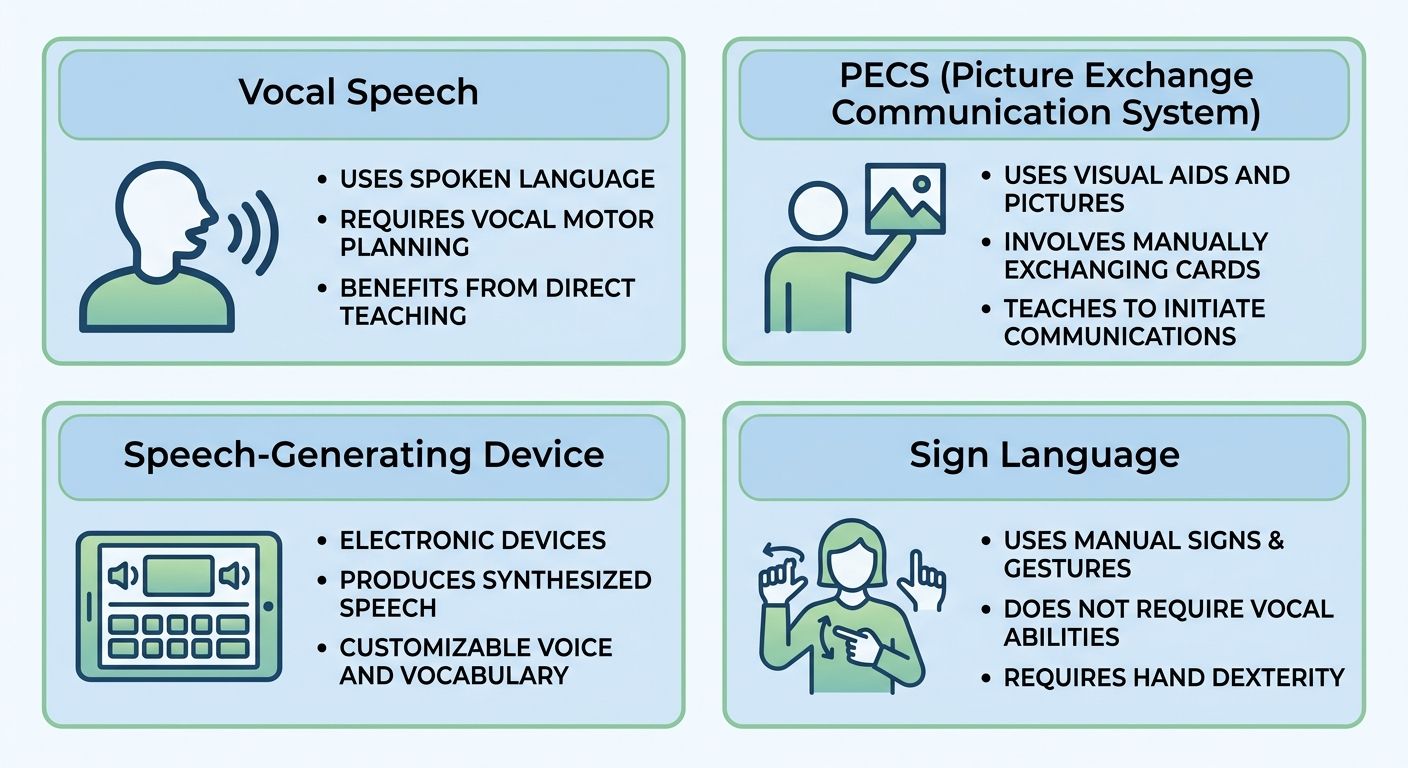
Comparison of communication methods in ABA therapy for parents.
The best method is always the one that fits the child’s existing skills and family context, and our thorough assessment process ensures this match is made thoughtfully. We celebrate every small step forward, knowing that a personalized plan builds a strong foundation for lasting communication and connection.
Cost and Value Considerations for In-Home FCT
Functional Communication Training autism therapy is an evidence-based ABA technique that replaces challenging behaviors with functional communication. By teaching your child a replacement behavior—such as using augmentative and alternative communication (AAC) tools like picture exchange or speech-generating devices—FCT can dramatically improve daily interactions and reduce frustration.
The cost of in-home FCT varies based on session frequency, your child’s individual needs, and your insurance plan. At Golden Touch ABA Therapy, we help families explore does insurance cover ABA therapy in Utah and assist with benefits verification so you can make the most of your coverage.
Because every therapy plan is uniquely designed, we provide custom quotes rather than standard pricing. Contact us for a personalized estimate that considers your child’s goals and insurance details.
Insurance coverage is subject to verification and is not guaranteed; results may vary; consult a licensed healthcare professional. Early investment in FCT often reduces the need for more intensive interventions later—supporting both your child’s long-term development and your family’s financial well‐being. The Association for Science in Autism Treatment (ASAT) recognizes FCT as an evidence‐based practice backed by research.
We’re here to help you navigate costs and coverage. Reach out today for a custom plan and insurance check.
Choosing the Right ABA Provider for Functional Communication Training
Choosing an ABA provider who excels at functional communication training autism is key to building meaningful communication. At Golden Touch ABA, we pair your child with a BCBA skilled in teaching communication skills for autism.
When evaluating a provider, look for these essentials:
- BCBA expertise: Seek a clinician with deep experience in functional communication training and teaching replacement behavior.
- In-home delivery: In-home therapy lets your child practice communication skills in real-life settings where they are needed most.
- AAC support: A provider that embraces augmentative and alternative communication tools—from picture cards to speech-generating devices—ensures your child’s voice is heard in whatever form it takes.
- Parent training: Regular caregiver coaching helps your child generalize communication across daily routines, making progress stick.
We combine these elements in our in-home ABA therapy programs, and our approach to functional communication training autism ensures tailored plans for every child. Maryland families can access ABA therapy in Prince George’s County through us, and we also serve Weber and Davis Counties in Utah. Custom pricing and insurance verification assistance make beginning therapy simple.
Once you’ve identified a qualified provider, verify insurance coverage and schedule an initial assessment. Individual results vary; consult a licensed professional for diagnosis, and remember insurance coverage is not guaranteed.
Empowering Communication Through In-Home ABA Therapy
Building on our in-home ABA approach, we use functional communication training for children with autism, an evidence-based practice supported by the Association for Science in Autism Treatment, to teach alternative ways to express needs instead of problem behavior. At Golden Touch ABA, we incorporate augmentative and alternative communication tools like picture exchange systems for non-verbal children, and the core of FCT is the replacement behavior: our clinicians identify what a child’s challenging action is communicating and teach a more adaptive skill.
In our family-centered model, caregivers learn to reinforce these strategies throughout daily routines, so functional communication training for autism becomes part of everyday life. While results vary, each step forward is a celebration — and we’ll next explore how measurable outcomes track that progress.
Resources
Table of Contents
- Discovering ABA Therapists at Golden Touch ABA Therapy
- Fundamentals of ABA Therapy
- Deep Dive into ABA Therapist Training
- Practical Steps for ABA Careers and Services
- Advanced ABA Opportunities in NJ and Beyond
- ABA Therapist FAQ
- Elevate Skills and Care with Golden Touch ABA
Discovering ABA Therapists at Golden Touch ABA Therapy
At Golden Touch ABA Therapy, we deliver in-home ABA therapy through dedicated aba therapists who make a real difference for children with autism. These professionals implement evidence-based practices, supporting families with personalized treatment plans that build communication and independence skills. According to the Behavior Analyst Certification Board (BACB), ABA effectively treats autism spectrum disorder and developmental disabilities across all ages.
We seek qualified aba therapists for roles like Registered Behavior Technicians (RBTs), Board Certified Behavior Analysts (BCBAs), and Behavior Analysts in Training (BAITs). Key qualifications include BACB certifications such as RBT or BCBA. Explore ABA careers Golden Touch to apply: submit your resume online, then prepare for interviews focused on experience and passion for family-centered care. Golden Touch ABA Therapy careers highlight competitive aba therapist salary—RBTs earn $19–$22/hour, BCBAs $87,000–$100,000/year, plus sign-on bonuses, health insurance, and paid time off. We provide paid indirect hours and BCBA supervision for BAITs, ongoing professional development, and clear pathways for advancement across Utah, Arizona, and Maryland within our expanding locations. The aba therapist job outlook shines with growing demand for autism services in Utah, Arizona, and Maryland.
Ready to join our team and embrace the power of small steps? Visit our careers page today!
Fundamentals of ABA Therapy
Building on ABA’s proven efficacy for children with autism, we at Golden Touch ABA Therapy embrace the fundamentals of this evidence-based approach. ABA therapy applies principles of learning and behavior to increase desirable behaviors while decreasing problematic ones, particularly in autism spectrum disorder contexts. As a scientific method, it relies on data collection and progress monitoring to ensure measurable improvements in communication, social skills, and independence.
According to professional association guidelines from the Association for Science in Autism Treatment, a quality ABA program includes seven essential components:
- Qualified staff with proper credentials
- Effective teaching procedures using reinforcement
- Parent training for family involvement
- Ongoing evaluation of progress
- Functional behavioral assessment
- Individualized behavior intervention plans
- Comprehensive supervision of sessions
These elements form the backbone of our in-home ABA therapy at Golden Touch ABA Therapy, creating a warm and welcoming environment tailored to each child’s needs.
In our practice, the BCBA (Board Certified Behavior Analyst) plays a pivotal role, designing individualized treatment plans, supervising therapy sessions, and assessing client progress. This requires a master’s degree and BCBA certification, as outlined by official standards from the Behavior Analyst Certification Board. BCBAs oversee teams to ensure evidence-based practices drive outcomes. Meanwhile, the RBT (Registered Behavior Technician), or aba therapist on the front lines, delivers one-on-one therapy in home settings, implements BCBA plans, and collects behavioral data. RBTs need a high school diploma and RBT certification. The aba therapist salary offers competitive compensation, aligning with a promising aba therapist job outlook for dedicated professionals in this growing field.
At Golden Touch ABA Therapy, our interdisciplinary teams exemplify seamless collaboration. BCBAs provide strategic oversight, while RBTs execute daily interventions, often alongside speech therapists or occupational experts. This teamwork, rooted in family-centered care, enhances skill acquisition through consistent reinforcement and real-time adjustments. Families in Salt Lake City and surrounding areas benefit from coordinated scheduling and insurance assistance, fostering trust and efficiency. Such collaboration not only accelerates progress but also empowers parents as active partners, amplifying the power of small steps toward independence.
ABA Therapist Roles Comparison
| Role | Responsibilities | Qualifications |
|---|---|---|
| BCBA | Designs treatment plans, supervises sessions, assesses progress | BCBA certification, master’s degree |
| RBT | Delivers one-on-one therapy, implements plans, collects data | RBT certification, high school diploma |
This structured division of roles at Golden Touch ABA Therapy maximizes expertise at every level. Families gain significant advantages from this team dynamic, including personalized parent training that equips caregivers to reinforce skills at home. Ongoing BCBA supervision ensures fidelity to plans, while RBTs build rapport in natural environments. Progress data informs adjustments, promoting sustainable gains in daily living and social abilities. Our family-centered care integrates parents fully, boosting engagement and long-term success. Results may vary, but this collaborative model consistently delivers meaningful outcomes for autism families.
Deep Dive into ABA Therapist Training
Certification Pathways for ABA Therapists
To excel as an aba therapist at Golden Touch ABA Therapy, understanding certification pathways is essential. We prioritize Registered Behavior Technician (RBT) credentials for entry-level roles, requiring a high school diploma followed by a 40-hour training program focused on ethics, measurement, and skill acquisition. This leads to passing the BACB RBT exam, making it accessible for those starting their careers in in-home ABA therapy. For advanced positions, the Board Certified Behavior Analyst (BCBA) path demands a master’s degree in behavior analysis or related field, plus 5,000 supervised hours of fieldwork, culminating in the rigorous BACB BCBA exam.
At Golden Touch ABA Therapy, we offer free BCBA supervision for RBTs, aligning with our hiring preferences for ABA therapy in Taylorsville, Utah, where local expertise drives family-centered care. These certifications not only boost aba therapist salary potential but also open doors to leadership in autism support. Golden Touch ABA insights highlight how certified professionals thrive in our warm and welcoming environment.
Training Levels Comparison
| Certification | Education Required | Exam Details |
|---|---|---|
| RBT | High school + 40-hour training | BACB RBT exam |
| BCBA | Master’s degree + 5000 supervised hours | BACB BCBA exam |
Daily Responsibilities in In-Home Sessions
In our in-home ABA therapy sessions, ABA therapists implement individualized behavior intervention plans tailored to each child’s needs. Daily tasks include one-on-one therapy focusing on skill-building, such as communication and social engagement, in the natural home environment. Real-time data collection tracks progress metrics like response rates and behavior reductions, ensuring evidence-based practices guide adjustments.
Evidence-Based Techniques Used
ABA therapists at Golden Touch ABA employ proven methods like Discrete Trial Training (DTT), a structured approach with antecedent, stimulus, response, and reinforcement sequences. Natural Environment Teaching (NET) integrates learning into play, capturing incidental opportunities during daily activities.
Practical Steps for ABA Careers and Services
Applying for ABA Therapist Positions
Ready to pursue a career as an aba therapist? At Golden Touch ABA, we make applying straightforward via goldentouchaba.com/careers. Start by visiting our careers page to view open positions for Registered Behavior Technicians (RBTs), Board Certified Behavior Analysts (BCBAs), and Behavior Analysts in Training (BAITs).
Salary Expectations Across the US
Aba therapist salary expectations vary widely across the US. At Golden Touch ABA, we enhance compensation with benefits including health insurance, dental and vision coverage, paid time off, sign-on bonuses, and paid training for professional development.
| Role | Average Salary | Experience Level |
|---|---|---|
| RBT | $40,000 – $50,000 | 0-2 years |
| BCBA | $70,000 – $100,000+ | 5+ years |
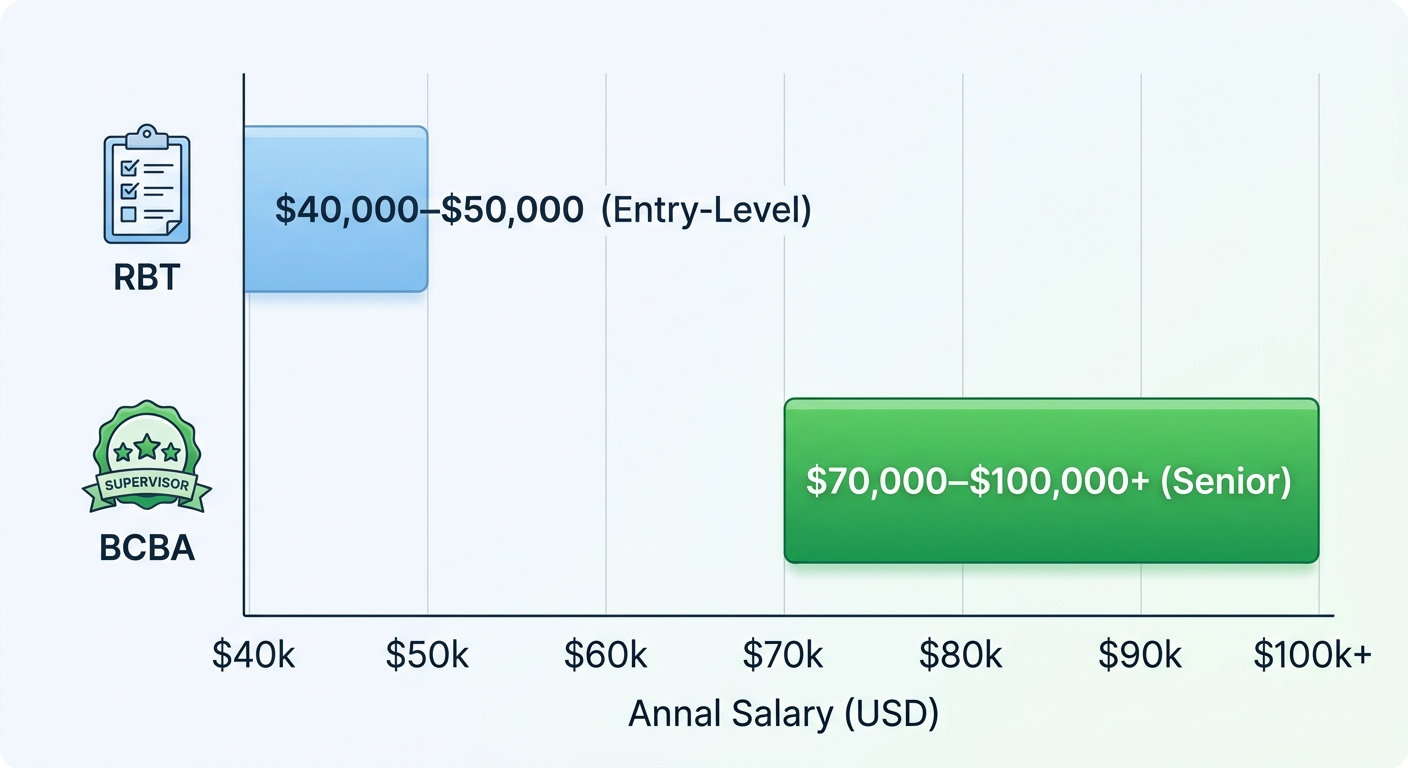
Family Onboarding for ABA Therapy
Families in Utah, Arizona, or Maryland can easily start in-home ABA therapy with Golden Touch ABA. Begin with an initial consultation call to discuss your child’s needs. We verify insurance benefits and schedule an in-home assessment by our BCBA to set goals.
Advanced ABA Opportunities in NJ and Beyond
Opportunities in New Jersey
New Jersey buzzes with demand for experienced ABA professionals. Advanced roles require New Jersey ABA licensing overseen by the New Jersey Division of Consumer Affairs. Aba therapist salary in these positions typically ranges from $70,000 to $95,000.
Job Outlook by State
| State | Demand | Licensing Notes |
|---|---|---|
| Utah | High in counties served | No state license required |
| New Jersey | Growing demand | State licensing required |
ABA Therapist FAQ
What does an ABA therapist do?
ABA therapists provide in-home ABA therapy, teaching kids with autism communication, social skills, and independence using evidence-based practices.
What is the average ABA therapist salary?
ABA therapist salary ranges from $35,000-$50,000 yearly, or $15-$25 hourly.
Elevate Skills and Care with Golden Touch ABA
Take your ABA expertise further with us at Golden Touch ABA. Ready to join? Apply now at our careers page today!
This article was researched and written with the assistance of AI tools.
Resources
- Explore Lucrative BCBA RBT Careers at Golden Touch ABA
- Discover Tailored In-Home ABA Therapy in Washington Terrace
- Get Personalized In-Home ABA Therapy in Taylorsville Utah
- Obtain Customized ABA Therapy for Independence in Eagle Mountain
- Access In-Home ABA Services Enhancing Skills in Pleasant Grove
- Secure Evidence-Based ABA Therapy in Parleys Canyon Utah
- Find Growth-Promoting In-Home ABA Therapy in Bluffdale Utah
- Learn New Jersey ABA Licensing Board Regulations
- Identify Key Characteristics of Quality ABA Programs
- Compare RBT Salaries by Location and Experience Factors
- Achieve BCBA Certification with BACB Requirements Guide
- Access BACB Resources for ABA Autism Treatment
Table of Contents
Recognizing Early Signs of Autism
We know how overwhelming it can be as parents to notice something might not feel quite right with your little one’s development. Autism spectrum disorder, a neurodevelopmental condition affecting about 1 in 89 children in the United States according to the autism spectrum disorder overview, presents with a wide range of challenges in social communication and repetitive behaviors. Recognizing the early signs of autism early can make a world of difference, opening doors to supportive strategies that enhance communication and social skills.
Common autism symptoms in toddlers often emerge between 6 and 18 months, including delayed milestones like not responding to their name or limited eye contact, as well as sensory sensitivities to sounds or textures. These initial indicators of ASD, or autism red flags in young children, vary widely, which is why our family-centered care at Golden Touch ABA Therapy emphasizes personalized observation. Early intervention autism approaches help build foundational skills in a warm and welcoming environment.
In the sections ahead, we’ll guide you through simple steps for home identification, but remember, professional support from providers like us ensures the best outcomes. Let’s prepare together for meaningful progress through evidence-based practices.
Preparing to Observe Your Child’s Development
As parents, spotting the early signs of autism can feel overwhelming, but starting with simple home observations empowers you to support your child’s growth. We recommend familiarizing yourself with typical developmental milestones from birth to 24 months, drawing from reliable resources like the CDC’s “Learn the Signs. Act Early.” program. For instance, most babies show social smiling by around 2 months and pointing to share interest by 12 months. Watch for red flags such as limited eye contact or delayed babbling, which may indicate autism symptoms in toddlers or developmental alerts in infants. These precursors to ASD aren’t definitive but highlight areas for closer attention during everyday routines.
To track progress effectively, use tools like milestone checklists from the “Learn the Signs. Act Early.” kits or simple journals to note behaviors during daily activities. During bath time, for example, observe if your baby responds to your voice or engages with toys playfully. Apps can also help log these moments, making it easier to spot patterns over time. This family-centered care approach builds confidence in monitoring without jumping to conclusions.
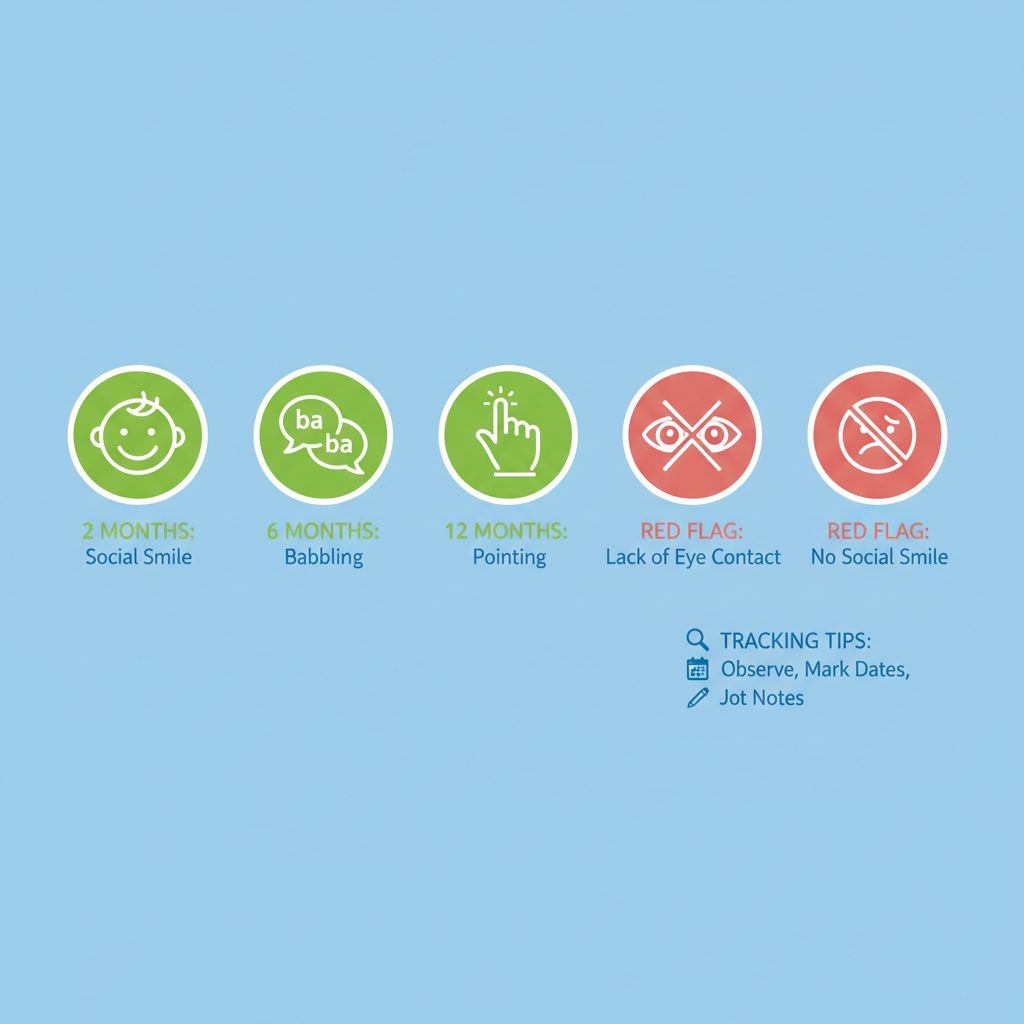
If concerns arise, consult professionals early for guidance on autism diagnosis for parents. Early intervention autism can significantly improve outcomes, so we encourage beginning with social observations in play to prepare for the steps ahead.
Observing Social and Emotional Responses
We suggest starting your observation journey by focusing on everyday moments with your baby, a crucial step in spotting early signs of autism. During playtime or feeding, watch for social developmental cues like smiles in response to your face by around 6 months. Engage in simple games such as peek-a-boo to test joint attention—does your baby look where you point or share excitement? Call their name gently during these activities and note if they turn toward you. For toddlers, observe autism symptoms in toddlers, such as limited eye contact during interactions or not responding to social bids by 12 to 18 months. These observations help answer how to recognize early signs of autism in babies without causing undue worry.
Understanding these social responses matters because challenges in social communication affect about 1 in 89 children in the US, according to health overviews. Early awareness supports family-centered care and timely early intervention autism, fostering better connections and development.
To document effectively, we recommend keeping a simple journal: note the date, activity, and your baby’s reaction. Share these insights with your pediatrician for guidance, ensuring evidence-based practices guide next steps like monitoring communication skills.
Monitoring Language and Communication Milestones
We know how exciting it is to watch your little one start babbling, pointing, and saying their first words. As parents, monitoring these milestones helps catch any differential diagnosis asd dld early. By 12 months, most babies use gestures like waving bye-bye or simple words like ‘mama.’ If you notice delays in babbling by 6 months, fewer gestures by 12 months, or no first words, these could be communication red flags. Track daily interactions, note responses to your voice, and observe if they imitate sounds during playtime. Keeping a simple journal of these moments allows us to support your child’s development right at home.
Delays in language skills can impact independence, making it harder for toddlers to express needs or connect with others. Research shows these early signs of autism often involve more than just words—they include reduced joint attention and fewer gestures compared to typical development or developmental language disorder. Spotting them early empowers families to seek help promptly.
To stimulate interaction, try reading books together or singing songs daily—fun ways to encourage babbling and pointing. We recommend exploring early intervention autism programs, like our in-home ABA therapy, which uses evidence-based practices to build communication skills in a warm, family-centered environment. Small steps make a big difference.
Watching Play and Imagination Skills
Building on communication cues, we often see valuable insights into a child’s development through their play. Observing how toddlers engage with toys and peers can reveal early signs of autism, helping parents like you spot potential needs early. At Golden Touch ABA, we emphasize family-centered care to support these observations in a warm and welcoming environment.
Start by assessing toy play at home. Watch if your child uses dolls or stuffed animals in pretend scenarios, like feeding or dressing them, which builds imaginative skills essential for social understanding. Limited pretend play, such as lining up toys without role-playing, may indicate autism symptoms in toddlers. According to the Association for Science in Autism Treatment’s diagnosis resources, these play patterns are key indicators for early intervention autism.
In group settings, note interactions during playdates. Does your child share toys or join imaginative games? Tips include gently encouraging turn-taking while monitoring for imaginative development alerts, like lack of joint attention. Early recognition through play fosters evidence-based practices that enhance outcomes, paving the way to address repetitive behaviors next.
Noting Repetitive Behaviors and Routines
As parents, we often notice our children developing unique habits, and it’s completely normal to wonder if they’re just part of growing up. However, repetitive behaviors and a strong preference for routines can sometimes be early signs of autism, such as lining up toys repeatedly or insisting on the same daily schedule. We see this often in our family-centered care at Golden Touch ABA Therapy, where we help families identify these routine fixation indicators without any judgment.
To check for patterns, observe your child’s daily routines during playtime or mealtimes—note if they resist changes or repeat actions frequently, as described in diagnostic criteria like those from the DSM-5. Encouraging flexibility aids development by building adaptability skills, which supports overall growth. For tips on early intervention autism, try gentle variations like slightly altering a familiar game; this can ease transitions while monitoring autism symptoms in toddlers. Remember, if you spot these signs, consulting a licensed healthcare professional for diagnosis is key—we’re here with in-home ABA therapy to support your journey.
Checking Sensory Sensitivities
At Golden Touch ABA Therapy, we know that observing how your child responds to everyday stimuli can reveal important early signs of autism. Sensory processing cues, like overreactions to noise or light, often show up during routine activities. For instance, during mealtime, you might notice your toddler covering their ears at the sound of a spoon clinking or squinting in bright kitchen lights. These reactions are common autism symptoms in toddlers and highlight challenges in sensory integration, as noted in comprehensive overviews of Autism Spectrum Disorder.
Why does this matter? Sensory sensitivities can affect a child’s comfort and ability to engage with their environment, making early recognition key for better outcomes. We emphasize screening for these often-overlooked signs to support timely intervention. For tips on calming techniques, try dimming lights or using soft sounds to create a warm and welcoming environment when you spot early signs of autism.
If these sensory responses concern you, our in home ABA therapy in Utah can help tailor family-centered care. From here, we’ll move into checking motor skills to build a fuller picture.
Assessing Motor Skills and Coordination
At Golden Touch ABA Therapy, we understand how important it is to spot early signs of autism, including potential motor delays, to support your child’s development. Motor skills like crawling and walking are key milestones that help build independence and confidence. If you notice delays, such as your little one not crawling by around 9 months or walking by 15 months, these can be motor milestone alerts worth tracking.
To check crawling and walking, gently observe your child during playtime with toys like soft blocks or push-along animals. Encourage tummy time from early infancy to strengthen muscles, and create safe spaces for exploration with colorful tunnels or balls. These activities not only make assessment fun but also promote progress. Remember, early intervention autism can make a big difference in addressing autism symptoms in toddlers through occupational therapy and our in-home ABA therapy.
Why focus on this? Strong motor skills lay the foundation for daily activities, from dressing to playing with friends. We encourage you to keep a simple journal of these observations as the final step in monitoring—share them with your pediatrician for personalized guidance. Our family-centered care is here to help every step of the way.
Documenting and Reviewing Your Observations
As you wrap up these home observation steps, it’s time to compile your notes for clarity and action. Start by journaling patterns you’ve noticed in your child’s behavior, such as social interactions or communication attempts. Use a simple notebook or app to record dates, contexts, and specific examples—this observation synthesis will help you spot recurring themes over time.
Documenting these details is crucial because it aids in identifying potential early signs of autism and supports a more accurate discussion with healthcare professionals. Clear records show patterns that might otherwise be overlooked, facilitating early intervention autism strategies for better outcomes.
When reviewing your entries, focus on common autism symptoms in toddlers, like delayed speech or repetitive actions. Organize your thoughts into key categories before sharing: bring your journal to appointments, highlight concerns chronologically, and prepare questions for the doctor. We’re here to help with family-centered care through our in-home ABA therapy. For personalized support, consider autism services in Vivian Park, Utah, where our team offers evidence-based practices tailored to your needs. Remember, consult a licensed professional for any diagnosis—results may vary.
Addressing Common Challenges in Sign Recognition
Spotting early signs of autism can feel overwhelming for families, especially when everyday behaviors overlap with potential indicators. We often hear from parents who worry about misinterpreting typical toddler quirks, like delayed speech or intense focus on toys, as something more serious. Cultural differences in developmental milestones can add confusion too— what might seem like a delay in one community could be a variation in another. Parental stress compounds this, making it hard to stay objective, while anxiety or other developmental delays might mimic autism symptoms in toddlers. These sign misinterpretation pitfalls are common, but understanding them helps us guide families toward clarity.
To tackle these hurdles, start by observing patterns rather than isolated incidents; if social engagement seems consistently limited, note it without jumping to conclusions. We encourage incorporating family input to contextualize behaviors across settings, like home versus daycare. For cultural nuances, consult resources that respect diverse backgrounds. When differentiating from other delays, look for clusters of traits rather than singles—professional assessment is key here. If anxiety influences appear, simple strategies like creating a warm and welcoming environment with quiet spaces can help. For reliable support, consider autism therapy in Washington Terrace, Utah, where our in-home ABA therapy tailors early intervention autism to local needs in areas like Davis County. This family-centered care integrates evidence-based practices to address autism symptoms in toddlers effectively, easing parental stress through personalized plans and ongoing collaboration.
Don’t hesitate to reach out for early intervention autism—timely professional guidance can make all the difference in supporting your child’s growth.
Moving Forward with Early Support
Recognizing the early signs of autism can make all the difference for your child’s development. We’ve explored how keen observation of autism symptoms in toddlers empowers parents to seek help sooner, fostering better outcomes through proactive steps. At Golden Touch ABA Therapy, we believe in the power of small steps toward meaningful progress.
Timely ASD support, including early intervention autism, offers children essential tools to build communication, social skills, and independence. Start by consulting your pediatrician for an evaluation, then explore therapy options tailored to your family’s needs. Our team specializes in personalized plans with family-centered care, delivering in-home ABA therapy right where your child feels most comfortable. For reliable in home ABA therapy in Utah, we draw on evidence-based practices and caregiver training to support your journey.
We’re here to partner with you every step of the way. Reach out today to discuss how we can help—results may vary, but early action brings hope and possibility.
Resources
- Get Personalized In-Home ABA Therapy for Autism in Utah
- Access Evidence-Based In-Home ABA Therapy in Washington Terrace Utah
- Find Individualized ABA Therapy Services for Autism in Vivian Park Utah
- Obtain Tailored In-Home ABA Therapy in Fruit Heights Utah
- Discover Customized ABA Therapy for Autism in Marriott-Slaterville Utah
- Explore In-Home ABA Therapy Techniques for Autism in Prince George’s County
- Receive Compassionate ABA Therapy Support in Davis County Utah
- Learn Detailed Overview of Autism Spectrum Disorder Diagnosis and Treatment
- Understand Differential Diagnosis Between ASD and Developmental Language Disorder
- Guide Parents Through Autism Diagnosis Process and Resources
- Utilize CDC Program to Identify Early Autism Signs and Act
- Discover Autism Care Strategies and Coverage for Military Families
