
ABA Therapy Cost with Insurance 2026: A Complete Guide for Parents
Table of Contents
- Understanding ABA Therapy Costs with Insurance in 2026
- Before You Begin: Key Information to Gather
- Gather Your Insurance Policy and Benefits Information
- Understand Your Out-of-Pocket Costs and Deductibles
- Verify Your Insurance Coverage for ABA Therapy
- Calculate Coinsurance and Estimated Costs per Session
Understanding ABA Therapy Costs with Insurance in 2026
Navigating ABA therapy cost with insurance 2026 is often the first concern for families. As our team at Golden Touch ABA explains, insurance coverage can substantially lower what you pay out of pocket, though your exact cost depends on your plan’s deductibles, copays, and coverage limits. That’s why insurance verification for ABA therapy is a critical first step—we review your benefits to clarify what your policy covers before services begin, so you can focus on your child’s progress. We’ll also explain your plan’s coverage limits and help you understand any visit caps.
Your actual ABA therapy cost with insurance 2026 also depends on whether your plan must comply with the autism insurance mandate in your state. While many state mandates require certain regulated plans to cover ABA therapy, self-funded employer plans (ERISA) are often exempt. In states like Utah, the mandate covers ABA therapy up to age 9, while Arizona extends coverage to age 16, but ERISA plans are not bound by these rules. Because coverage varies, checking your plan’s ABA therapy out-of-pocket maximum helps you estimate your worst-case financial responsibility. It’s a useful figure for budgeting, though actual bills will reflect your specific deductible and copay structure. Results vary, and coverage is not guaranteed and is always subject to verification; we encourage you to contact us for a personalized benefits check.
Before You Begin: Key Information to Gather
At Golden Touch ABA Therapy, we know that gathering the right information makes insurance verification for ABA therapy smoother. ABA is a science based autism treatment, and we want to help you check your coverage. Knowing what’s required simplifies checking ABA therapy coverage and helps you plan for potential costs.
Based on our experience, these are the key items you’ll need:
- Your insurance card, including member ID, group number, and payer contact information.
- A formal autism diagnosis with ICD-10 code F84.0 or a prescription from a licensed professional.
- The treatment plan or behavioral assessment prepared by your child’s Board Certified Behavior Analyst (BCBA).
- Any prior authorization (pre-auth) numbers you may have received.
- Your child’s date of birth and relevant medical history.
If you have any questions, our team is here to help you verify these details.
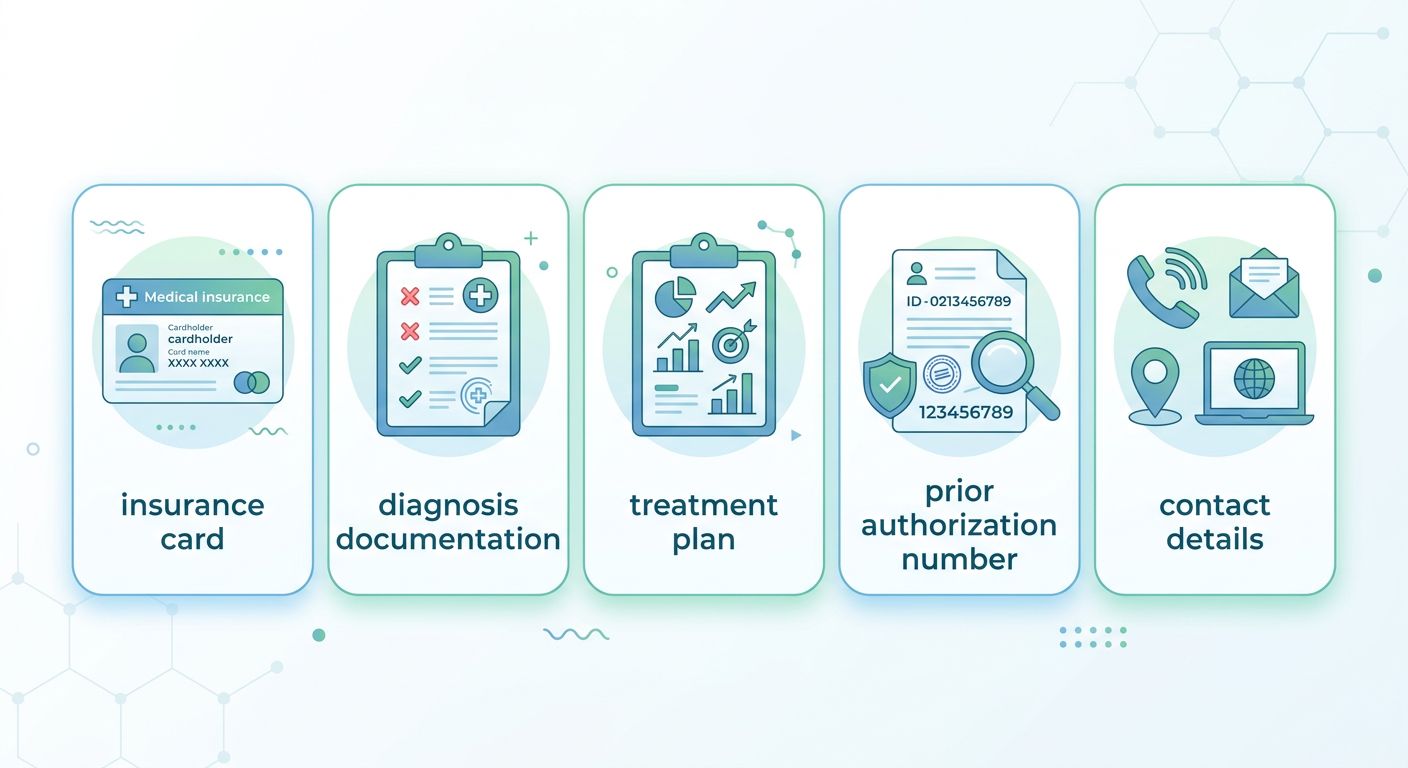
Essential documents and information for ABA insurance verification.
With these items in hand, you’re ready to begin the ABA therapy insurance verification process. Our team at Golden Touch ABA Therapy can assist with each step, from calling your insurer to confirming prior authorizations and benefits. Knowing your coverage helps you plan for costs and avoid surprises, so you can focus on your child’s progress. Once you’ve gathered these documents, the next step is submitting them for verification. Please remember that insurance coverage is subject to verification and is not guaranteed.
Gather Your Insurance Policy and Benefits Information
Before you can understand your costs, you need to know what your plan covers. Start by locating your insurance member ID card. Note your member ID, group number, and the customer service phone number. These details are essential when you begin the insurance verification for ABA therapy.
Gather the following items:
- Your insurance card with member ID, group number, and phone
- Your benefits summary or plan document
- Any pre-authorization or referral forms
- A copy of your child’s autism diagnosis report
Review your plan by calling member services or checking the benefits summary. Ask specifically about ABA therapy coverage and whether your state’s autism insurance mandate applies. Confirm if pre-authorization, a referral, or proof of medical necessity is required. Also ask about your out-of-pocket maximum so you understand your financial responsibility.
Our insurance assistance team can handle this step for you. Golden Touch ABA will guide you through the verification process and contact your insurer on your behalf. According to our team, the process often takes only a few days once you provide the documents.
Once you have your documents ready, the verification process can begin — covered in the next section. Please note that insurance coverage is subject to verification and is not guaranteed.
Understand Your Out-of-Pocket Costs and Deductibles
Understanding your coverage is the first step, but knowing your out-of-pocket costs brings real clarity. As you explore ABA therapy cost with insurance in 2026, these expenses generally encompass deductibles, copays, and co-insurance. The deductible is the amount you must pay before insurance begins to contribute. Once met, copays (a set fee per session) or co-insurance (a percentage of costs) often apply. Our insurance verification for ABA therapy gives families a clear picture of their financial responsibility, though it does not guarantee coverage. The autism insurance mandate operating in many states may limit maximum out-of-pocket costs, but specific rules hinge on your state and plan. Golden Touch ABA’s team walks you through these details, answers questions, and provides a custom quote after verification. Because actual costs differ for each family, we encourage you to contact us for a personalized breakdown. Insurance coverage is subject to verification and is not guaranteed.
Verify Your Insurance Coverage for ABA Therapy
Understanding the potential cost of ABA therapy with insurance in 2026 starts with a clear insurance verification for ABA therapy process. The most direct route is to call the number on the back of your insurance card and ask specifically about your plan’s coverage for Applied Behavior Analysis for autism. Before you call, gathering your insurance ID and policy details will speed up the conversation.
- Ask about your ABA therapy benefits: Inquire about the specific coverage for autism treatment, including any age limits or required pre-authorizations.
- Define your cost-sharing details: Clarify your plan’s deductible, your copay or coinsurance per session, and the total ABA therapy out-of-pocket maximum for the year.
- Request a written summary: Secure a written benefits summary from the insurer to identify any annual visit restrictions or financial caps, as coverage varies by plan, provider network, and state.
We understand this can feel overwhelming, which is why our team offers complimentary assistance to help you verify your child’s ABA benefits. We can guide you through the nuances of your policy to clarify your coverage situation.
Insurance coverage is subject to verification and is not guaranteed. Once you have a clearer picture, we invite you to connect with our insurance assistance team for a personalized benefits check. Studies indexed in the biomedical research database affirm that evidence-based practices like ours are key to effective family-centered care. From here, you can confidently take the next step: scheduling a free assessment to begin therapy.
Calculate Coinsurance and Estimated Costs per Session
Estimating your aba therapy cost with insurance 2026 starts with understanding coinsurance—the percentage you pay after your deductible. Here’s a simple process:
- Verify your benefits—we can run your insurance plan.
- Check your deductible status—if unmet, you’ll pay the full session rate.
- Apply your coinsurance rate—once the deductible is met, multiply the session fee by your percentage.
Your plan’s out-of-pocket maximum protects you by capping annual spending; once you reach that ABA therapy out-of-pocket maximum, the insurer pays 100% of allowed amounts for the rest of the year. Insurance verification for ABA therapy is therefore essential, and our team at Golden Touch ABA can review your benefits to explain your specific deductible, coinsurance, and out-of-pocket limits.
Because costs vary widely by carrier and individual plan, we encourage you to contact us for a personalized estimate of the cost of ABA therapy with insurance. Sessions are supervised by Board Certified Behavior Analysts (BCBAs), certified by the Behavior Analyst Certification Board. Keep in mind that insurance‐covered ABA therapy expenses are subject to verification and not guaranteed.
Explore State Mandates and Grant Opportunities
Families often wonder how state mandates and grant opportunities can help lower the ABA therapy cost with insurance. In Maryland, a state mandate requires insurance coverage for autism therapy, including ABA, which can make treatment more accessible for your child. Our team offers insurance verification for ABA therapy to help you understand how state mandates apply to your plan and what benefits you may have.
Beyond insurance, grant opportunities such as state-funded programs or nonprofit awards may further offset ABA therapy costs. We assist families in our service areas—including in Utah, Maryland, and Arizona—by navigating these options and providing personalized guidance. Every plan is different, so coverage and grant availability vary; we cannot guarantee specific outcomes, and verification is subject to plan terms.
Reach out for a free benefits check. We’re here to help you take the first step—because the power of small steps can lead to meaningful progress.
Reach Your Out-of-Pocket Maximum to Maximize Coverage
Now that you understand the basics of insurance coverage for ABA therapy, let’s look at a key strategy: reaching your out-of-pocket maximum to get the most out of your plan. This is the annual cap on what you pay for covered services. Managing ABA therapy cost with insurance 2026 starts here. According to Golden Touch ABA’s insurance FAQ, the out-of-pocket maximum usually applies to ABA therapy, and once you meet it, your insurer pays 100% of covered ABA sessions for the rest of the plan year.
Scheduling ABA sessions early in the plan year can help you reach your annual out-of-pocket limit sooner, unlocking full coverage for the rest of the year. Because each insurance plan sets its own maximum out-of-pocket cap, getting insurance verification for ABA therapy is essential. Our team at Golden Touch ABA helps families understand their plan details and schedule accordingly. Insurance coverage is subject to verification and is not guaranteed; some non-covered services may still apply. The power of small steps — every session moves you closer to the cap. Ready to check your plan’s out-of-pocket maximum? Our team can help with insurance verification — reach out to us today.
Request a Custom Quote and Finalize Your Decision
Understanding the ABA therapy cost with insurance 2026 can feel overwhelming, but we make it simple with a personalized custom quote. We tailor every quote to your child’s unique needs, goals, and location while handling insurance verification for you. This includes clarifying your out-of-pocket maximum and any plan limitations, so you know exactly what to expect before making a commitment. As explained in our FAQ on cost with insurance, coverage depends on your specific policy, which is why we take the time to verify your benefits thoroughly.
There’s never any obligation to move forward after receiving your quote—you can review everything at your own pace. We accept Medicaid and most major insurance plans, though each plan is verified individually to confirm your exact benefits. When you’re ready to begin, simply contact us by phone, email, or try our interactive ABA roadmap tool to start the process. Insurance coverage is subject to verification and is not guaranteed. Please consult a licensed healthcare professional for diagnosis or medical advice.
Troubleshooting Common Insurance Coverage Issues
Insurance verification for ABA therapy is a critical first step, but it doesn’t guarantee that your child’s services will be covered. At Golden Touch ABA, we help families in Salt Lake City, Utah County, Weber County, and Davis County in Utah, as well as in Arizona and Maryland, understand exactly what their plan requires before treatment begins.
Even after verification, claims can still be denied. Common reasons include:
- Lack of demonstrated medical necessity – the insurer may not see the therapy as essential.
- Out‐of‐network status – your provider isn’t in the plan’s network.
- Insufficient documentation – missing reports or progress notes.
- Exceeded session limits – hitting annual or lifetime visit caps.
We strongly recommend securing pre‐authorization before starting ABA services. This process confirms that the insurer agrees the treatment is medically necessary and outlines what they will pay. Understanding your ABA therapy out‐of‐pocket maximum is equally important because it caps your total annual spending, protecting you from runaway costs.
If a claim is denied, you can appeal. Our team guides families through collecting a letter of medical necessity from the BCBA, treatment plans, and progress data to build a strong case. As you plan for aba therapy cost with insurance 2026, keep in mind that deductibles, copays, and coverage limits can shift each year, so early planning makes a real difference.
You don’t have to navigate these challenges alone. Our insurance assistance service is here to help you untangle denials, understand benefits, and take the next small step forward. Remember, insurance coverage is subject to verification and is not guaranteed, but we’ll work alongside you to pursue every possible option.
Navigating ABA Therapy Costs with Confidence
Managing the ABA therapy cost with insurance 2026 starts with understanding your plan’s deductibles, co-pays, and out-of-pocket maximums. A thorough insurance verification reveals exactly what your policy covers so you can plan with confidence. We help families focus on therapy, not financial uncertainty.
Once we complete the insurance verification for ABA therapy, we outline your ABA therapy out-of-pocket maximum and any co-pay responsibilities. We break down the ABA therapy cost with insurance 2026 through example scenarios on our FAQ page, but your estimate depends on your specific benefits. That personalized insight helps you budget realistically. Reach out for insurance assistance and benefits eligibility support—our team will walk you through the process and answer your questions. Please remember that insurance coverage is subject to verification and is not guaranteed, but we’re here to help every step of the way.
Resources
- Understand Arizona’s Autism Insurance Mandate for ABA
- Differentiate State Mandates from ERISA for ABA Coverage
- Explore Maryland’s Autism Mandate Covering Therapy to Age 21
- Secure ABA Coverage Through State Insurance Mandates
- Compare Autism Mandate Age Limits Across States AZ MD UT
- Verify Your Health Plan for ABA Mandate Coverage
- Prove Medical Necessity for ABA Under State Mandates
- Find Science-Based Autism Treatment Information at ASAT
- Access Biomedical Research Databases via NCBI
- Get Certified as an ABA Professional with BACB
Table of Contents
- ABA Therapy for School-Age Children: What Parents Need to Know
- Before You Begin ABA Therapy with Your School-Age Child
- Assess Your Child’s Current Behavioral and Communication Skills
- Set Measurable Goals with Your BCBA
- Coordinate ABA Therapy with School and IEP Goals
- Create a Consistent In-Home Therapy Schedule
ABA Therapy for School-Age Children: What Parents Need to Know
Is your school-age child facing challenges with social skills, classroom routines, or growing independence? You’re not alone. ABA therapy for school age children is an evidence-based approach that uses positive reinforcement to teach adaptive skills and reduce challenging behaviors through individualized goals. Golden Touch ABA offers in-home ABA therapy tailored specifically to school-age children, bringing therapy into your home to build real-world skills in a warm and welcoming environment.
Our therapists collaborate with you to carry over strategies at home and support school readiness by reinforcing the communication and self-regulation skills essential for classroom success. We believe in the power of small steps, breaking complex skills into manageable achievements through family-centered care.
ABA therapy can also complement your child’s IEP goals for autism, ensuring progress aligns with educational objectives.
- Results vary; always consult a healthcare professional for medical advice.
In the sections below, we explore how in-home ABA therapy can boost school readiness and complement IEP goals for autism.
Before You Begin ABA Therapy with Your School-Age Child
Before you begin autism therapy for your elementary-aged child, a little preparation on the front end can help set the stage for a smooth, confident start. We want to make sure you feel supported in this process, so here are a few steps to consider before the first session even begins.
First, a Board Certified Behavior Analyst, or BCBA — the professional certified by the Behavior Analyst Certification Board (BACB) to design and oversee treatment — will conduct a comprehensive assessment of your child’s unique strengths and needs. This assessment informs the individualized goals that your clinical team will work toward. In-home ABA therapy gives us the advantage of observing your child in their natural environment, where real-life skills are built.
Next, review your insurance benefits early. Our team offers free assistance to help you understand your coverage so you can focus on your child’s care. You’ll also want to bring any current school documents — including IEP goals for autism — to your BCBA’s attention. Aligning home and school strategies encourages family-centered care and creates a consistent thread of support for your learner.
With a complete picture of your child’s needs, your BCBA will craft a plan that fits seamlessly into your schedule. As you prepare for this partnership, remember that progress is a gradual journey; every child’s path toward school readiness and independence unfolds at a pace shaped by their own hard work and the consistency of the support around them.
Now that you know what to line up, the next step is meeting your team and getting started with a personalized consultation.
Assess Your Child’s Current Behavioral and Communication Skills
Before we can set goals, let’s look at where your child is now. The first step in choosing aba therapy for school age children is understanding their current abilities, especially in school readiness. Our family-centered approach values your insights as you observe your child’s communication and behavior patterns in a warm and welcoming environment.
Pay attention to both verbal and non-verbal communication, such as using words, gestures, or AAC devices. Also note behaviors like transitions, tantrum frequency, or self-stimulatory actions, and assess social strengths, including whether your child engages in parallel or cooperative play. These observations are foundational for setting meaningful iep goals for autism like increasing mands and social initiations. A qualified professional with BCBA certification will then perform a comprehensive evaluation, using evidence-based practices to develop a tailored program.
This home assessment helps us see the full picture, connecting your child’s current skills to the power of small steps in therapy. By identifying targeted objectives together, we prepare for a smooth transition into an individualized plan that supports growth and independence. Our team is here to guide you through this family-centered process every step of the way.
Set Measurable Goals with Your BCBA
After your child’s initial assessment reveals their strengths and areas for growth, the next step in aba therapy for school age children is to sit down with your BCBA and turn those insights into clear, measurable goals. We believe in family-centered care, so these objectives are created together — not dictated by the therapist alone. The targets are specific, measurable, and woven into your child’s daily routines, focusing on skills like transitions and peer interaction to build classroom preparedness. Your BCBA also aligns these home targets with IEP goals for autism so school-based objectives are supported. For example, a goal might be to increase on-task behavior during a 10-minute table activity from 2 minutes to 8 minutes over 8 weeks. Our team of RBTs, who hold the registered behavior technician certification, implements these plans, and progress is tracked session by session and shared in regular updates. Every child is different, so results may vary, but we believe in the power of small steps.
Coordinate ABA Therapy with School and IEP Goals
After setting meaningful therapy targets at home, aligning those goals with your child’s Individualized Education Program (IEP) is a natural next step.
When the Board Certified Behavior Analyst (BCBA) communicates regularly with school staff, therapy data can directly inform classroom strategies. Our in-home team tracks targeted behaviors — from task initiation to following instructions — which teachers can use to update IEP goals for autism and measure progress. Parents often find it helpful to invite their BCBA to IEP meetings, as this provides valuable behavioral insights and reinforces consistent strategies across both environments.
In our home sessions, we emphasize school readiness skills such as following multi-step directions, staying on task, and building social connections. Using the same prompts and reinforcement at home and in the classroom reduces confusion and helps children generalize newly learned skills more confidently.
Want to learn more about how we partner with families and schools? Reach out today to talk about coordinating autism therapy in Washington Terrace, Utah with your child’s educational team.
Create a Consistent In-Home Therapy Schedule
Once the space is ready, the next step is building a consistent in-home therapy schedule. We recommend starting aba therapy for school age children by selecting two or three fixed time slots each week and treating them as non-negotiable appointments. A predictable rhythm helps your child transition from the school day to therapy with less resistance, and it reinforces the skills practiced during sessions.
A steady routine is the heartbeat of family-centered care. Prepare a dedicated, distraction-free area and pair each session with a simple before-routine—like a snack and a brief chat about the day. This warm, welcoming cue signals to your child that it’s time to focus and engage. We encourage you to lean on your BCBA or RBT for strategies when life disrupts the schedule; they can help you adjust while preserving momentum.
Consistently following a schedule can strengthen school readiness and support progress toward your child’s iep goals for autism. Committing to small, regular sessions often builds confidence and lasting skills.
Practice Social Skills Through Everyday Interactions
We know that the best way for school-age children enrolled in ABA therapy for school age children to grow socially is through the small, natural moments that fill each day. With guidance from your child’s BCBA, everyday routines become powerful opportunities to practice skills identified in the treatment plan, opening the door to school readiness and meaningful IEP goals for autism.
An easy, low-pressure starting point is taking turns during a family board game. A therapist from Golden Touch ABA can coach you on how to prompt your child to wait and then offer enthusiastic, immediate praise for a successful turn. A second example is practicing a simple greeting when ordering at a cafe counter; the BCBA might suggest focusing on just one moment of eye contact during the brief exchange. The goal is to begin with manageable steps that support peer interactions and avoid creating anxiety, and then gradually build toward longer, more complex conversations.
These everyday interactions are most effective when they’re brief, positive, and connected directly to the skills your BCBA has prioritized. Our team helps you weave these moments into your family’s unique rhythm, ensuring that every small success builds toward growing social confidence and building communication skills for school and beyond.
Monitor Progress and Adjust Goals as Needed
After goals are set, the next step is to track your child’s progress closely. For school-age children receiving ABA therapy, monitoring progress is key to making sure therapy is working and adapting to their evolving needs. We track development continuously through data collection during every session, recording trial-by-trial responses and skill acquisition. This real-time information helps our BCBAs see what’s working and where small adjustments can make a big difference.
Parents can support this process by keeping a simple home log of observed behaviors and new skills, noting anything that seems easier or more challenging at home. These notes, combined with our data, create a fuller picture of your child’s growth. Signs of progress often show up as increased independence, improved communication, reduced challenging behaviors, or progress toward school readiness and iep goals for autism. We review goals regularly—usually weekly or bi-weekly—and suggest adjustments when a child has consistently met a target for several sessions or when a goal no longer fits their developmental priorities.
As you monitor progress and adjust goals, you’ll build a clearer picture of your child’s growth. We encourage you to ask questions during caregiver training and collaborate on setting new, slightly more challenging targets. Progress looks different for every child—some days bring big leaps, other days quiet wins—but the power of small steps is always at the heart of our family-centered care. Golden Touch ABA Therapy is here to help you shape a plan that reflects your child’s unique journey, and we would love to talk through a personalized progress strategy whenever you are ready.
Prepare for School Readiness and Independence
Once your child is making progress at home, we also focus on preparing them for the classroom. Our in-home aba therapy for school age children builds school readiness by teaching the routines and independence skills that lead to classroom success. We practice transitioning between activities, following multi-step instructions, and handling bathroom independence during familiar in-home sessions, so these abilities feel natural before the first day of school.
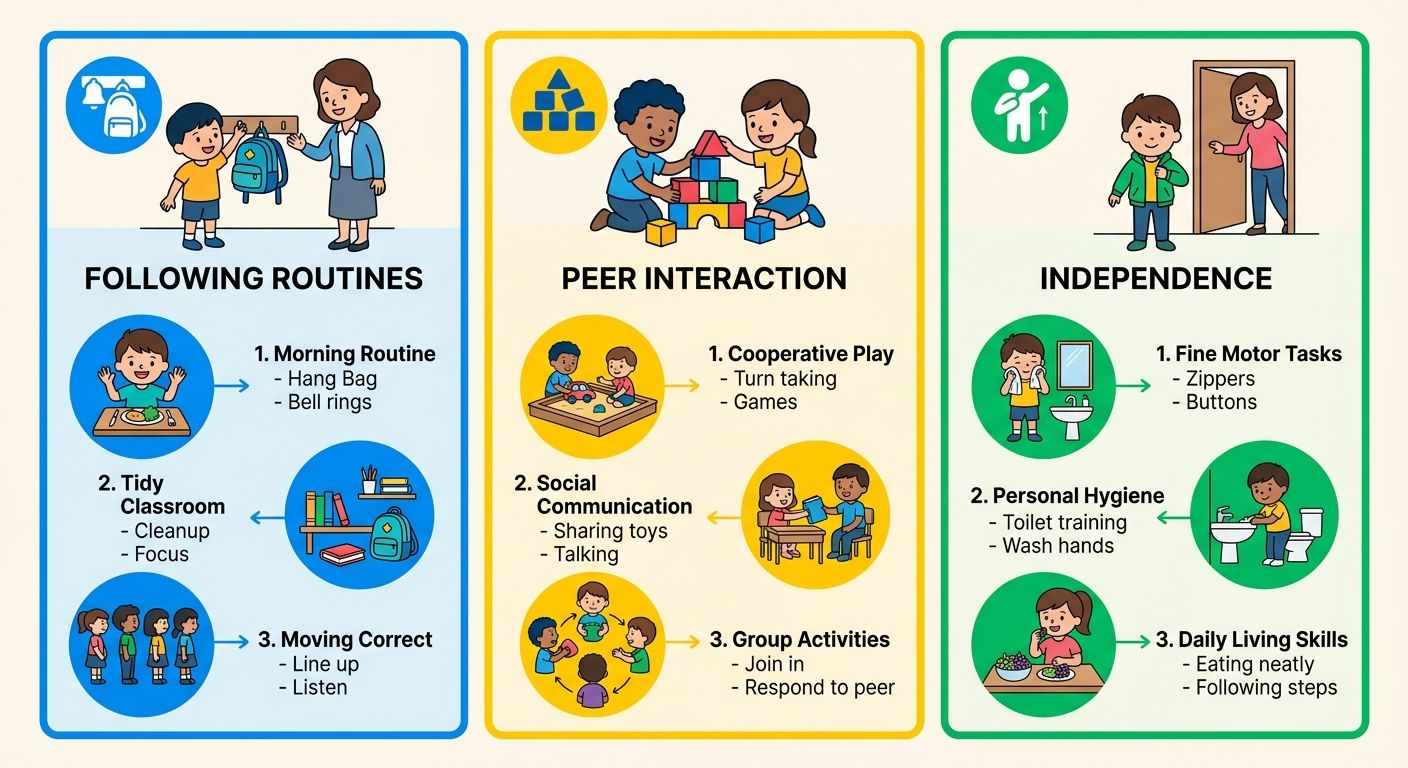
Three key school readiness skills developed through in-home ABA therapy
Strong school readiness also means reducing problem behaviors that interfere with learning, such as difficulty with transitions or following teacher directions. Our BCBAs and RBTs weave these targets into each session, and the data we collect often becomes the baseline for measurable iep goals for autism—giving your child’s team clear, observable objectives to track.
Parents play a vital role, too. Using ABA strategies consistently at home helps children practice independence during daily routines like dressing and packing a backpack. To learn more about in-home support in Arizona, visit our Arizona location page.
This information is for educational purposes. Consult a licensed healthcare professional for medical advice. Results may vary.
Overcoming Common Challenges in In-Home ABA Therapy
Even with a strong foundation, every family encounters a few bumps along the way—here’s how we help you navigate them. When you begin aba therapy for school age children, the transition to regular in-home sessions can sometimes bring resistance, especially from a child who is tired after a busy day. We partner with you to make sessions feel natural and engaging by incorporating your child’s favorite toys and activities right in their living room. This child-led approach, guided by your dedicated BCBA, helps transform reluctance into cooperation.
We also know that caregiver involvement can feel like a significant addition to an already full plate. Our family-centered model turns this dynamic on its head: rather than adding extra work, we weave caregiver training into everyday moments. Our therapists provide simple strategies you can use during dinner, playtime, or bedtime routines, so building school readiness behaviors at home quickly becomes second nature.
Scheduling conflicts are another common hurdle, but the in-home model itself is the most direct solution. Our team offers flexible scheduling that works around your family’s rhythm, not the other way around. If you’re struggling to see how far your child has come, the interactive ABA roadmap provides a clear, simple snapshot of every small win, showing how daily sessions reinforce broader objectives, including iep goals for autism. Rest assured, every challenge has a workable, compassionate answer—and our team is in your corner every step forward.
Discover how our ABA roadmap can illuminate your child’s path forward.
Putting It All Together: Next Steps for Your Child’s Development
In summary, ABA therapy for school age children provides an evidence-based pathway to strengthen the social, communication, and adaptive skills that form the foundation for classroom success. We at Golden Touch ABA craft personalized in-home treatment plans aligned with each child’s unique school readiness milestones and their IEP goals for autism, ensuring every session builds meaningful classroom preparedness.
The power of small steps drives our warm, family-centered approach. Our dedicated BCBAs and RBTs work collaboratively with your family, offering flexible scheduling that fits seamlessly into your daily routine. Discover how our customized support can make a difference — reach out to Golden Touch ABA for a custom quote or complete our interactive ABA roadmap to explore the next step. Together, we will nurture your child’s confidence and skill-building for school success.
Results may vary. Consult a licensed healthcare professional for diagnosis or medical advice.
Resources
- Get Personalized In-Home ABA Therapy in Washington Terrace
- Engage Children with Play-Based In-Home ABA Therapy
- Get Multistate ABA Therapy with Certified Analysts
- Find Personalized ABA Therapy in Taylorsville, Utah
- Find In-Home ABA Therapy Services Across Arizona
- Get In-Home ABA Therapy with Evidence-Based Techniques
- Discover ABA Therapy Services for Ages 1-21
- Find Details on BCBA Certification and Process
- Explore Registered Behavior Technician Certification Process
