
ABA Therapy Goal Setting Techniques: Complete Guide for BCBAs
Table of Contents
- Purposeful Progress: Setting the Stage for ABA Therapy Goals
- The Foundation of Effective ABA Goal Setting
- The Advantages of Structured Goal Setting in ABA
- Crafting and Implementing Individualized ABA Goals
- Collaborating with Families and Tracking Milestones
- Embracing a Collaborative Path Forward
Purposeful Progress: Setting the Stage for ABA Therapy Goals
In ABA therapy, purposeful progress is the intentional, measurable growth achieved through thoughtful goal setting. We believe that effective treatment starts with a clear roadmap built around proven aba therapy goal setting techniques, ensuring every child’s journey is both structured and meaningful.
Goal setting serves as the foundation for effective therapy, directing assessment and guiding intervention. Our approach to ABA treatment planning begins with collaborative, purposeful goal setting to define each child’s unique starting point and potential. By partnering directly with families and our Board Certified Behavior Analysts, we identify priorities that target meaningful behaviors, fostering skills that enhance daily life and independence. We focus on smart goals in aba therapy—specific, measurable, achievable, relevant, and time-bound objectives—that bring clarity to the process. The power of small steps drives this method, where clear aba therapy operational definitions ensure measurable progress, turning broad outcomes into achievable daily wins. This commitment to evidence-based practices and family-centered care keeps therapy relevant and responsive to each child’s evolving needs.
The Foundation of Effective ABA Goal Setting
Now that we understand the importance of goal setting in ABA, let’s explore the foundation behind effective goals. Effective aba therapy goal setting techniques start with a commitment to precision and collaboration. At Golden Touch ABA Therapy, we believe that every child’s journey is unique, and our in-home approach allows us to create goals that fit naturally into your family’s daily life. By grounding our work in evidence-based practices and family-centered care, we transform broad hopes into clear, actionable steps.
Why Measurable Goals Matter in ABA
Why is it so important for therapy goals to be precise? The answer lies in the science of behavior. Measurable goals allow us to see the impact of our interventions clearly. According to the National Center for Biotechnology Information, data-driven goal setting consistently leads to improved outcomes in behavioral interventions. This means that when we define exactly what we are working on, we can reinforce progress effectively and adjust our strategies if a child is not responding. It’s the power of small steps measured and celebrated along the way.
Applying the SMART Framework to Autism Treatment
We work together as a team to ensure therapy goals are clear and achievable, which is where setting smart goals in aba therapy becomes essential. The SMART framework gives us a powerful blueprint. Let’s look at how we apply it with concrete examples from our sessions:
- Specific: We target a well-defined skill. For example, instead of a vague goal like “improve communication,” a specific goal is: “Liam will request a preferred snack by combining a one-word label with the ‘please’ sign.”
- Measurable: We can count the behavior to track progress. For social initiation, a measurable goal is: “Maya will initiate a greeting with a peer by saying ‘hi’ or waving during 4 out of 5 scheduled play opportunities at the park.”
- Achievable: The goal is challenging yet realistic. For daily living skills, an achievable goal is a small step: “Alex will independently put on one sock during the morning routine for three consecutive days.”
- Relevant: The goal targets a skill that will meaningfully improve the child’s and family’s life. Focusing on a favorite activity ensures that a communication goal truly motivates the child.
- Time-bound: Every goal has a deadline for re-evaluation. We might set a target that “Elena will use her communication card to request a break when feeling overwhelmed during 80% of opportunities by her next monthly review.”
Creating Operational Definitions for Clear Tracking
How do we make sure that something like “engagement” or “compliance” is seen the same way by every therapist and family member? This is where aba therapy operational definitions come into play. An operational definition translates a vague behavior label into something observable, objective, and countable, eliminating any guesswork.
A weak definition might state: “reduce self-stimulatory behavior.” This phrase is unclear; what does it consist of, and where does it occur? A strong, parent-friendly operational definition would be: “vocal stereotypy, defined as any instance of repetitive, non-contextual humming or squealing sounds lasting longer than three seconds, excluding singing along to music.” The difference is critical. The strong definition allows anyone on the team to know exactly when the behavior occurs and to track its frequency accurately. We can then create a plan to teach a replacement behavior that serves the same sensory need, all while collecting data that reliably shows progress. This precise tracking is a cornerstone of our evidence-based practices.
The Advantages of Structured Goal Setting in ABA
At Golden Touch ABA Therapy, we believe in the power of small steps. By breaking down larger objectives into small, measurable steps, structured goal setting unlocks a child’s potential across multiple areas, and this is why it is a cornerstone of effective ABA treatment planning. Our approach to aba therapy goal setting techniques ensures that every milestone is realistic, data-driven, and tailored to each child’s unique needs, creating a clear path toward meaningful, long-term progress.
Fostering Communication and Social Skills
One of the primary benefits of structured goal setting in ABA is the development of vital communication and social abilities. We design goals that target foundational skills, starting with simple requests for favorite items or activities, labeling emotions like happiness or frustration, and initiating play with peers. These aren’t just isolated skills; each small step builds toward deeper social connection and a greater ability for your child to express their world, turning daily interactions from sources of frustration into moments of joy. Our aba therapy goal setting techniques focus on reinforcing these attempts until they become natural parts of your child’s repertoire.
Building Functional Living Skills for Independence
Structured goal setting is instrumental in building independence through functional living skills. By defining smart goals in aba therapy, we can teach essential self-care routines in a way that promotes autonomy and builds confidence. Using task analysis, we break activities like brushing teeth, dressing, and feeding into a series of small, teachable steps, and then we use chaining to link these steps together. When families practice these routines within a warm and welcoming environment at home, the skills are more likely to generalize, helping your child navigate their day with increased self-reliance and a sense of accomplishment.
Reducing Problem Behaviors Through Targeted Goals
Addressing challenging behaviors begins with understanding their root cause, which is why our approach is grounded in a systematic assessment process. Our BCBAs conduct a thorough functional behavior assessment (FBA) to identify the specific triggers and functions of a behavior, as noted in our internal FAQ on the benefits of ABA therapy. This allows us to establish goals using aba therapy operational definitions, ensuring the target behavior and its replacement are described in clear, observable terms. The core objective is not just to stop a troubling behavior, but to teach an appropriate, functionally equivalent alternative—such as teaching a child to use a card or a sign to request a break instead of having a tantrum. This philosophy is embedded in our commitment to family-centered care, where we train and empower parents to consistently reinforce these new, positive behaviors across all settings.
Crafting and Implementing Individualized ABA Goals
Now let’s walk through how we create and implement individualized goals for every child. Effective ABA therapy goal setting techniques start with a thorough understanding of your child’s unique strengths, needs, and your family’s priorities. At Golden Touch ABA Therapy, this collaborative process is the foundation of our family-centered care, ensuring every goal we set is both meaningful and achievable.
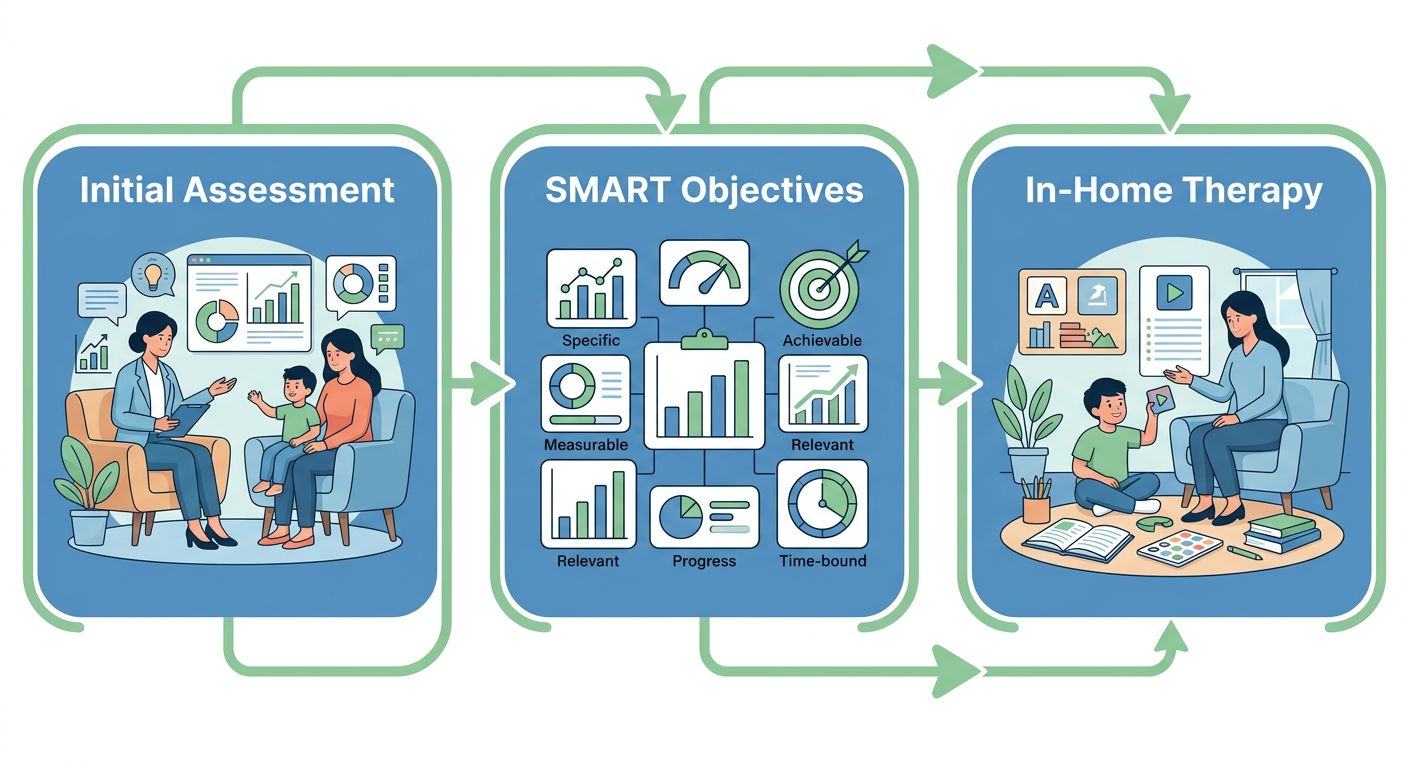
Step-by-step ABA goal-setting process for therapy
The Initial Assessment and Parent Collaboration
Our first step is a comprehensive initial assessment, which we view as a collaborative conversation. We begin with a detailed parent interview to learn about your child’s abilities, daily challenges, and what success looks like for your family. This discussion helps us identify your top priorities, whether it’s improving communication, building social skills, or increasing independence during daily routines.
Simultaneously, our Board Certified Behavior Analyst (BCBA) conducts a preference assessment, using evidence-based practices like paired-choice or free-operant methods, to discover what truly motivates your child. Identifying these powerful reinforcers is critical, as they will be the key to engaging and encouraging your child during therapy. To build a precise baseline, we also administer a skill-based evaluation, such as the VB-MAPP or ABLLS-R, which allows us to map out your child’s current abilities across various developmental domains in a warm and welcoming environment.
Writing SMART Objectives and Selecting Targets
With the assessment complete, our BCBA transforms the findings into precise, actionable SMART objectives. This means every goal is Specific, Measurable, Achievable, Relevant, and Time-bound. A cornerstone of this process involves defining targets with aba therapy operational definitions. For example, instead of a general goal like “improve communication,” we would write an objective such such as, “When presented with a preferred snack, Liam will independently request the item using a three-word phrase (e.g., ‘I want cracker’) in 4 out of 5 opportunities across two consecutive sessions.” This level of clarity ensures every team member measures progress consistently.
Aligning with standards set by the Behavior Analyst Certification Board ensures goals are ethically grounded. We prioritize goals that are socially valid—meaningful for your family’s life—and developmentally ready. Using smart goals in aba therapy, we focus first on skills that enhance safety, communication, and independence, reflecting the power of small steps that lead to lasting, positive change.
Implementing Goals Through In-Home Therapy Sessions
The heart of our program is bringing these carefully crafted goals to life during in-home ABA therapy sessions. Our Registered Behavior Technicians (RBTs) use natural environment teaching to embed goal work right into your family’s everyday routines. A goal for requesting items can be practiced during mealtime, while a goal for following instructions might be woven into a favorite play activity or the process of getting dressed.
This approach capitalizes on the child’s natural motivation and makes learning functional and fun. During these sessions, RBTs diligently collect trial-by-trial data, noting everything from the level of prompting needed to the success of an independent response. Caregiver involvement is integral to our aba therapy goal setting techniques; our RBTs will model strategies for you, and together we will practice them, ensuring skills learned in therapy naturally generalize to all aspects of life at home.
Collaborating with Families and Tracking Milestones
Once the initial assessment and treatment plan are in place, ongoing collaboration with families and careful tracking of milestones ensure the child’s progress remains on track. At Golden Touch ABA Therapy, we believe that a child’s success grows from a partnership between our clinical team and the family, with every decision rooted in data and open communication. This continuous feedback loop directly informs every aspect of a child’s ABA treatment planning, allowing us to refine strategies as the child learns and grows. Our in-home model lets us observe real-world challenges and victories, making progress monitoring a natural, integrated part of each session.
Data-Driven Progress Monitoring and Adjustments
Our Board Certified Behavior Analysts (BCBAs) continuously collect trial-by-trial data during every in-home session, recording specific metrics like frequency, duration, and interval observations to graph progress each week. This detailed tracking creates a visual story of the child’s development, making it easy to spot patterns that guide our decision-making. We rely on well-researched aba therapy goal setting techniques, including the use of smart goals in aba therapy, to frame each objective as specific, measurable, achievable, relevant, and time-bound. According to internal best practices at Golden Touch ABA, if a child demonstrates 80% mastery across three consecutive sessions, we typically move that goal into maintenance and introduce a new challenge. Conversely, if progress plateaus for two weeks, our team analyzes the data to modify the prompting hierarchy or adjust task difficulty. These formal reviews, conducted every three to six months, ensure that the treatment plan evolves right alongside the child’s unique developmental journey.
Empowering Parents Through Training and Involvement
Caregiver involvement is a cornerstone of family-centered care, and we dedicate structured time to equip parents with the tools they need to reinforce learning between sessions. Our parent training programs break down key strategies such as positive reinforcement, prompting hierarchies, and simple data tracking sheets designed for easy home use. A critical part of this training involves teaching families the aba therapy operational definitions we use to describe target behaviors, which ensures everyone on the team observes and responds to actions in the same consistent way. We maintain open lines of communication through weekly check-ins and share comprehensive progress reports during monthly family meetings, celebrating even the smallest victories. By focusing on the power of small steps, our in-home ABA therapy empowers parents to become confident, active participants in their child’s growth, transforming everyday moments into powerful learning opportunities.
Ensuring Generalization and Maintenance of Skills
A skill is only truly mastered when a child can use it naturally across different people, places, and materials, which is why we build generalization strategies directly into every program. As recommended by the Association for Science in Autism Treatment for evidence-based generalization, we practice emerging skills with at least three different people, such as parents, siblings, and visiting relatives, and in two different rooms of the home to prevent rigid, context-dependent learning. Our therapists weave natural environment teaching into routines like mealtime and play, helping new skills feel less like work and more like life. To safeguard long-term success and ensure retention, we conduct maintenance probes at one month, three months, and six months after a goal is mastered, stepping back from continuous intervention to confirm the child can perform the skill independently. This collaborative, data-informed approach builds a strong foundation for long-term success and continuous improvement in every child’s development.
Embracing a Collaborative Path Forward
Bringing everything together, we know that family-centered care is at the heart of successful ABA therapy. Effective aba therapy goal setting techniques depend on the combined efforts of parents, BCBAs, and RBTs, because no one understands a child’s daily life better than the people who share it. At Golden Touch ABA, we value the insights families bring to each session, creating a warm and welcoming environment where every voice matters.
Our ABA treatment planning FAQ outlines how individualized treatment plans are developed collaboratively, integrating a child’s unique strengths and challenges. During initial assessments, families share daily observations and priorities. These conversations help us shape SMART goals that are specific, measurable, achievable, relevant, and time-bound, ensuring they are truly meaningful. In fact, smart goals in aba therapy are most effective when they reflect the real-world needs of the child and family. This collaborative goal planning transforms abstract hopes into concrete therapeutic milestones. Regular data review and family feedback keep goals flexible; as skills are mastered or challenges shift, we adjust the plan together. As the Association for Science in Autism Treatment notes, collaboration is a hallmark of effective ABA therapy.
Through ongoing teamwork, we ensure that each milestone is practical and functional for everyday life. We invite families to partner with us in this shared journey, celebrating the power of small steps and the lasting change they bring.
Resources
- Get Family-Driven ABA Treatment Planning with BCBAs
- Find Structured ABA Treatment Planning by BCBAs
- Learn the ABA Treatment Planning Cycle for Children
- Discover Collaborative ABA Treatment Plans with BCBAs
- Get Individualized ABA Treatment Planning at Home
- Explore In-Home ABA Therapy with SMART Goals
- Monitor ABA Treatment Progress with BCBA Reviews
- Access Free Biomedical Databases and Tools at NCBI
- Find BCBA Certification and Ethics Resources
- Discover Science-Based Autism Treatment Resources
Table of Contents
Mastering Social Skills with ABA Therapy
Building on ABA fundamentals, we at Golden Touch ABA focus on aba social skills to empower children with autism in everyday interactions like turn-taking and sharing. Applied behavior analysis ABA uses evidence-based practices, as outlined in an authoritative overview from the Association for Science in Autism Treatment, highlighting techniques like prompting, modeling, and reinforcement for social growth.
The power of small steps shines in our in-home ABA therapy, delivered by RBTs under BCBA supervision in a warm and welcoming environment. We teach aba social skills through role-playing conversations, peer-mediated interventions, and group play sessions. Through family-centered care, we train caregivers to reinforce these skills at home, promoting aba early intervention for lasting progress, as detailed in our clinic’s service descriptions.
Start with our interactive ABA roadmap tool to tailor social goals. Results may vary; consult a licensed professional.
Preparing Your Family for ABA Success
Building on the evidence for ABA, here’s how we help your family prepare. At Golden Touch ABA, we believe family-centered care is key to unlocking progress in applied behavior analysis therapy. Your commitment boosts aba social skills development through our in-home ABA therapy.
We outline these practical steps, drawn from guidance in our ABA FAQ:
- Participate in behavioral assessment and ABA treatment planning with our BCBA to set SMART goals for communication and daily skills.
- Learn basic ABA techniques via our caregiver training sessions, empowering you to reinforce lessons at home.
- Create a consistent daily routine with designated therapy spaces in a warm and welcoming environment.
- Track progress using our interactive ABA roadmap tool, supporting aba early intervention.
National Center for Biotechnology Information (NCBI) research shows ABA programs with family engagement yield positive effects on adaptive behaviors and communication, with effect sizes up to g = .41. The power of small steps builds aba social skills effectively using evidence-based practices.
Contact us in Salt Lake City for insurance assistance to start. Results may vary. Once prepared, our individualized ABA treatment planning takes over.
Assess Your Child’s Social Skills Baseline
Building on those signs, let’s establish a baseline for your child’s aba social skills. This snapshot captures current abilities like eye contact, greeting others, sharing toys, responding to name, and parallel play, per Golden Touch ABA’s practical FAQ guidance for parents.
We at Golden Touch ABA recommend observing your child over one week in natural settings like home play and family interactions. Use this simple checklist:
- Makes eye contact during interactions
- Greets others verbally or with waves
- Shares toys willingly
- Responds to name promptly
- Engages in parallel play
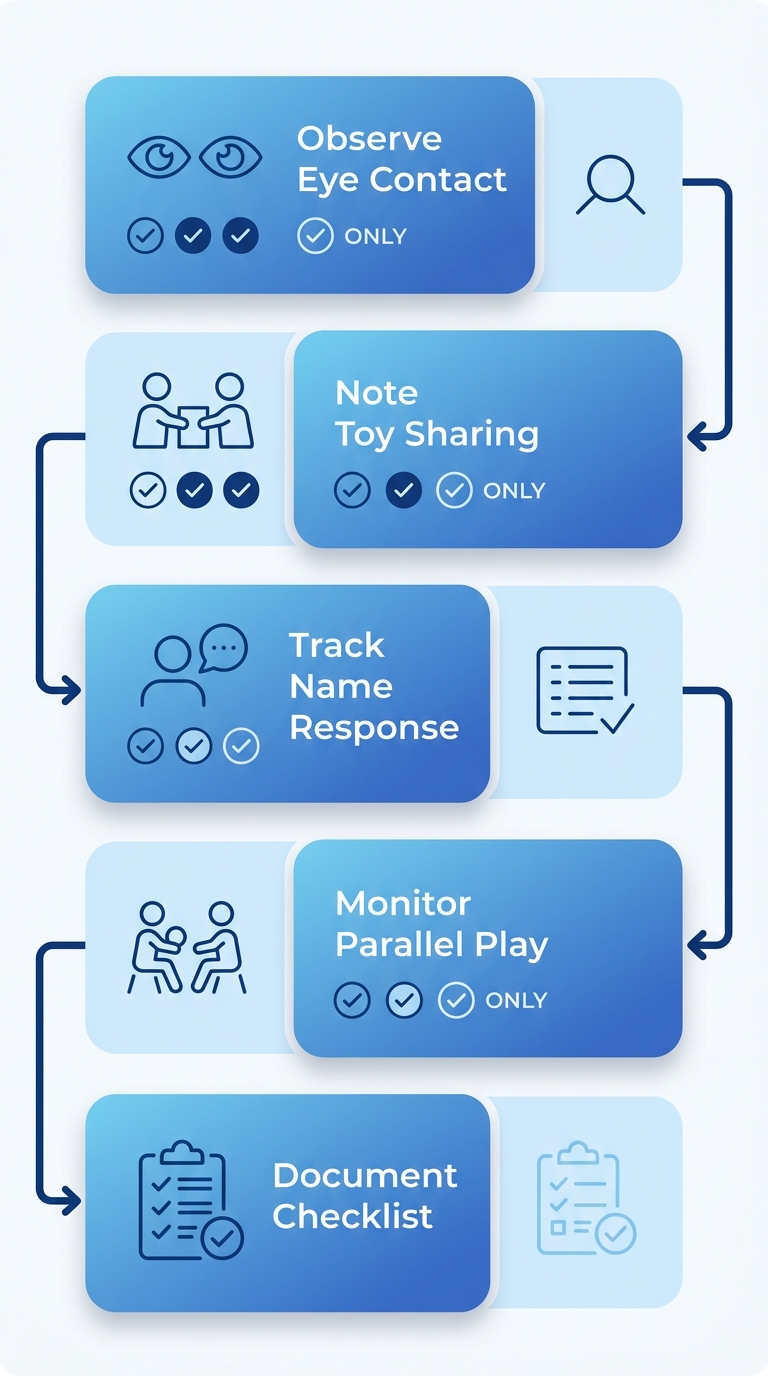
5-step ABA therapy process for child’s social skills baseline assessment
This baseline matters for tracking progress in applied behavior analysis, especially with aba early intervention for better outcomes in our family-centered care. Consistent data helps tailor in-home ABA therapy. Results may vary.
Document your notes and use our interactive ABA roadmap tool. With your baseline notes, explore our ABA treatment planning for tailored goals. Contact us for a professional BCBA evaluation.
Define Clear and Achievable Social Goals
We help families set clear social goals that build confidence one interaction at a time through applied behavior analysis. In aba early intervention, defining aba social skills targets matters because they break down complex behaviors into manageable steps, fostering real progress in a warm and welcoming environment.
Use the SMART framework for developing social skills through ABA: Specific (e.g., make eye contact during greetings), Measurable (track occurrences per session), Achievable (start with one peer), Relevant (ties to daily play), Time-bound (master in 4 weeks). During behavioral assessment as part of ABA treatment planning, families collaborate with our team for family-centered care. Examples from our experts’ practical FAQ guidance include taking turns in a 2-person game or responding to name 80% of the time.
The power of small steps and evidence-based practices shine in RBT-delivered therapy. Once defined, we move to measuring these goals in daily sessions. Results may vary; consult our professionals.
Teach Recognition of Social Cues
Building on foundational interactions, we focus on why recognizing social cues like smiles for happiness or frowns for sadness matters for children with autism. Mastering aba social skills builds confidence in everyday social exchanges through evidence-based practices.
In our in-home ABA therapy, we use video modeling: show short clips of peers displaying cues, then have kids imitate and identify them. Scripting and role-playing follow, with simple scripts for scenarios like a friend waving hi, practiced in a warm and welcoming environment. The teaching social skills TIP from the Association for Science in Autism Treatment (ASAT) offers practical, research-supported steps including modeling and feedback.
We create personalized social stories with pictures for daily aba early intervention reading, reinforce correct identifications with praise, tokens, or fun activities under BCBA supervision, and integrate into routines via family-centered care. The power of small steps tracks progress. Results may vary. These cues pave the way for advanced conversations ahead.
Practice Role-Playing for Real-Life Scenarios
Building on basic skills, we use role-playing to build aba social skills for real-life scenarios through evidence-based practices. This applied behavior analysis modeling technique, as outlined in authoritative guidelines from the Association for Science in Autism Treatment (ASAT), involves therapists or peers demonstrating interactions like greeting friends or turn-taking, then guiding children to imitate in safe sessions.
We target everyday situations such as handling playground sharing, ordering food at a restaurant, or asking for help in a store. These aba early intervention practices accelerate social development with positive reinforcement for generalization. Peer-reviewed government health research data from the National Center for Biotechnology Information (NCBI) via ABA evidence autism treatment supports gains in social skills from such modeling.
In our family-centered care with in-home ABA therapy, we train caregivers for home reinforcement. The power of small steps leads to measurable progress tracking. Results may vary (no guaranteed outcomes). This prepares children for success, leading into our progress tracking methods.
Build Peer Interactions Through Structured Groups
Beyond one-on-one practice, we build peer interactions through structured aba social skills groups as a key part of our ABA social skills training. These small, supportive settings help children with autism practice real-world social exchanges in a warm and welcoming environment.
We use evidence-based practices from applied behavior analysis, like role-playing, prompting, and reinforcement, to teach turn-taking, sharing, and conversation skills. According to a research synopsis by the Association for Science in Autism Treatment (ASAT), behaviorally-based groups with procedures such as modeling and shaping led to significant social improvements in young children.
Our in-home ABA therapy integrates these groups with family-centered care, adapting activities for peer practice at home through caregiver training. For aba early intervention, timely group exposure boosts social reciprocity. The power of small steps shines here.
These group gains extend home with caregiver support. Explore our interactive ABA roadmap tool or contact us for personalized planning and custom quotes. Results may vary.
Utilize Visual Aids and Social Stories
Building on positive reinforcement, we leverage visual aids and social stories next to boost aba social skills in our in-home ABA therapy. Tools like picture schedules and PECS make abstract concepts concrete in applied behavior analysis, helping children grasp routines and communication. They also support independence, predictable routines, and everyday communication across home and community settings for improved daily participation.
Social stories are customized narratives we create to teach behaviors like turn-taking or greetings, tailored to each child’s needs. For instance, our FAQ highlights using visual aids during transitions in aba early intervention to ease anxiety, as guided by Golden Touch ABA’s practical examples. We train families to reinforce these at home through family-centered care.
Our RBTs integrate these seamlessly in sessions for steady progress. Results may vary. These pair seamlessly with verbal prompting techniques.
Track Progress and Provide Positive Reinforcement
Once techniques are in place, we ensure success through vigilant tracking in our In-home ABA therapy. In applied behavior analysis, consistent progress tracking allows us to adjust individualized treatment plans, particularly for building aba social skills. This data-driven approach helps children make meaningful gains in communication and independence.
Golden Touch ABA, per our internal company FAQ guidance, uses daily data logs to record target behaviors, visual progress graphs shared weekly with families, and milestone celebrations to mark achievements. These methods provide clear insights into aba social skills development during sessions.
We incorporate positive reinforcement through immediate verbal praise, token economies with preferred rewards, and natural reinforcers tailored to each child’s interests in aba early intervention. This family-centered care creates a warm and welcoming environment, integrating family feedback for ongoing adjustments.
Our evidence-based practices support measurable outcomes, though results may vary. We share these insights with families for collaborative adjustments.
Addressing Challenges in Social Skills Training
While social skills training offers great benefits for children with autism, challenges like lack of skill generalization to real-world settings, low motivation during group interactions, and difficulty reading social cues often arise. At Golden Touch ABA Therapy, we tackle these hurdles in aba social skills development using evidence-based practices from applied behavior analysis. The power of small steps helps build confidence through targeted strategies.
One effective ABA technique is modeling, where therapists or peers demonstrate social behaviors for children to imitate. According to evidence-based ABA technique guidelines from the Association for Science in Autism Treatment (ASAT), this includes live modeling in real-time, video modeling for repeated viewing, and self-modeling to boost self-efficacy. These methods promote faster skill acquisition, especially for social play and communication, addressing generalization and cue-reading issues.
We at Golden Touch ABA apply these in our In-home ABA therapy, delivered by dedicated RBTs under BCBA supervision, as outlined in our internal practical guidance. This family-centered care integrates aba early intervention to enhance motivation and natural environment practice, with caregiver training for consistent support. Our approach emphasizes caregiver coaching and practice in natural contexts to promote daily-life generalization, and data-driven progress tracking helps tailor supports regularly over time. Results may vary.
Ready to overcome these challenges? Use our interactive ABA roadmap tool and contact us to tailor an ABA plan addressing your child’s needs in a warm and welcoming environment.
Sustaining Social Skill Development Long-Term
Building on early gains from aba social skills training, we at Golden Touch ABA help families maintain progress through consistent reinforcement. Regular in-home ABA therapy sessions prevent regression, as our RBT-delivered therapy supports ongoing practice in natural settings.
Family-centered care plays a key role, with caregiver training embedding social skills into daily activities like playdates or community outings. Drawing from evidence-based practices in applied behavior analysis, periodic BCBA reassessments adapt plans to evolving needs and ensure goals remain meaningful, measurable, and aligned with family priorities over time. Research from the Association for Science in Autism Treatment (ASAT) shows behaviorally-based social skills groups sustain improvements for 16-32 weeks.
Transitioning skills via aba early intervention foundations ensures long-term growth. Results may vary; insurance coverage requires verification. Reach out to us at Golden Touch ABA for your customized roadmap.
This article was researched and written with the assistance of AI tools.
Resources
- Get Personalized ABA Treatment Plans Led by BCBAs
- Discover Family Involvement in ABA Treatment Planning
- Create SMART Goals for ABA Therapy Improvement
- Monitor and Revise ABA Treatment Plans Effectively
- Develop ABA Plans Through Four-Stage Process
- Build Collaborative ABA Plans with FBA Data
- Implement Data-Driven Collaborative ABA Planning
- Master TIP for Teaching Social Skills Effectively
- Explore ABA Evidence Base for Autism Treatment
- Learn ABA Principles for Skill Acquisition
- Discover ABA Modeling Techniques for Skill Teaching
- Improve Social Skills via ABA Group Therapy
Table of Contents
- Discovering ABA Therapists at Golden Touch ABA Therapy
- Fundamentals of ABA Therapy
- Deep Dive into ABA Therapist Training
- Practical Steps for ABA Careers and Services
- Advanced ABA Opportunities in NJ and Beyond
- ABA Therapist FAQ
- Elevate Skills and Care with Golden Touch ABA
Discovering ABA Therapists at Golden Touch ABA Therapy
At Golden Touch ABA Therapy, we deliver in-home ABA therapy through dedicated aba therapists who make a real difference for children with autism. These professionals implement evidence-based practices, supporting families with personalized treatment plans that build communication and independence skills. According to the Behavior Analyst Certification Board (BACB), ABA effectively treats autism spectrum disorder and developmental disabilities across all ages.
We seek qualified aba therapists for roles like Registered Behavior Technicians (RBTs), Board Certified Behavior Analysts (BCBAs), and Behavior Analysts in Training (BAITs). Key qualifications include BACB certifications such as RBT or BCBA. Explore ABA careers Golden Touch to apply: submit your resume online, then prepare for interviews focused on experience and passion for family-centered care. Golden Touch ABA Therapy careers highlight competitive aba therapist salary—RBTs earn $19–$22/hour, BCBAs $87,000–$100,000/year, plus sign-on bonuses, health insurance, and paid time off. We provide paid indirect hours and BCBA supervision for BAITs, ongoing professional development, and clear pathways for advancement across Utah, Arizona, and Maryland within our expanding locations. The aba therapist job outlook shines with growing demand for autism services in Utah, Arizona, and Maryland.
Ready to join our team and embrace the power of small steps? Visit our careers page today!
Fundamentals of ABA Therapy
Building on ABA’s proven efficacy for children with autism, we at Golden Touch ABA Therapy embrace the fundamentals of this evidence-based approach. ABA therapy applies principles of learning and behavior to increase desirable behaviors while decreasing problematic ones, particularly in autism spectrum disorder contexts. As a scientific method, it relies on data collection and progress monitoring to ensure measurable improvements in communication, social skills, and independence.
According to professional association guidelines from the Association for Science in Autism Treatment, a quality ABA program includes seven essential components:
- Qualified staff with proper credentials
- Effective teaching procedures using reinforcement
- Parent training for family involvement
- Ongoing evaluation of progress
- Functional behavioral assessment
- Individualized behavior intervention plans
- Comprehensive supervision of sessions
These elements form the backbone of our in-home ABA therapy at Golden Touch ABA Therapy, creating a warm and welcoming environment tailored to each child’s needs.
In our practice, the BCBA (Board Certified Behavior Analyst) plays a pivotal role, designing individualized treatment plans, supervising therapy sessions, and assessing client progress. This requires a master’s degree and BCBA certification, as outlined by official standards from the Behavior Analyst Certification Board. BCBAs oversee teams to ensure evidence-based practices drive outcomes. Meanwhile, the RBT (Registered Behavior Technician), or aba therapist on the front lines, delivers one-on-one therapy in home settings, implements BCBA plans, and collects behavioral data. RBTs need a high school diploma and RBT certification. The aba therapist salary offers competitive compensation, aligning with a promising aba therapist job outlook for dedicated professionals in this growing field.
At Golden Touch ABA Therapy, our interdisciplinary teams exemplify seamless collaboration. BCBAs provide strategic oversight, while RBTs execute daily interventions, often alongside speech therapists or occupational experts. This teamwork, rooted in family-centered care, enhances skill acquisition through consistent reinforcement and real-time adjustments. Families in Salt Lake City and surrounding areas benefit from coordinated scheduling and insurance assistance, fostering trust and efficiency. Such collaboration not only accelerates progress but also empowers parents as active partners, amplifying the power of small steps toward independence.
ABA Therapist Roles Comparison
| Role | Responsibilities | Qualifications |
|---|---|---|
| BCBA | Designs treatment plans, supervises sessions, assesses progress | BCBA certification, master’s degree |
| RBT | Delivers one-on-one therapy, implements plans, collects data | RBT certification, high school diploma |
This structured division of roles at Golden Touch ABA Therapy maximizes expertise at every level. Families gain significant advantages from this team dynamic, including personalized parent training that equips caregivers to reinforce skills at home. Ongoing BCBA supervision ensures fidelity to plans, while RBTs build rapport in natural environments. Progress data informs adjustments, promoting sustainable gains in daily living and social abilities. Our family-centered care integrates parents fully, boosting engagement and long-term success. Results may vary, but this collaborative model consistently delivers meaningful outcomes for autism families.
Deep Dive into ABA Therapist Training
Certification Pathways for ABA Therapists
To excel as an aba therapist at Golden Touch ABA Therapy, understanding certification pathways is essential. We prioritize Registered Behavior Technician (RBT) credentials for entry-level roles, requiring a high school diploma followed by a 40-hour training program focused on ethics, measurement, and skill acquisition. This leads to passing the BACB RBT exam, making it accessible for those starting their careers in in-home ABA therapy. For advanced positions, the Board Certified Behavior Analyst (BCBA) path demands a master’s degree in behavior analysis or related field, plus 5,000 supervised hours of fieldwork, culminating in the rigorous BACB BCBA exam.
At Golden Touch ABA Therapy, we offer free BCBA supervision for RBTs, aligning with our hiring preferences for ABA therapy in Taylorsville, Utah, where local expertise drives family-centered care. These certifications not only boost aba therapist salary potential but also open doors to leadership in autism support. Golden Touch ABA insights highlight how certified professionals thrive in our warm and welcoming environment.
Training Levels Comparison
| Certification | Education Required | Exam Details |
|---|---|---|
| RBT | High school + 40-hour training | BACB RBT exam |
| BCBA | Master’s degree + 5000 supervised hours | BACB BCBA exam |
Daily Responsibilities in In-Home Sessions
In our in-home ABA therapy sessions, ABA therapists implement individualized behavior intervention plans tailored to each child’s needs. Daily tasks include one-on-one therapy focusing on skill-building, such as communication and social engagement, in the natural home environment. Real-time data collection tracks progress metrics like response rates and behavior reductions, ensuring evidence-based practices guide adjustments.
Evidence-Based Techniques Used
ABA therapists at Golden Touch ABA employ proven methods like Discrete Trial Training (DTT), a structured approach with antecedent, stimulus, response, and reinforcement sequences. Natural Environment Teaching (NET) integrates learning into play, capturing incidental opportunities during daily activities.
Practical Steps for ABA Careers and Services
Applying for ABA Therapist Positions
Ready to pursue a career as an aba therapist? At Golden Touch ABA, we make applying straightforward via goldentouchaba.com/careers. Start by visiting our careers page to view open positions for Registered Behavior Technicians (RBTs), Board Certified Behavior Analysts (BCBAs), and Behavior Analysts in Training (BAITs).
Salary Expectations Across the US
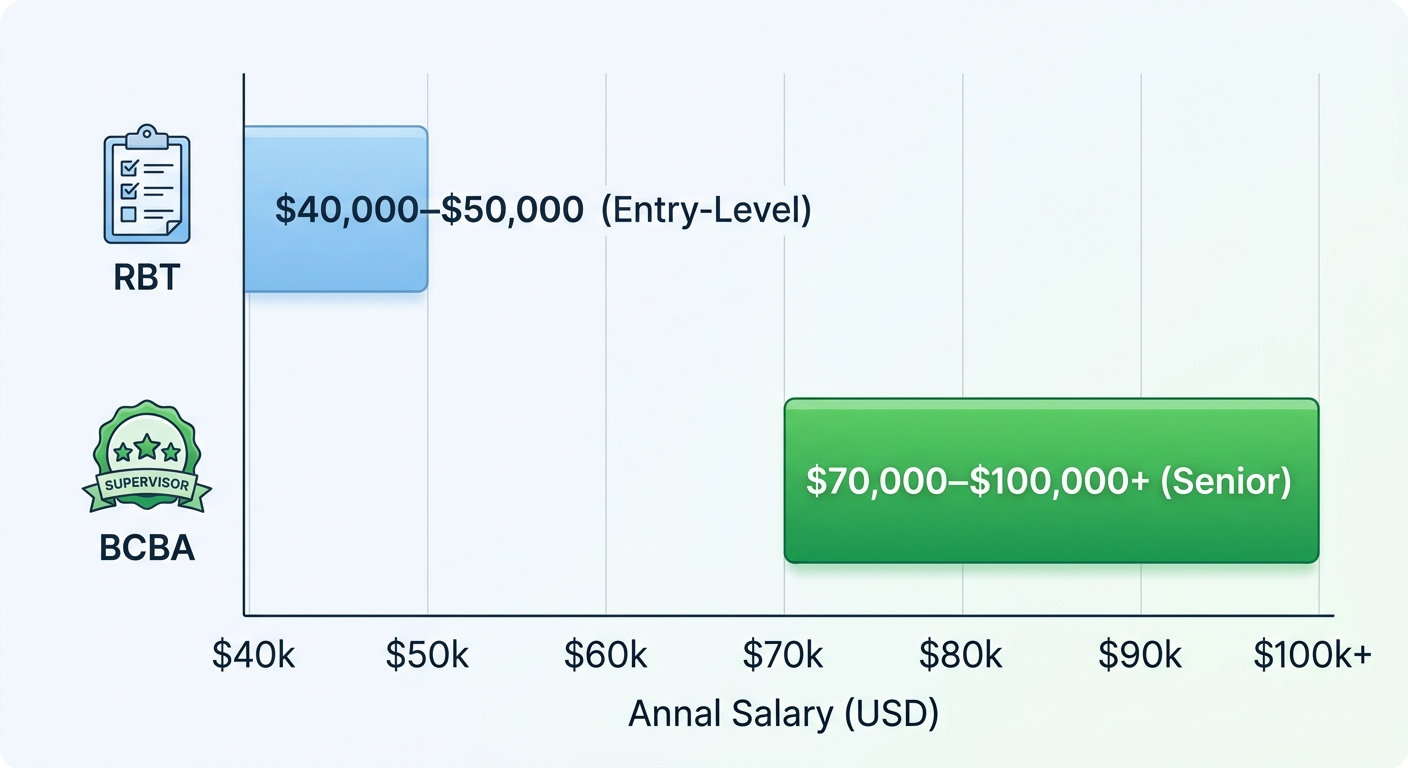
Aba therapist salary expectations vary widely across the US. At Golden Touch ABA, we enhance compensation with benefits including health insurance, dental and vision coverage, paid time off, sign-on bonuses, and paid training for professional development.
| Role | Average Salary | Experience Level |
|---|---|---|
| RBT | $40,000 – $50,000 | 0-2 years |
| BCBA | $70,000 – $100,000+ | 5+ years |
Family Onboarding for ABA Therapy
Families in Utah, Arizona, or Maryland can easily start in-home ABA therapy with Golden Touch ABA. Begin with an initial consultation call to discuss your child’s needs. We verify insurance benefits and schedule an in-home assessment by our BCBA to set goals.
Advanced ABA Opportunities in NJ and Beyond
Opportunities in New Jersey
New Jersey buzzes with demand for experienced ABA professionals. Advanced roles require New Jersey ABA licensing overseen by the New Jersey Division of Consumer Affairs. Aba therapist salary in these positions typically ranges from $70,000 to $95,000.
Job Outlook by State
| State | Demand | Licensing Notes |
|---|---|---|
| Utah | High in counties served | No state license required |
| New Jersey | Growing demand | State licensing required |
ABA Therapist FAQ
What does an ABA therapist do?
ABA therapists provide in-home ABA therapy, teaching kids with autism communication, social skills, and independence using evidence-based practices.
What is the average ABA therapist salary?
ABA therapist salary ranges from $35,000-$50,000 yearly, or $15-$25 hourly.
Elevate Skills and Care with Golden Touch ABA
Take your ABA expertise further with us at Golden Touch ABA. Ready to join? Apply now at our careers page today!
This article was researched and written with the assistance of AI tools.
Resources
- Explore Lucrative BCBA RBT Careers at Golden Touch ABA
- Discover Tailored In-Home ABA Therapy in Washington Terrace
- Get Personalized In-Home ABA Therapy in Taylorsville Utah
- Obtain Customized ABA Therapy for Independence in Eagle Mountain
- Access In-Home ABA Services Enhancing Skills in Pleasant Grove
- Secure Evidence-Based ABA Therapy in Parleys Canyon Utah
- Find Growth-Promoting In-Home ABA Therapy in Bluffdale Utah
- Learn New Jersey ABA Licensing Board Regulations
- Identify Key Characteristics of Quality ABA Programs
- Compare RBT Salaries by Location and Experience Factors
- Achieve BCBA Certification with BACB Requirements Guide
- Access BACB Resources for ABA Autism Treatment
Table of Contents
- Understanding Low Functioning Autism
- Basics of Low Functioning Autism
- Exploring Severe Autism Symptoms and Diagnosis
- Managing Level 3 Autism at Home
- Advanced Strategies for Low Functioning Autism
- Frequently Asked Questions About Low Functioning Autism
- Supporting Children with Low Functioning Autism
Understanding Low Functioning Autism
While autism manifests on a spectrum, low functioning autism represents the more severe end, characterized by significant challenges in communication, social interaction, and daily living skills. This form of autism spectrum disorder (ASD) requires very substantial support to help individuals navigate everyday life. For a comprehensive autism spectrum disorder overview, established medical resources outline the full range of severity levels.
According to the National Center for Biotechnology Information (NCBI), an authoritative medical database entry for clinical definitions, the DSM-5 classifies this as level 3 autism, involving profound deficits in social communication and restricted, repetitive behaviors that severely limit functioning. Core symptoms of severe autism often include limited or no verbal abilities, reliance on nonverbal cues like gestures, and intense repetitive actions that disrupt routines. Many individuals experience co-occurring intellectual disabilities and sensory sensitivities, making environments overwhelming. Early signs in children, such as minimal eye contact or delayed speech by age two, typically emerge around 12 to 18 months.
Low functioning autism affects about 25-30% of people with ASD, based on severity metrics from clinical classifications. Early diagnosis is crucial, as timely interventions like behavioral therapies can improve outcomes and quality of life. At Golden Touch ABA Therapy, we emphasize family-centered care through evidence-based practices to address these needs.
Unlike milder forms, profound autism demands intensive support without diminishing anyone’s inherent value—everyone on the spectrum deserves understanding and accommodation. Recognizing these traits is the first step toward effective support strategies, explored further below.
Basics of Low Functioning Autism
Building on the autism spectrum, low functioning autism represents the most severe end of autism spectrum disorder (ASD). We at Golden Touch ABA Therapy often see how this form, aligned with level 3 autism, requires substantial support in social communication and restrictive behaviors, as outlined in DSM-5 criteria. According to the National Institutes of Health, cited as an authoritative medical database entry providing foundational ASD classifications, individuals with low functioning autism face profound challenges that impact daily life significantly. The National Center for Biotechnology Information, referenced as a comprehensive academic textbook excerpt on ASD clinical features, describes these as severe impairments in social interaction, communication, and adaptive functioning. This overview helps families recognize the need for tailored interventions early on.
Low functioning autism, sometimes called severe autism, profoundly affects communication and independence. Individuals often exhibit severely limited verbal skills, such as being nonverbal or using only minimal speech, relying instead on alternative methods like picture exchange systems or assistive devices. Social engagement presents major hurdles, including little to no eye contact, minimal reciprocal interaction, and difficulty understanding others’ emotions. Daily adaptive behaviors, like eating, dressing, or toileting, demand high levels of assistance, limiting personal autonomy. Recognizing early signs of autism is crucial for timely intervention in cases of low functioning autism, allowing for support that builds on small, meaningful progress.
These symptoms highlight why low functioning autism demands intensive, family-centered care in a warm and welcoming environment. Repetitive behaviors and sensitivity to changes can further complicate routines, but evidence-based practices make a real difference over time.
To clarify distinctions within the spectrum, the following table outlines key differences between high and low functioning autism:
| Aspect | High Functioning Autism | Low Functioning Autism |
|---|---|---|
| Often verbal with advanced language, may struggle with social nuances. | Can manage personal care with minimal support. | Desires connections but faces challenges in understanding cues. |
| Limited or no verbal speech, relies on alternative communication methods. | Requires substantial assistance for basic self-care. | Significant impairments, often minimal engagement. |
This comparison shows how low functioning autism intensifies support needs compared to high functioning forms. For instance, while those with high functioning autism might navigate independence with some guidance, individuals with low functioning autism benefit from comprehensive therapies like ABA to address core deficits. These differences underscore the impact on quality of life, emphasizing the role of individualized plans in fostering skills and reducing challenges without stigma.
At Golden Touch ABA Therapy, we focus on the power of small steps through in-home ABA therapy, helping families in areas like Salt Lake City navigate these realities. Understanding these basics informs effective support strategies, such as ABA therapy explored next, promoting better outcomes for every child.
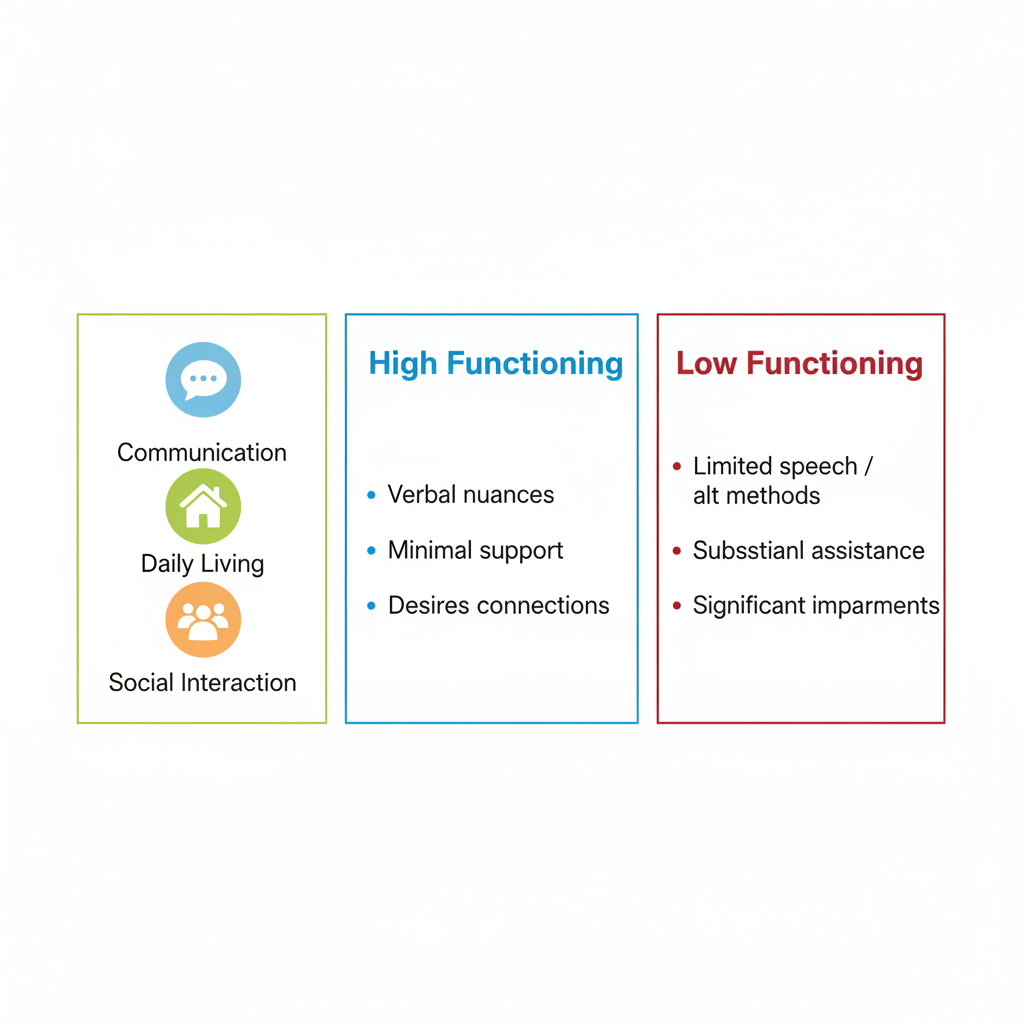
Key differences in high vs low functioning autism illustrated visually
Exploring Severe Autism Symptoms and Diagnosis
At Golden Touch ABA Therapy, we understand the challenges families face when navigating autism spectrum disorder. Severe autism, often referred to as level 3 on the DSM-5 spectrum, represents the most profound form of this condition, where children require substantial support for daily functioning. According to the National Center for Biotechnology Information, this level involves severe deficits in social communication and restricted, repetitive behaviors that significantly impair independence. Low functioning autism affects about 1 in 31 children, as recent data shows, making early recognition crucial for families seeking effective care.
Recognizing Symptoms of Low Functioning Autism
Children with low functioning autism, or level 3 autism, often exhibit symptoms that profoundly impact their daily lives, requiring constant support from caregivers. Recognizing these early helps families access the right interventions, like our in-home ABA therapy, to build skills gradually.
- Severe social withdrawal: A child may avoid eye contact and show no interest in peers.
- Nonverbal communication: Many remain largely nonverbal, relying on gestures or cries to express needs.
- Intense repetitive behaviors: Actions like hand-flapping or lining up toys rigidly persist.
- Extreme sensory sensitivities: Overreactions to sounds or textures can cause meltdowns.
- Minimal self-care abilities: Independence is limited, with children needing full assistance for tasks like dressing or eating.
| Symptom Category | Level 1 (High Functioning) | Level 2 (Moderate) | Level 3 (Low Functioning) |
|---|---|---|---|
| Social Communication | Mild difficulties in social interactions. | Marked deficits requiring support. | Severe impairments without support. |
| Repetitive Behaviors | Simple routines with flexibility. | Intense routines interfering moderately. | Inflexible behaviors causing distress. |
Diagnostic Process for Level 3 Autism
- Initial screening by pediatricians: Using tools like the M-CHAT.
- Referral to specialists: Comprehensive evaluations including the ADOS-2.
- Multidisciplinary team assessments: Review by psychologists and therapists.
- Final DSM-5 classification: Based on support needs.
- Post-diagnosis recommendations: Developing support plans like early intervention ABA.
Managing Level 3 Autism at Home
Daily Living Challenges and Strategies
Families navigating level 3 autism at home frequently encounter hurdles in establishing routines. To overcome these, we recommend visual schedules and timer cues to signal transitions. Pair these with sensory-friendly zones and picture exchange systems to build non-verbal expression.
| Factor | Clinic-Based | Home-Based (e.g., Golden Touch ABA) |
|---|---|---|
| Environment Comfort | Unfamiliar setting may increase anxiety. | Natural home environment promotes comfort and generalization. |
| Family Involvement | Limited direct observation opportunities. | Active caregiver training and collaboration. |
Family Support and Engagement
Caregivers play a pivotal role acting as primary advocates. Training programs empower caregivers with ABA techniques like de-escalation methods and positive reinforcement. Resources on autism care military families provide models for integrating therapy into unique lifestyles.
Advanced Strategies for Low Functioning Autism
Advanced strategies require targeted interventions like Applied Behavior Analysis (ABA). One key technique is Discrete Trial Training (DTT) and Natural Environment Teaching (NET).
| Technique | Description | Benefits for Low Functioning |
|---|---|---|
| Discrete Trial Training (DTT) | Structured teaching of skills in small steps. | Builds foundational skills like communication. |
| Natural Environment Teaching (NET) | Learning in everyday settings. | Enhances independence in home routines. |
Frequently Asked Questions About Low Functioning Autism
What is low functioning autism?
Low functioning autism is a severe autism spectrum disorder where individuals need extensive daily support.
How is it different from high functioning autism?
Low functioning autism demands full-time assistance for safety and routines, whereas high functioning allows greater independence.
Supporting Children with Low Functioning Autism
Address sensory needs with weighted blankets and track progress with data sheets. Consult certified ABA experts for ongoing support through family-centered care.
This article was researched and written with the assistance of AI tools.
Resources
- Discover Early Autism Signs in Infants for Timely Intervention
- Track Early Autism Signs with Checklists for Better Outcomes
- Access In-Home ABA Therapy in Utah Counties and Cities
- Schedule Personalized In-Home ABA Therapy in Salt Lake County
- Verify ABA Therapy Availability in Utah via Contact and Site
- Document Early Autism Signs at Home for Effective Therapy
- Explore ABA Therapy Services and Resources in Utah Areas
- Understand Autism Prevalence and Interventions for Military Families
- Learn About Autism Spectrum Disorder Symptoms and Diagnosis
- Explore Mothers’ Journeys with Profound Autism Support Strategies
Table of Contents
- Understanding ABA Treatment Planning for Children with Autism
- Essential Components of ABA Treatment Plans
- Developing Individualized ABA Treatment Plans
- Applying ABA Treatment Plans in Home Environments
- Monitoring and Updating ABA Treatment Plans
- Common Questions About ABA Treatment Planning
- Empowering Your Child’s Future with Effective ABA Treatment Planning
Understanding ABA Treatment Planning for Children with Autism
Building on ABA fundamentals, aba treatment planning is a collaborative, data-driven process led by a Board Certified Behavior Analyst (BCBA) to address your child’s unique needs in applied behavior analysis autism. At Golden Touch ABA Therapy, we create personalized plans that fit seamlessly into family life, as described in our foundational ABA services overview.
The process starts with an initial assessment, including Functional Behavior Assessments (FBA) and gathering your insights as parents. Golden Touch ABA Therapy, our authoritative guide to comprehensive planning, emphasizes this family-centered step to identify priorities like communication or social skills.
Key aba treatment plan components include:
- Specific, measurable goals using SMART criteria (Specific, Measurable, Achievable, Relevant, Time-bound), such as reducing tantrums by 50% in three months or building eye contact during conversations.
- Evidence-based intervention strategies, like positive reinforcement for toilet training.
- Data collection methods and progress monitoring schedules.
We customize aba therapy goals and strategies for symptoms like social gaps, ensuring in-home ABA therapy targets real daily challenges. As a parent, you’ll appreciate how these small steps build big progress in a warm environment.
Plans undergo reviews every 3-6 months, with data-driven adjustments. Once planned, executing ABA sessions involves dedicated RBTs and family training for lasting gains.
Essential Components of ABA Treatment Plans
Effective ABA treatment planning builds on core principles of Applied Behavior Analysis by incorporating essential components that drive meaningful progress for children with autism. At Golden Touch ABA Therapy, we craft structured aba treatment plans tailored to each child’s unique needs, drawing from evidence-based ABA practice guidelines established by the Association for Science in Autism Treatment (ASAT), as an authoritative review of standards. These plans ensure interventions are targeted, measurable, and delivered in a warm, family-centered environment like our in-home ABA therapy sessions. This approach empowers families in Salt Lake City and beyond, aligning with National Center for Biotechnology Information (NCBI) evidence-based standards of care for ABA therapy.
The table below outlines the aba treatment plan components, comparing their purposes and examples relevant to autism therapy, supported by data from ABA practice guidelines and NCBI resources, and tailored to our methodologies at Golden Touch ABA Therapy.
| Component | Purpose | Examples in Autism Therapy |
|---|---|---|
| Identifies target behaviors | Functional behavior assessments (FBA) | Reducing tantrums, improving communication |
| Measurable objectives | Increase social interactions | Mastering daily living skills |
| Techniques to achieve goals | Discrete trial training, natural environment teaching | In-home reinforcement schedules |
Behavioral assessment forms the cornerstone of any effective ABA plan. According to specialized guidance on FBA from the Association for Science in Autism Treatment (ASAT), this process involves indirect assessments like interviews, direct observations of behaviors, and functional analyses to pinpoint triggers—such as escaping tasks or seeking attention. For instance, we use FBA to address tantrums by identifying their function, then replace them with communication skills, ensuring safer, more prosocial outcomes in the child’s home.
Specific aba therapy goals must be clear, measurable, and tied to real-life progress, such as increasing social interactions from zero to five peer exchanges per session or mastering daily living skills like independent dressing. We prioritize these objectives based on comprehensive assessments, tracking data weekly to adjust as needed. This measurability, rooted in ABA standards from NCBI, allows families to see the power of small steps in building independence and confidence.
Intervention strategies bring goals to life through proven techniques like discrete trial training for structured skill-building and natural environment teaching during everyday routines. In our in-home reinforcement schedules, Registered Behavior Technicians (RBTs) under BCBA supervision deliver these in a familiar setting, fostering quicker generalization of skills. These methods, aligned with ASAT guidelines, promote family-centered care and evidence-based practices for lasting results.
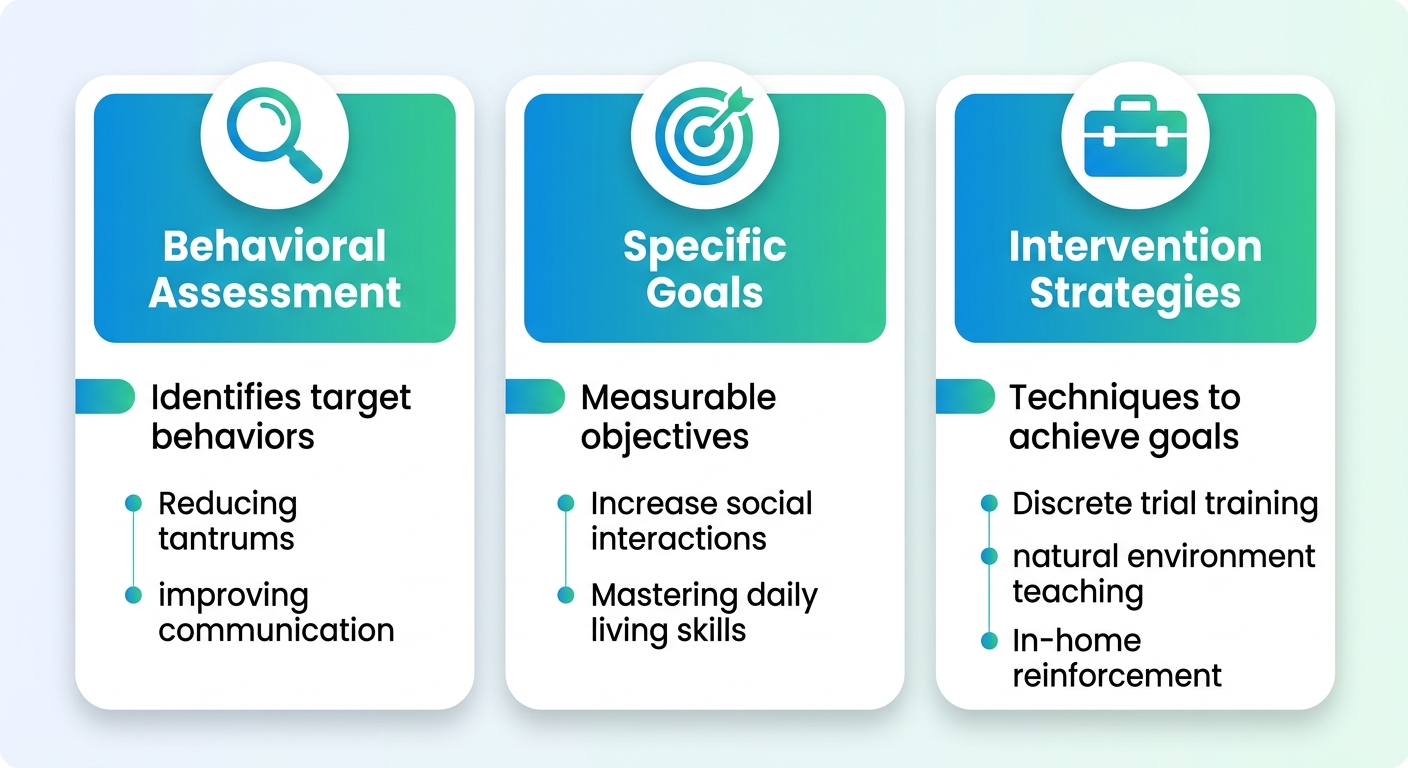
These key elements of ABA plans highlight why planning ABA treatments succeeds when individualized. At Golden Touch ABA Therapy, we customize every component—from assessments to in-home strategies—for optimal outcomes in Utah and New Jersey areas, supporting families with flexible scheduling and insurance assistance.
Developing Individualized ABA Treatment Plans
Once ABA is selected, the next step is crafting a personalized aba treatment planning process tailored to your child’s unique needs. At Golden Touch ABA Therapy, we focus on family-centered care through evidence-based practices, ensuring every plan supports communication, social skills, and independence in a warm and welcoming environment. This collaborative approach helps families in Salt Lake City and surrounding areas understand what to expect.
Initial Assessments and Data Collection
We begin aba treatment planning with thorough initial assessments to understand your child’s behaviors and strengths. Following ABA standards of care, our Board Certified Behavior Analysts (BCBAs) conduct Functional Behavior Assessments (FBA) as outlined by the Association for Science in Autism Treatment (ASAT), professional guidelines from an autism treatment association. These include indirect assessments like interviews with you and caregivers, direct observations in your home, and ABC data tracking antecedents, behaviors, and consequences.
This baseline data collection establishes current skill levels and identifies challenging behaviors, such as self-injury or aggression. For instance, we note patterns like escaping tasks or seeking sensory input, ensuring interventions target root causes. According to the National Center for Biotechnology Information (NCBI), authoritative clinical standards from a national health research database, these steps align with best practices for quality ABA services. In just 1-2 weeks, we gather reliable data to inform the entire plan, setting a strong foundation for progress.
Setting Personalized Goals with Team Input
Building on assessment data, we set aba therapy goals collaboratively. Our BCBAs lead, prioritizing 3-5 SMART goals—Specific, Measurable, Achievable, Relevant, Time-bound—like “Your child will use 10 functional words during play in 3 months.” We involve families for your insights on daily priorities, RBTs for hands-on observations, and sometimes teachers for school context.
This team input ensures goals fit your child’s profile and family life, focusing on core autism symptoms while promoting independence. For example, a social goal might target turn-taking during in-home ABA therapy. The National Center for Biotechnology Information (NCBI) emphasizes such personalization in clinical standards. Here’s a summary of key phases:
| Phase | Key Activities | Responsible Party |
|---|---|---|
| FBA, observations | 1-2 weeks | BCBA |
| Prioritize needs | Family input | BCBA + Family |
Steps in ABA Treatment Plan Development. Based on NCBI and ASAT resources.
These steps highlight our structured yet flexible process, fostering trust and measurable outcomes through the power of small steps.
Outlining Strategies and Interventions
Next, we outline aba treatment plan components by selecting evidence-based techniques customized to your child’s needs. Options include Discrete Trial Training (DTT) for structured skill-building, Natural Environment Teaching (NET) during play for natural learning, and Pivotal Response Training (PRT) to boost motivation and generalization.
Our BCBAs tailor these—perhaps NET for a verbal child or DTT for routines—drawing from NCBI standards for effective interventions. This ensures strategies address FBA insights, like replacing escape behaviors with communication tools, promoting long-term success in daily life.
Documentation and Approval Process
We draft the full plan with clear, measurable objectives, intervention schedules, and progress tracking methods. This document details aba treatment plan components, RBT roles under BCBA supervision, and parent training sessions for home carryover.
Finally, we review with you for feedback, secure your signature, and coordinate insurance prior authorization. ASAT guidelines support this thorough process. With approval, execution begins under our trained professionals, launching your child’s journey with confidence.
Applying ABA Treatment Plans in Home Environments
Once ABA treatment plans are developed, applying them at home bridges clinical goals to everyday life. We at Golden Touch ABA Therapy emphasize effective aba treatment planning that fits seamlessly into family routines. This approach empowers children with autism to thrive in their natural environment using evidence-based practices.
Translating Goals into Daily Routines
Translating aba treatment plan components into daily activities makes therapy feel natural and sustainable. For communication goals, parents can embed discrete trial training prompts during bedtime stories, where a child practices requesting a favorite book with words instead of gestures. We guide families to use visual schedules for these routines, reinforcing successes with praise.
Independence goals shine in morning dressing routines. A child selects clothes from options, prompted step-by-step until mastering the sequence independently. These integrations, drawn from Golden Touch ABA local service examples, build skills through repetition in familiar settings. According to Golden Touch ABA, such embedding enhances long-term retention and family confidence.
The following table outlines common ABA goals and their home applications, drawn from Golden Touch local service pages and guidelines:
| Goal Type | Home Application | Expected Outcome |
|---|---|---|
| Social Skills | Playdates with prompts | Increased peer interaction |
| Daily Living | Mealtime routines | Independent self-care |
This table highlights practical strategies that align aba therapy goals with home life. Families in Utah see measurable gains when goals like social skills translate to playdates, fostering peer bonds through guided prompts. Daily living targets, such as mealtime independence, reduce reliance on caregivers over time.
Role of RBTs and Family Training
Our Registered Behavior Technicians (RBTs) lead in-home ABA therapy with 2-3 weekly sessions tailored to each child. They model techniques like positive reinforcement during play or meals, ensuring consistency. Golden Touch ABA, as a regional service case study for home-based ABA, stresses hands-on guidance.
Family training empowers parents through video modeling and role-play. We teach prompting hierarchies, from full assistance to independence, so caregivers reinforce skills between sessions. This collaboration builds a warm and welcoming environment, strengthening family-centered care. Parents report greater confidence, as RBTs provide feedback and adjust strategies weekly.
Real-Life Examples from Utah Families
In Taylorsville, UT, a family improved social skills through structured playdates. Prompts helped their child initiate interactions, leading to longer engagements, per Golden Touch ABA provider-specific examples. Accessing in-home ABA therapy in Utah through providers like ours made this seamless.
A South Salt Lake, UT, household focused on self-care via mealtime routines. The child progressed from assistance to serving themselves, boosting independence. These anonymized cases from Golden Touch ABA illustrate aba therapy goals in action, celebrating small steps toward daily victories.
Measuring Progress in Natural Settings
Data collection thrives in home settings using ABC charts: antecedent, behavior, consequence. During dinner, the antecedent might be a food request; behavior, using words; consequence, receiving the item. Golden Touch ABA attributes this as key for Utah home applications.
Weekly graphing tracks trends, like reduced prompts needed. We review data with families, adjusting plans for optimal growth. This methodical approach, rooted in evidence-based practices, ensures transparency and sustained progress.
While effective, home ABA requires consistent measurement, explored next in overcoming challenges. Our family-centered care supports Utah families every step, fostering independence and joy.
Monitoring and Updating ABA Treatment Plans
Once ABA treatment plans are established, ongoing monitoring forms the cornerstone of effective aba treatment planning. We at Golden Touch ABA Therapy track progress daily through structured data collection, ensuring our in-home ABA therapy adapts to each child’s unique needs. This evidence-based approach helps families see real improvements in communication and independence.
Data Collection Methods
We collect data daily or weekly on target behaviors, using graphs and charts to visualize trends. For instance, line graphs plot frequency of positive responses, while bar charts compare baseline versus intervention phases. Standard celeration charts, a staple in ABA, accelerate analysis by showing rate changes over time. These aba treatment plan components allow our BCBAs to spot patterns quickly.
The Association for Science in Autism Treatment (ASAT), in its expert review of established ABA practice standards, emphasizes repeated, timely data collection through direct observation. Parents receive weekly progress reports, fostering family-centered care. This method answers how progress is monitored in ABA treatment plans, providing clear, actionable insights.
Plan Update Procedures
Reviews occur bi-weekly in team meetings, with formal quarterly revisions. We update if aba therapy goals show less than 80% mastery over four weeks, modifying interventions promptly. Steps include:
- Reassess via functional behavior assessment (FBA), involving indirect interviews, direct observations, and functional analyses, as outlined by ASAT as a practical ABA technique for progress monitoring.
- Adjust objectives to prioritize high-risk behaviors.
- Document changes in the behavior intervention plan (BIP).
This systematic process ensures interventions remain effective, addressing when and how ABA treatment plans should be updated.
Rigorous monitoring and timely updates yield measurable outcomes, empowering children with autism. For customized ABA therapy in Eagle Mountain, Utah, our team delivers tailored oversight. Engaging families enhances monitoring effectiveness, as detailed next.
Common Questions About ABA Treatment Planning
Building on ABA basics, here are answers to frequent questions about aba treatment planning.
What is ABA treatment planning?
ABA treatment planning is a collaborative process between a BCBA (Board Certified Behavior Analyst) and your family. It outlines individualized interventions based on assessment data, per Golden Touch ABA insights.
What are the main aba treatment plan components?
Key elements include: – Functional assessment results – Specific behavioral goals – Intervention strategies – Data collection and progress monitoring, following NCBI clinical guidelines.
How are aba therapy goals set?
We use SMART criteria: Specific, Measurable, Achievable, Relevant, Time-bound. Example: Reduce tantrums from 10 to 2 per day in 3 months, empowering steady progress.
How often is an ABA treatment plan reviewed?
Plans are reviewed every 3-6 months or sooner if needed, as authoritative NCBI standards recommend for optimal adjustments.
How can I get started with ABA treatment planning locally?
Contact us at Golden Touch ABA for customized ABA therapy in South Salt Lake and nearby areas like Cottonwood Heights. Ready to create your child’s plan? Contact us for aba treatment planning in your area.
Empowering Your Child’s Future with Effective ABA Treatment Planning
Building on foundational ABA principles, effective aba treatment planning transforms challenges into achievements for children with autism. At Golden Touch ABA Therapy, our personalized goals foster independence, communication, and social skills through in-home ABA therapy.
Key aba treatment plan components include initial assessments, defining aba therapy goals, tailored interventions, and ongoing adjustments. According to Golden Touch ABA Therapy’s expertise, this ensures measurable progress, family involvement, and family-centered care for lasting success.
Ready to empower your child? Contact us in Salt Lake City for a customized plan. Discover the essential components of these plans next.
This article was researched and written with the assistance of AI tools.
Resources
- Get Individualized In-Home ABA Therapy for Autism in Taylorsville
- Get In-Home ABA Therapy for Autism in South Salt Lake
- Get Customized In-Home ABA Therapy for Autism in Eagle Mountain
- Get Tailored In-Home ABA Therapy for Autism in Washington Terrace
- Get Personalized In-Home ABA Therapy for Autism in Cottonwood Heights
- Discover Golden Touch In-Home ABA Therapy for Autism
- Get In-Home ABA Therapy with Parent Training in Utah
- Review ABA Practice Guidelines for Autism Treatment Standards
- Explore ABA Standards of Care for Ethical Practice
- Learn ABA’s Seven Dimensions and Efficacy for Autism
- Learn Functional Behavior Assessment for Autism Interventions
