
ABA Therapy for Anger Management: A Complete Guide for Families
Table of Contents
Why Anger Outbursts Happen in Autism—and How ABA Helps
Parents of autistic children who experience frequent anger outbursts may find them hard to cope with since these usually suggest that there has been some unfulfilled need or too many stimuli. ABA therapy for anger management starts off by figuring out what is causing the outbursts and then equips the child with suitable alternative strategies to manage his emotions at home.
Anger outbursts typically relate to events happening before or after the behavior, so identifying these patterns is the first step to meaningful change. By collaborating with families, we create individualized plans that address each child’s unique challenges while building communication and coping strategies. Understanding specific triggers is the logical starting point for reducing outbursts.
Key Takeaways
- Angry outbursts in our little one aren’t random; they’re responses to identifiable events happening right before them.
- When a child’s angry outbursts feel unpredictable, a functional behavior assessment (FBA) turns guesswork into answers.
- When an assessment tells us what’s going on, we help kids work on solving it.
- Recognizing emotion at its earliest signs is perhaps most significant because when we recognize changes in our child’s breathing pattern, tone of voice, or body language, we may then choose to interrupt this behavior.
- The aggression that we see often communicates an unmet need, whether it’s a cry for attention, a way to escape a difficult task, or a search for sensory relief.
1. Identifying What Triggers Angry Outbursts
Angry outbursts in our little one aren’t random; they’re responses to identifiable events happening right before them. By learning to spot these triggers, we can start to understand the patterns behind our little one’s reactions and respond in ways that support their needs.
Many children’s meltdowns happen during particular times of day, during specific routines, or under specific circumstances. Transitions from playtime to dinner, last-minute plan changes, or interaction with a certain friend at school may all set off a meltdown for some children. Ask your child’s family members to write down anything that may have preceded his meltdown: where he was, whom else was there, and what was going on in his immediate environment. Note taking sounds like a small step, but we hope this will help you better understand his actions and explain these episodes more effectively if they come up during a conversation with the behavioral team.
When we’ve observed these signs at home, a formal evaluation by a qualified professional can bring clarity to the picture.
Gaining Clarity with a Functional Behavior Assessment
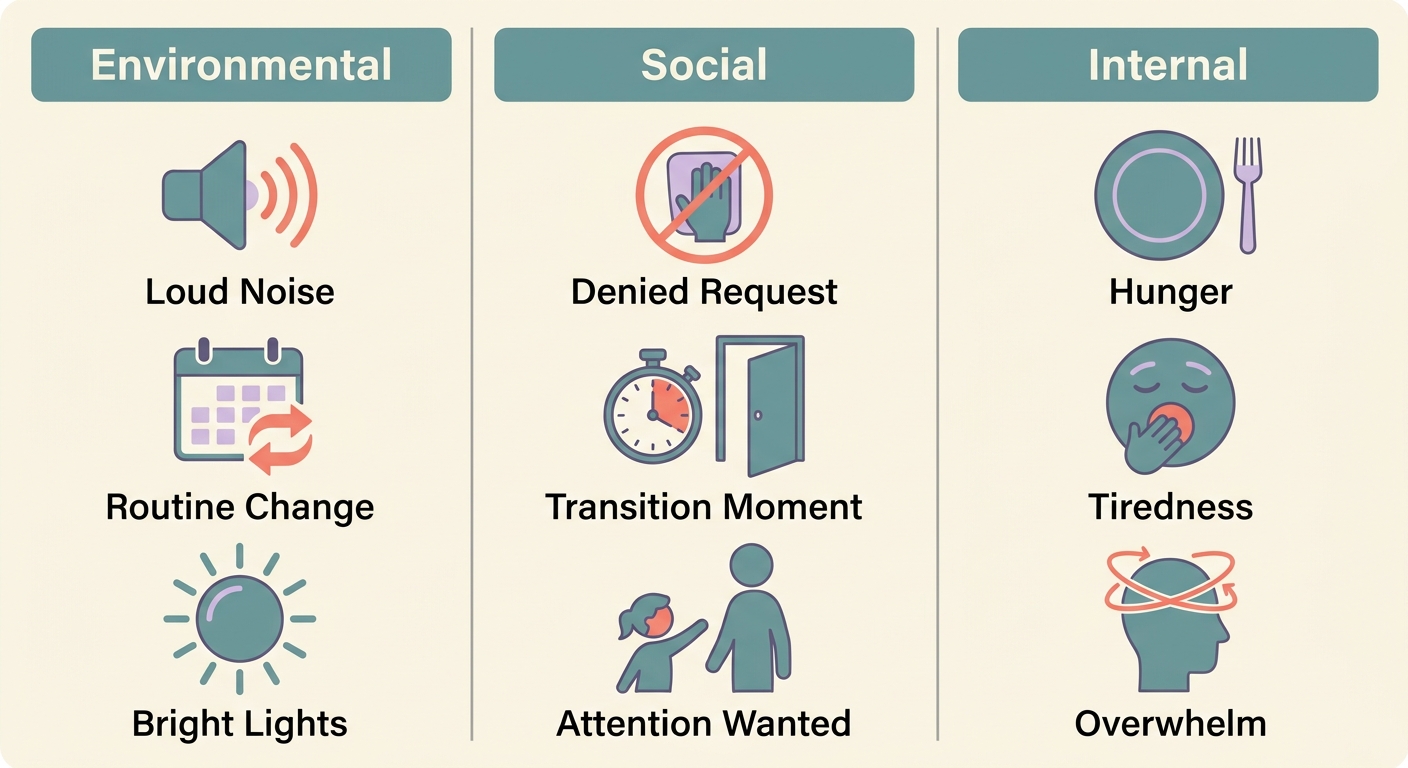
When a child’s angry outbursts feel unpredictable, a functional behavior assessment (FBA) turns guesswork into answers. We look for patterns in what happens before and after the outbursts to uncover the triggers and outcomes that keep the behavior going. By identifying these connections, we help families understand the ‘why’ behind the behavior.
An FBA goes beyond observation: we gather information, watch for consistent patterns, and determine the function of the behavior—whether it’s seeking attention, escaping a situation, or meeting a sensory need. The most rigorous form of assessment, called functional analysis, is considered the gold standard because it demonstrates cause-and-effect relationships in behavior. Trained practitioners then use decision models and visual data analysis to interpret the results, ensuring the process is systematic and reliable.
In other words, we aren’t studying how people act so much as studying how that information can be used to come up with a tailor-made solution based on solid facts.
3. Building Coping Skills That Actually Stick
When an assessment tells us what’s going on, we help kids work on solving it. ABA therapy for anger management teaches coping skills by breaking them down into simple pieces, practicing them in their own homes, then teaching the kid how to use it where they need it, not only when sitting there doing behavior techniques. They’re learning more than one tool for how to calm themselves, instead of being told “Use your counting breaths” if they lose control while playing catch, or eating dinner, or when they throw down the paper after being assigned extra homework.
The act of generalization is not an automatic thing that just happens by itself. It has to be taught. Teams will use at least three varied examples of each skill, highlighting the core features while mixing in non-essential details. They’ll highlight only the parts of the skill they’re teaching but sometimes add a little bit more detail as well. The idea here is to help kids focus on the features they need to generalize rather than the unnecessary background information, which could get them off track. In addition, when we embed practice into daily routines and coach parents to replicate these practices outside the session, it becomes a child’s natural way to respond to strong emotions.
4. Calming Big Feelings Before They Escalate
Recognizing emotion at its earliest signs is perhaps most significant because when we recognize changes in our child’s breathing pattern, tone of voice, or body language, we may then choose to interrupt this behavior. When we get a sense of this early change occurring within him, we can intervene before the emotion takes hold. This approach reduces the risk that a simple emotional tantrum will escalate into aggressive behavior.
By staying mindful of our own reactions as well as that of the child, we can reduce impulsivity and increase self-regulation, which helps both the adult and child calm down. Results from a study done at the Association for Behavior Analysis International support this approach, suggesting that autism-focused interventions rooted in mindfulness practices improve self-regulation among autistic people and their caregivers.
Also, using functional behaviour assessment helps us understand what events in our children’s environment, whether environmental, social, or physiological, contribute to triggering those huge emotions and reactions so we can develop a specific plan to calm them during moments of distress. Center on PBIS says that because data helps us better understand where those trigger points are, and therefore which parts need intervention for each child, having plans based on data will be more effective when dealing with potential escalations.
5. Replacing Aggression with Workable Behaviors
The aggression that we see often communicates an unmet need, whether it’s a cry for attention, a way to escape a difficult task, or a search for sensory relief. In the families that seek out ABA therapy for anger management, they learn that there isn’t any randomness to their children’s behaviors. Aggressive behavior does have a reason behind it and children gain something when they act aggressively. The first step to addressing this type of problem would be figuring out why the children react in certain ways and what the children get from acting in those manners.
The way in which this system functions involves examining the sequence of events that occur before, during and following aggression. Let’s say we have a child who throws items if his homework feels difficult. He would learn how to request help from others through the use of a card marked ‘help’. In order to meet the same need as that of throwing things (the child wants out), the replacement behaviour (handed over card) fulfils the same aim without endangering any lives. Every child responds differently to their treatment plan, so patience and consistency are the two most important elements here.
These new skills must be practiced when anger strikes—at home, in school, or in their daily lives—so they stick when it counts.
6. Practicing New Skills Right Where Anger Happens
This helps kids learn and practice new calm skills in the moment and where frustration occurs, at home. Our one-on-one training sessions with our Registered Behavior Technicians take place in Ogden City & Weber County and turn normal parts of life like mealtime and bedtime into opportunities to replace aggressive reactions with other acceptable ways to get their needs met. The in-home setting also includes this approach as part of the child’s day-to-day activities.
These replacement behaviors need to be taught in small segments rather than as big chunks otherwise kids will become overwhelmed. The plans are written up by our Board Certified Behavior Analysts who make sure the RBT coaches the child on how to execute the plan when eating meals or moving from one activity to another. Through this approach they can learn that practicing doesn’t have to be difficult, but feels more like playing around. By following these guidelines, the child will develop habits that stick.
When parents notice their child using these skills, they can gently reinforce them in everyday moments, helping to bridge therapy into the flow of family life.
7. Parents Carrying Progress into Everyday Moments
The skills we learn while playing are not going to last unless family members practice them on a daily basis outside of our training. We teach parents to incorporate these lessons during daily life, when they’re feeding their child, running errands together, or preparing for bed at night, so that progress isn’t limited strictly to individual play time.
Mindfulness-Based Self-Management helps caregivers shift from being in automatic pilot mode and responding automatically out of frustration to more reflective responses. Parents learn how to stop in the moment, reflect on what is happening before them, think through what needs to be done and take actions that will help both themselves and their child. The techniques that parents have learned are directly applicable to this approach during normal family interaction. With many small changes each day, over time there is significant improvement.
This isn’t just practice, this is where the change really happens for the whole family.
Watching Real Progress Through Data
We see the difference in these everyday moments when we are frustrated and then we learn something new. We are able to see how much has changed for us over time because we have tracked our skill development as well as behaviors using structured information, not impressions, so we can see how we have improved from week-to-week.
By conducting functional analysis, which is considered the gold-standard by the Association for Behavior Analysis International, we can determine why certain behavior happens and what should be done about it. We go over all the information obtained from tests together, modifying our strategy if things aren’t going well, so the family has assurance that their child will continue making strides towards more calm interactions while they’re at home. It provides assurance that steps are purposeful and backed up by proof, offering parents the confidence that what their kids achieve is both meaningful and measurable.
Frequently Asked Questions
How does ABA therapy help children with autism manage anger and aggressive outbursts?
ABA therapy helps children with autism manage anger by identifying triggers and teaching alternative coping strategies. BCBAs and RBTs work with families to create individualized plans that build communication and self-regulation skills. Skills are practiced in the child’s natural home environment to ensure they generalize beyond therapy sessions.
What role does a Functional Behavior Assessment (FBA) play in addressing anger management?
A Functional Behavior Assessment identifies patterns in what happens before and after anger outbursts to uncover triggers and outcomes. It determines whether behaviors serve functions like seeking attention, escaping tasks, or meeting sensory needs. Functional analysis, the gold standard, demonstrates cause-and-effect relationships to guide tailored solutions.
Can ABA therapy help my child learn coping skills to use when they feel frustrated?
Yes, ABA therapy teaches coping skills by breaking them into simple, practice-ready steps. Children learn to recognize early signs of frustration and use calming techniques in real-life situations. Skills are reinforced through varied examples and embedded into daily routines with parent coaching.
How can parents use ABA strategies at home to support their child’s emotional regulation?
Parents can reinforce coping skills during everyday moments like mealtime or bedtime by gently guiding their child to use taught strategies. Mindfulness-based self-management helps caregivers respond reflectively rather than reactively. Consistency and small, daily practice strengthen progress.
How is progress measured when using ABA therapy to reduce aggressive behaviors?
Progress is measured using structured data collected during therapy sessions and functional analysis. BCBAs review this information weekly to adjust strategies and ensure meaningful, measurable gains. Parents receive updates to see objective improvements over time.
Small Steps Toward Calmer Days
We also look at data that tells us about slow but steady progress building long-term skills. Our in-home ABA therapy in Utah meets kids wherever they are, breaking down big changes into tiny steps that make sense within their regular day-to-day life. With our BCBA led team, you’ll work together to develop customized behavior plans to help foster calmer responses and meaningful growth.
Please contact us if you would like to book in for your free initial consultation about what specific needs your child has, as well as discussing how consistent home-based ABA can help them. Please remember that results may be different for others because everybody is different and therefore, we recommend always consulting with health care professionals before starting any new treatment regimen.
Start With a Free Consultation
You’ve seen how understanding triggers, teaching coping skills in small steps, and practicing them right at home can lead toward calmer days. Our team brings that same approach into your child’s natural home environment, serving children ages 1 to 21 across Utah. Progress is gradual and individualized, but every small win documented along the way adds up. We partner with parents at every step, from the first assessment to celebrating incremental wins together. A free initial consultation is the simplest way to discuss your child’s needs and begin building a personalized treatment plan. Call Golden Touch ABA Therapy at (801) 630-5443 to get started. Results may vary based on individual circumstances, and this information is not a substitute for professional medical advice.
Start With a Free Consultation
Resources
Table of Contents
Mastering Social Skills with ABA Therapy
Building on ABA fundamentals, we at Golden Touch ABA focus on aba social skills to empower children with autism in everyday interactions like turn-taking and sharing. Applied behavior analysis ABA uses evidence-based practices, as outlined in an authoritative overview from the Association for Science in Autism Treatment, highlighting techniques like prompting, modeling, and reinforcement for social growth.
The power of small steps shines in our in-home ABA therapy, delivered by RBTs under BCBA supervision in a warm and welcoming environment. We teach aba social skills through role-playing conversations, peer-mediated interventions, and group play sessions. Through family-centered care, we train caregivers to reinforce these skills at home, promoting aba early intervention for lasting progress, as detailed in our clinic’s service descriptions.
Start with our interactive ABA roadmap tool to tailor social goals. Results may vary; consult a licensed professional.
Preparing Your Family for ABA Success
Building on the evidence for ABA, here’s how we help your family prepare. At Golden Touch ABA, we believe family-centered care is key to unlocking progress in applied behavior analysis therapy. Your commitment boosts aba social skills development through our in-home ABA therapy.
We outline these practical steps, drawn from guidance in our ABA FAQ:
- Participate in behavioral assessment and ABA treatment planning with our BCBA to set SMART goals for communication and daily skills.
- Learn basic ABA techniques via our caregiver training sessions, empowering you to reinforce lessons at home.
- Create a consistent daily routine with designated therapy spaces in a warm and welcoming environment.
- Track progress using our interactive ABA roadmap tool, supporting aba early intervention.
National Center for Biotechnology Information (NCBI) research shows ABA programs with family engagement yield positive effects on adaptive behaviors and communication, with effect sizes up to g = .41. The power of small steps builds aba social skills effectively using evidence-based practices.
Contact us in Salt Lake City for insurance assistance to start. Results may vary. Once prepared, our individualized ABA treatment planning takes over.
Assess Your Child’s Social Skills Baseline
Building on those signs, let’s establish a baseline for your child’s aba social skills. This snapshot captures current abilities like eye contact, greeting others, sharing toys, responding to name, and parallel play, per Golden Touch ABA’s practical FAQ guidance for parents.
We at Golden Touch ABA recommend observing your child over one week in natural settings like home play and family interactions. Use this simple checklist:
- Makes eye contact during interactions
- Greets others verbally or with waves
- Shares toys willingly
- Responds to name promptly
- Engages in parallel play
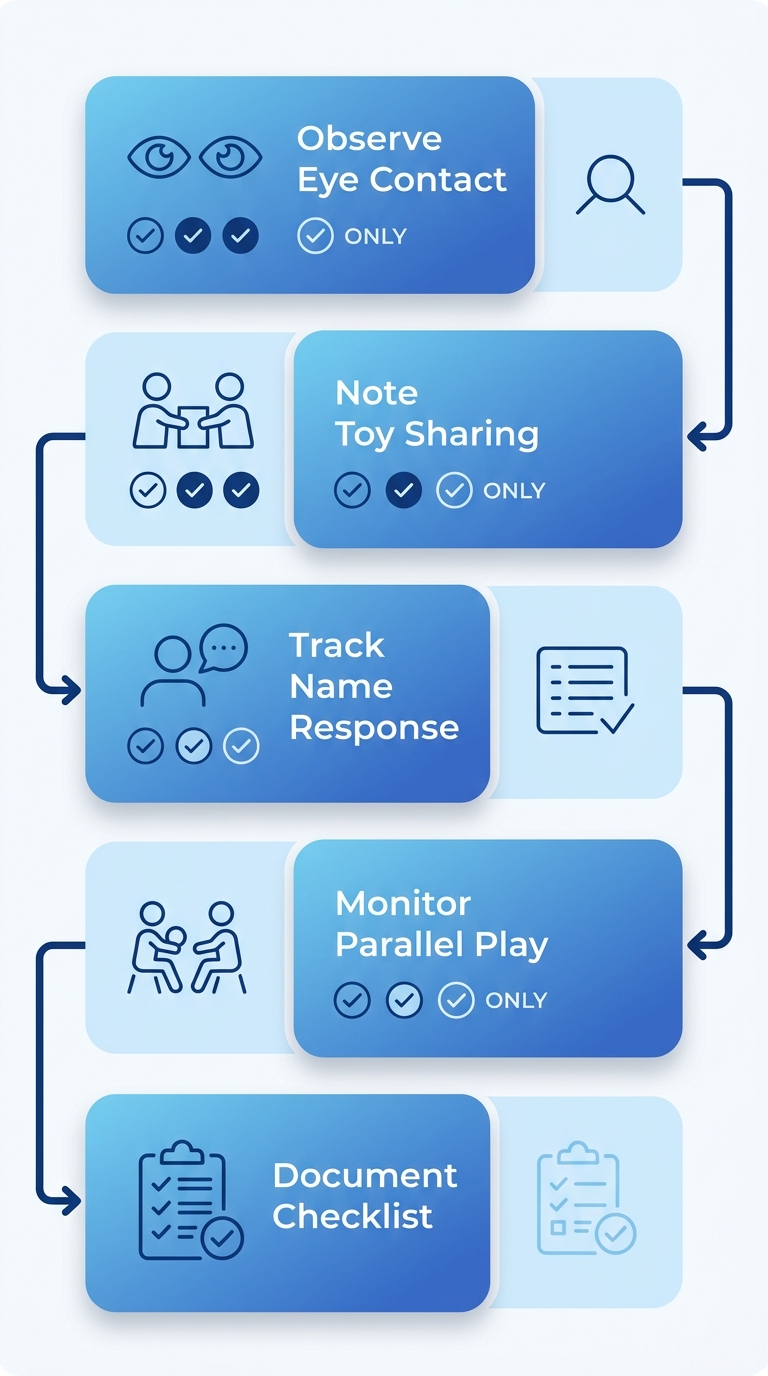
5-step ABA therapy process for child’s social skills baseline assessment
This baseline matters for tracking progress in applied behavior analysis, especially with aba early intervention for better outcomes in our family-centered care. Consistent data helps tailor in-home ABA therapy. Results may vary.
Document your notes and use our interactive ABA roadmap tool. With your baseline notes, explore our ABA treatment planning for tailored goals. Contact us for a professional BCBA evaluation.
Define Clear and Achievable Social Goals
We help families set clear social goals that build confidence one interaction at a time through applied behavior analysis. In aba early intervention, defining aba social skills targets matters because they break down complex behaviors into manageable steps, fostering real progress in a warm and welcoming environment.
Use the SMART framework for developing social skills through ABA: Specific (e.g., make eye contact during greetings), Measurable (track occurrences per session), Achievable (start with one peer), Relevant (ties to daily play), Time-bound (master in 4 weeks). During behavioral assessment as part of ABA treatment planning, families collaborate with our team for family-centered care. Examples from our experts’ practical FAQ guidance include taking turns in a 2-person game or responding to name 80% of the time.
The power of small steps and evidence-based practices shine in RBT-delivered therapy. Once defined, we move to measuring these goals in daily sessions. Results may vary; consult our professionals.
Teach Recognition of Social Cues
Building on foundational interactions, we focus on why recognizing social cues like smiles for happiness or frowns for sadness matters for children with autism. Mastering aba social skills builds confidence in everyday social exchanges through evidence-based practices.
In our in-home ABA therapy, we use video modeling: show short clips of peers displaying cues, then have kids imitate and identify them. Scripting and role-playing follow, with simple scripts for scenarios like a friend waving hi, practiced in a warm and welcoming environment. The teaching social skills TIP from the Association for Science in Autism Treatment (ASAT) offers practical, research-supported steps including modeling and feedback.
We create personalized social stories with pictures for daily aba early intervention reading, reinforce correct identifications with praise, tokens, or fun activities under BCBA supervision, and integrate into routines via family-centered care. The power of small steps tracks progress. Results may vary. These cues pave the way for advanced conversations ahead.
Practice Role-Playing for Real-Life Scenarios
Building on basic skills, we use role-playing to build aba social skills for real-life scenarios through evidence-based practices. This applied behavior analysis modeling technique, as outlined in authoritative guidelines from the Association for Science in Autism Treatment (ASAT), involves therapists or peers demonstrating interactions like greeting friends or turn-taking, then guiding children to imitate in safe sessions.
We target everyday situations such as handling playground sharing, ordering food at a restaurant, or asking for help in a store. These aba early intervention practices accelerate social development with positive reinforcement for generalization. Peer-reviewed government health research data from the National Center for Biotechnology Information (NCBI) via ABA evidence autism treatment supports gains in social skills from such modeling.
In our family-centered care with in-home ABA therapy, we train caregivers for home reinforcement. The power of small steps leads to measurable progress tracking. Results may vary (no guaranteed outcomes). This prepares children for success, leading into our progress tracking methods.
Build Peer Interactions Through Structured Groups
Beyond one-on-one practice, we build peer interactions through structured aba social skills groups as a key part of our ABA social skills training. These small, supportive settings help children with autism practice real-world social exchanges in a warm and welcoming environment.
We use evidence-based practices from applied behavior analysis, like role-playing, prompting, and reinforcement, to teach turn-taking, sharing, and conversation skills. According to a research synopsis by the Association for Science in Autism Treatment (ASAT), behaviorally-based groups with procedures such as modeling and shaping led to significant social improvements in young children.
Our in-home ABA therapy integrates these groups with family-centered care, adapting activities for peer practice at home through caregiver training. For aba early intervention, timely group exposure boosts social reciprocity. The power of small steps shines here.
These group gains extend home with caregiver support. Explore our interactive ABA roadmap tool or contact us for personalized planning and custom quotes. Results may vary.
Utilize Visual Aids and Social Stories
Building on positive reinforcement, we leverage visual aids and social stories next to boost aba social skills in our in-home ABA therapy. Tools like picture schedules and PECS make abstract concepts concrete in applied behavior analysis, helping children grasp routines and communication. They also support independence, predictable routines, and everyday communication across home and community settings for improved daily participation.
Social stories are customized narratives we create to teach behaviors like turn-taking or greetings, tailored to each child’s needs. For instance, our FAQ highlights using visual aids during transitions in aba early intervention to ease anxiety, as guided by Golden Touch ABA’s practical examples. We train families to reinforce these at home through family-centered care.
Our RBTs integrate these seamlessly in sessions for steady progress. Results may vary. These pair seamlessly with verbal prompting techniques.
Track Progress and Provide Positive Reinforcement
Once techniques are in place, we ensure success through vigilant tracking in our In-home ABA therapy. In applied behavior analysis, consistent progress tracking allows us to adjust individualized treatment plans, particularly for building aba social skills. This data-driven approach helps children make meaningful gains in communication and independence.
Golden Touch ABA, per our internal company FAQ guidance, uses daily data logs to record target behaviors, visual progress graphs shared weekly with families, and milestone celebrations to mark achievements. These methods provide clear insights into aba social skills development during sessions.
We incorporate positive reinforcement through immediate verbal praise, token economies with preferred rewards, and natural reinforcers tailored to each child’s interests in aba early intervention. This family-centered care creates a warm and welcoming environment, integrating family feedback for ongoing adjustments.
Our evidence-based practices support measurable outcomes, though results may vary. We share these insights with families for collaborative adjustments.
Addressing Challenges in Social Skills Training
While social skills training offers great benefits for children with autism, challenges like lack of skill generalization to real-world settings, low motivation during group interactions, and difficulty reading social cues often arise. At Golden Touch ABA Therapy, we tackle these hurdles in aba social skills development using evidence-based practices from applied behavior analysis. The power of small steps helps build confidence through targeted strategies.
One effective ABA technique is modeling, where therapists or peers demonstrate social behaviors for children to imitate. According to evidence-based ABA technique guidelines from the Association for Science in Autism Treatment (ASAT), this includes live modeling in real-time, video modeling for repeated viewing, and self-modeling to boost self-efficacy. These methods promote faster skill acquisition, especially for social play and communication, addressing generalization and cue-reading issues.
We at Golden Touch ABA apply these in our In-home ABA therapy, delivered by dedicated RBTs under BCBA supervision, as outlined in our internal practical guidance. This family-centered care integrates aba early intervention to enhance motivation and natural environment practice, with caregiver training for consistent support. Our approach emphasizes caregiver coaching and practice in natural contexts to promote daily-life generalization, and data-driven progress tracking helps tailor supports regularly over time. Results may vary.
Ready to overcome these challenges? Use our interactive ABA roadmap tool and contact us to tailor an ABA plan addressing your child’s needs in a warm and welcoming environment.
Sustaining Social Skill Development Long-Term
Building on early gains from aba social skills training, we at Golden Touch ABA help families maintain progress through consistent reinforcement. Regular in-home ABA therapy sessions prevent regression, as our RBT-delivered therapy supports ongoing practice in natural settings.
Family-centered care plays a key role, with caregiver training embedding social skills into daily activities like playdates or community outings. Drawing from evidence-based practices in applied behavior analysis, periodic BCBA reassessments adapt plans to evolving needs and ensure goals remain meaningful, measurable, and aligned with family priorities over time. Research from the Association for Science in Autism Treatment (ASAT) shows behaviorally-based social skills groups sustain improvements for 16-32 weeks.
Transitioning skills via aba early intervention foundations ensures long-term growth. Results may vary; insurance coverage requires verification. Reach out to us at Golden Touch ABA for your customized roadmap.
This article was researched and written with the assistance of AI tools.
Resources
- Get Personalized ABA Treatment Plans Led by BCBAs
- Discover Family Involvement in ABA Treatment Planning
- Create SMART Goals for ABA Therapy Improvement
- Monitor and Revise ABA Treatment Plans Effectively
- Develop ABA Plans Through Four-Stage Process
- Build Collaborative ABA Plans with FBA Data
- Implement Data-Driven Collaborative ABA Planning
- Master TIP for Teaching Social Skills Effectively
- Explore ABA Evidence Base for Autism Treatment
- Learn ABA Principles for Skill Acquisition
- Discover ABA Modeling Techniques for Skill Teaching
- Improve Social Skills via ABA Group Therapy